Waymo begins rolling out the sixth generation of its autonomous driving technology
 Javier Cantagalli
15 February 2026
3 min.
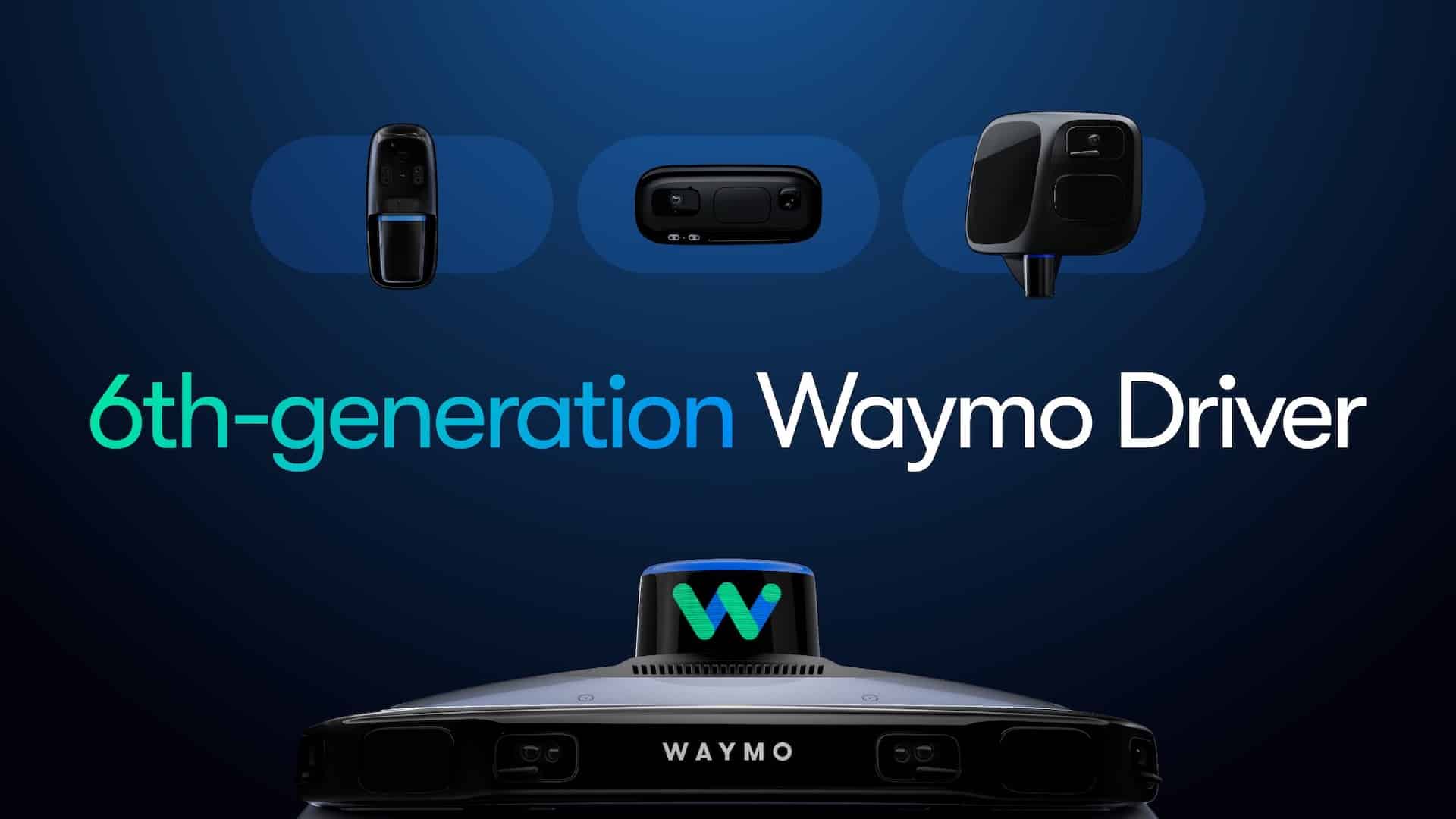
Waymo is opening a new era in autonomous mobility with its sixth generation of the Waymo Driver, the most advanced and efficient technology the company has developed to date for driverless robotaxis.
Waymo has begun rolling out the sixth generation of its autonomous driving technology, known as Waymo Driver, designed to be deployed in the company’s robotaxi fleet. This new evolution of its technology represents a very important step forward for the future of Waymo, as its main focus is to combine greater efficiency and cost reduction with a high level of safety on the road. All of these factors are essential to boost the company’s growth and expansion in the coming years.
To develop this new generation of the Waymo Driver, close to 200 million miles driven autonomously by the company’s vehicles across a dozen cities have been necessary, where dense traffic poses a huge challenge to overcome.
One of the main improvements of this new generation of the system is its modular design, which is adaptable to various vehicle platforms, allowing it to operate in much more varied scenarios, including extreme winter climates. The sensor suite has also been notably optimized, incorporating high-resolution cameras equipped with 17-megapixel image sensors that capture sharp detail even in high-contrast conditions, deep shadows or intense glare. The company explains that thanks to these high-resolution sensors, it has been possible to reduce the total number of cameras, simplifying the configuration and cutting costs.
Waymo continues to rely on LiDAR
An important aspect to highlight is that, unlike one of its main competitors – we are obviously referring to Tesla with its robotaxis – the sixth generation of the Waymo Driver continues to rely on LiDAR to generate precise 3D maps of the surroundings over long distances. Additionally, the use of advanced radar also improves object tracking in adverse conditions such as rain or snow. Finally, the system includes external EAR audio receivers that detect emergency sirens or railway crossing signals.
This sixth generation of the Waymo Driver also comes hand in hand with a possible strategic agreement between the company and Hyundai Motor. According to some recent reports, the South Korean carmaker is currently negotiating the supply of up to 50,000 units of its IONIQ 5 model equipped with Waymo’s autonomous technology by 2028. With an estimated price of around 50,000 dollars per vehicle, this deal could amount to roughly 2.5 billion dollars.
The IONIQ 5 units destined to become Waymo robotaxis, according to this agreement between the two companies, would leave the Hyundai plant located in the state of Georgia, thus avoiding problems with imports of vehicles from foreign countries. This agreement would be very positive not only for Waymo, but also for the South Korean manufacturer, which is going through a difficult moment with falling sales and stagnant growth in some of its main markets.
Waymo maintains an accelerated pace of expansion, backed by a recent investment of 16 billion dollars. In this new stage, the company plans to step up its efforts to bring its autonomous robotaxi service to a greater number of cities beyond the United States, with the aim of consolidating its leadership in the sector.
Technical specifications of this car


 Peugeot E-208 GTi: a battery-powered toy that revives the spirit of the 1980s sports cars
 New Lexus ES: luxury grows and goes electric
 First contact with the Dacia Sandero Hybrid 155: power and efficiency from €19,890
Deja un comentario