Hybrids, electric and alternative-fuel vehicles now attract more interest than diesel and almost as much as petrol
 Guillermo Lopez
20 April 2018
5 min.
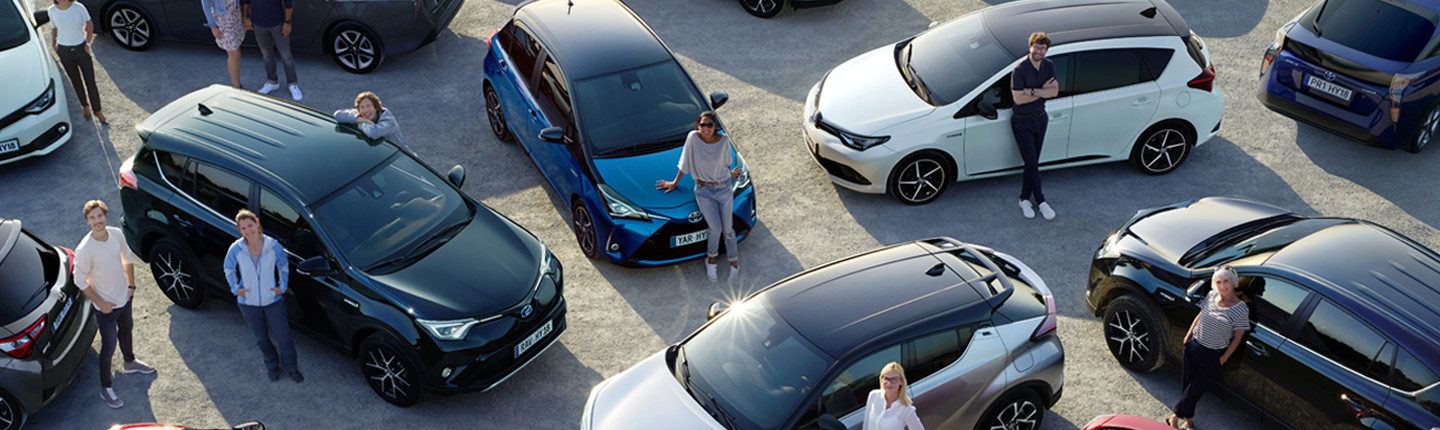
Although they still account for a minority of the market, interest in hybrid, electric and alternative-fuel vehicles is growing significantly in terms of purchase intention
According to the latest Cetelem Motor Observatory 2018, 29 percent of Spanish buyers already believe that their next car will be a hybrid, compared with 26 percent who think their next car will be a diesel. These figures contrast sharply with the 10 percent who planned to buy a hybrid and the 62 percent who were going to buy a diesel in 2007, the year before the crisis.
Interest in new mobility technologies is growing all the time. Hybrid and electric cars are winning over consumers, and the purchase intention expressed by respondents to the Cetelem Motor Observatory 2018 (36 percent overall) not only clearly exceeds that for diesel but almost matches that for petrol, which at 37 percent is currently the most sought-after option on the market. According to the Cetelem Observatory, 23 percent of Spaniards intend to acquire an electric vehicle within the next two years.
These figures are particularly striking because, for the rest of the respondents, an electric vehicle would be especially appealing provided some of the significant obstacles that electric cars present for everyday use were removed. According to the Cetelem Motor Observatory 2018, the main reasons why consumers are not opting for an electric car §h17;at present are mainly insufficient range (cited by 57% as the most important of all), their still high price (54%), the difficulty of finding battery charging stations (40%) and charging time (27%). Only 19% do not yet trust this technology and just 1% consider it dangerous.
The Cetelem Observatory data are likewise corroborated by figures from the market itself and, from time to time, by manufacturers of this type of model. In the first quarter of 2018, 19,445 electric and hybrid vehicles were registered in Spain, an increase of 39.3 percent compared with the same period of the previous year. Of that total, 2,697 were pure electric vehicles, an increase of 119% over those registered in 2017, and 16,748 were hybrid-powered units, a rise of 31.6% over the first quarter of 2017, according to data provided by ANFAC.
Manufacturers themselves confirm consumers’ growing interest in these powertrains. SEAT, for example, notes that this year registrations of hybrid units of the SEAT León are growing exponentially, those fitted with the dual TGI powertrain, which allows use of either petrol or natural gas as fuel. According to Mikel Palomera, SEAT’s Commercial Director General, recently stated, more than 10 percent of the total sales of the new León feature TGI engines under the bonnet, and the figure keeps rising.
Even more spectacular are the figures for Toyota, a brand in which 70 percent of its registrations already correspond to units fitted with hybrid powertrains. According to the Japanese brand, 1,500 people a day currently show interest in Spain in a hybrid electric vehicle at the official dealer network of Toyota. More than 187 visitors per hour go into the brand’s dealerships in our country asking about the hybrid models in its range and requesting a commercial offer. Of all of them, the one that attracts the most attention is the C-HR, the compact crossover that has become one of the most in-demand within its market niche. More than 80 percent of hybrid vehicles registered in Spain carry the Toyota logo on their front.
And it is not only consumers who show more interest in electric and alternative-fuel vehicles. Spanish manufacturers are also betting on them. The growing interest consumers show in this type of model means manufacturers are devoting ever more effort to their development and, for that very reason, the National Association of Car and Truck Manufacturers has just created a committee dedicated specifically to electric and alternative-fuel vehicles to “work on proposals to promote electric and alternative mobility in its various aspects and with an overall vision”, according to ANFAC’s statement.
The committee “will advocate the introduction of a structural incentive plan, endowed with 150 million euros a year, for the purchase of alternative vehicles”, the statement says. Encouraging the installation of public charging points and linked electricity, gas and fuel-cell supply, as well as the §h47;flexibilisation or elimination of the regulatory framework for charge managers, will also be among the new committee’s functions, since ANFAC considers these aspects, and in particular the planning of a fast-charging infrastructure, vital to increasing the market share of electric and alternative-fuel vehicles in Spain.
Achieving a new taxation system oriented more towards use than ownership and favourable to these vehicles, through the introduction of a reduced VAT rate for electric and alternative-fuel vehicles, and securing greater harmonisation of local and regional legislation, promoting the labelling introduced by the Directorate-General for Traffic to encourage emission-free traffic in large cities, will also be part of the new committee’s day-to-day work.


 Peugeot E-208 GTi: a battery-powered toy that revives the spirit of the 1980s sports cars
 New Lexus ES: luxury grows and goes electric
 First contact with the Dacia Sandero Hybrid 155: power and efficiency from €19,890
Deja un comentario