Audi Q3 2.0 TDI 177 CV S-Tronic Quattro, road test (Engine, performance and consumption)
 Diego G. Moreira
10 February 2013
4 min.
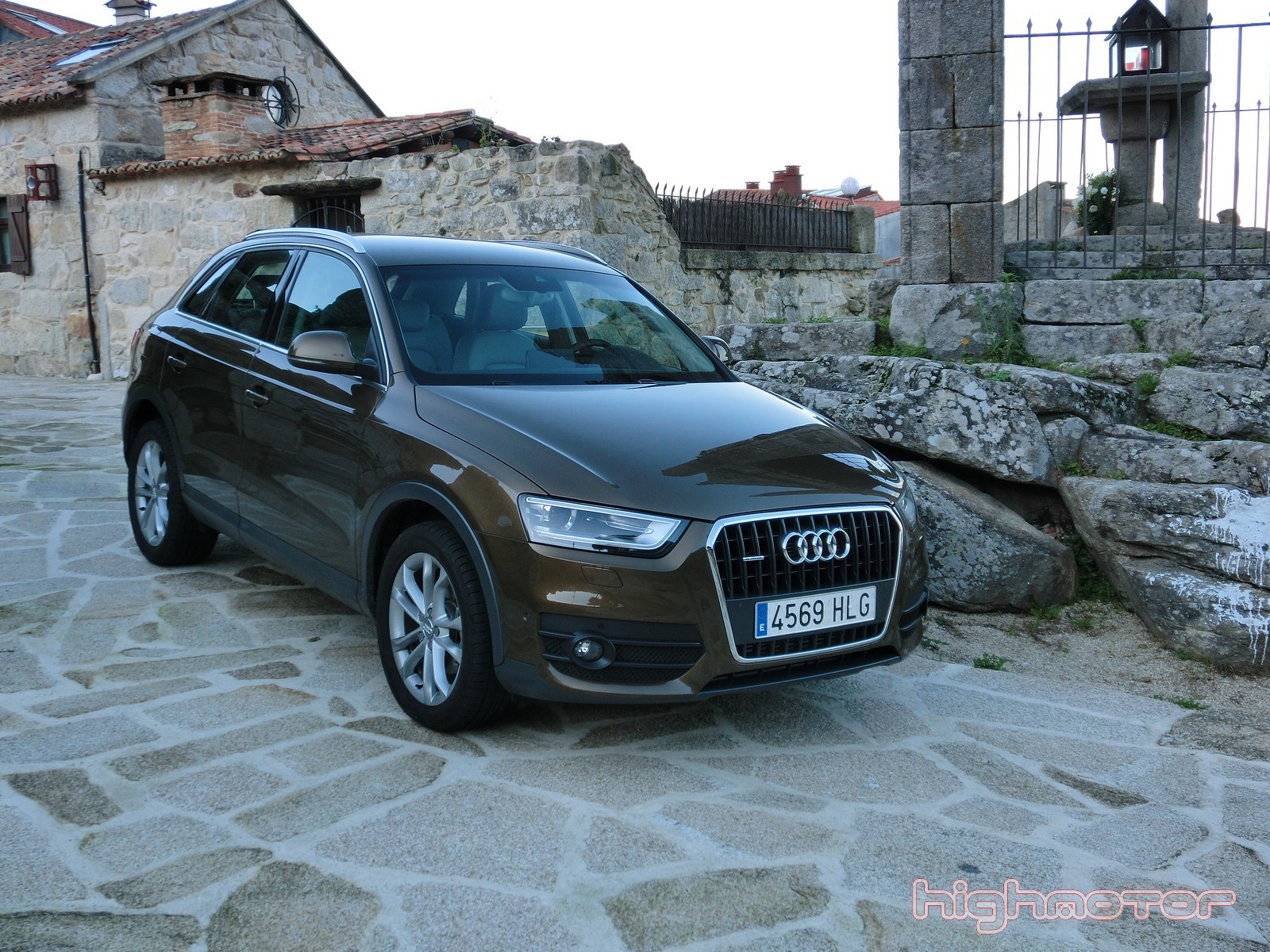
At Highmotor we have tested the Audi Q3, an SUV that perfectly fits the definition of the segment it belongs to and that has been one of the last to arrive on the market, facing the Mercedes GLK, the veteran of this segment. But this Audi arrives with potential, with solid arguments to convince the users of this type of car.
The engine we tested is the most powerful one (below it is the 143 CV version). It is the well-known 2.0 TDI of 177 CV paired with the S-Tronic dual-clutch gearbox (DSG), which increases comfort at the wheel and creates an interesting package for enjoying this small German SUV. Our unit also features Quattro all-wheel drive. Are you interested in the Q3? Are you looking for a premium SUV? Stay with us in this test and we will tell you everything about the car.
Engine and performance
The engine of the Q3 we tested holds few secrets. Surely few of you are unaware of this well-known two-litre TDI, which is used across a large range of VAG models, from the Seat, the Skoda or the Audi itself. If we talk about the engine in the Audi Q3, that is, whether it is sufficient or whether we can save some money and opt for the 143 CV version, there is more to say here.
For those seeking sportiness, for those who, when overtaking, want to press the pedal down and have the car respond quickly, this 2.0 TDI of 177 CV is without doubt the ideal engine, with its typical response from 2,000 rpm up to 3,500 rpm.
If we drive in a calmer way, the 143 CV version may be sufficient.
To our unit’s engine we must add the S-Tronic automatic gearbox, that is, a dual-clutch transmission with impeccable operation, as well as speed when shifting through each of its seven gears. The S-Tronic gearbox offers an extra touch of comfort at the wheel, allowing gears to be managed in sequential mode or getting the most out of the engine with Sport mode. Paddle shifters, however, are optional.
Handling
This is the section I liked most. In other vehicles Audi that we have tested, the suspension never fully pleases, it seeks firmness but ends up feeling somewhat harsh. In the Audi Q3 they have achieved an excellent middle ground. On roads with poor asphalt the car feels comfortable, filtering out irregularities, while in more dynamic driving the car responds with a composed and stable behaviour, more typical of a passenger car.
That said, the tyres have a generous profile (235/50 R18), which contributes to comfort on roads with poor asphalt but takes away agility on the open road. It is also noteworthy how quickly the ESP intervenes, leaving the driver very little margin, something that in turn is in line with the stability and composure we mentioned earlier.
In this section we must also talk about the Quattro all-wheel drive that comes as standard on our Audi Q3, an expendable feature, given the extra cost it entails and the little use we can make of it. The Q3 does not have a good ground clearance, and its tyres are not all-season, so beyond snow enthusiasts (with good winter tyres), the all-wheel drive is dispensable.
Finally, in the handling section, we have the steering with a correct feel and brakes that perform their task without problems.
Consumption
In terms of consumption the figures are somewhat high, but we are dealing with the version with the Quattro all-wheel drive system and a 177 CV engine, with the Q3 having a kerb weight of around 1,660 kg. On the motorway, over a 300 km route, it achieved a consumption of 6.6 litres per 100 km.
Meanwhile, in town the figure rises to 10 litres per 100 km, undoubtedly the worst environment for the Audi Q3, because stop-and-go traffic does not suit it, despite having Start&Stop. Meanwhile on the open road consumption was around 6.8 litres per 100 km.
In the second part of the test we will discuss the design, the interior space and the quality of the finishes.
Photos | Diego G. Moreira
Technical specifications of this car


 Peugeot E-208 GTi: a battery-powered toy that revives the spirit of the 1980s sports cars
 New Lexus ES: luxury grows and goes electric
 First contact with the Dacia Sandero Hybrid 155: power and efficiency from €19,890
Deja un comentario