Barcelona and Madrid demand changes from the Government in the fight against pollution
 Guillermo Lopez
9 February 2018
4 min.
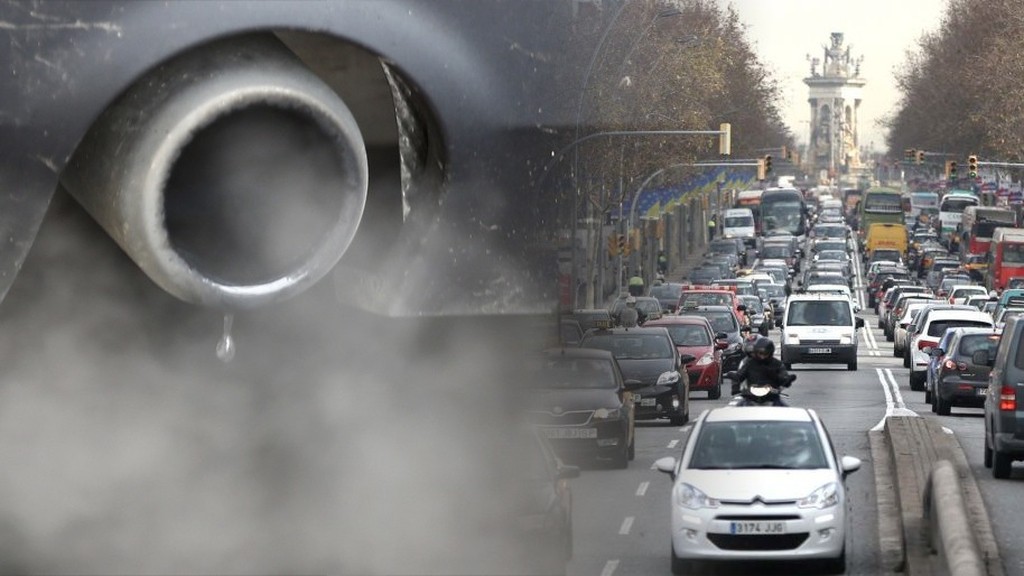
Madrid and Barcelona demand that the Government enact a state pact against pollution in large cities and put an end to the tax advantages of diesel vehicles.
The deadline is running out, and the threat from the European Union to take Spain before the Court of Justice in Luxembourg over our repeated failures as a country to comply with the regulation and the commitments made regarding emissions reduction is getting closer to becoming reality. Barcelona and Madrid are demanding that the Government take action, and to that end they have presented a joint list of measures to the Minister of the Environment to tackle pollution and stop breaching the established limits.
Pollution in the two major Spanish cities remains above the levels set by the European Union for large population centres. The City Councils of both cities have established separate action plans, but they call for greater action from the central administration in order to comply with European regulations.
“The central Government must also help tackle the problem,” said today Janet Sanz and Inés Sabanés, Deputy Mayor for Ecology, Urban Planning and Mobility of Barcelona City Council and Environment Delegate of Madrid City Council, respectively, demanding “loyalty” from the central administration in the fight against this problem.
This past Wednesday, the Minister of the Environment, Isabel García Tejerina, blamed both cities for being solely responsible for Spain’s non-compliance with Brussels on environmental matters. And today, Janet Sanz and Inés Sabanés have responded by demanding that the Spanish Government “begin implementing measures against pollution.”
“There are issues that cities cannot resolve,” said Inés Sabanés, calling, together with her counterpart at Barcelona City Council, for specific measures in favour of less polluting cars and greater investment in public transport and infrastructure. “Pollution is a matter of state,” stressed Janet Sanz. Both local authorities have accused the Government of inaction in the face of the problem: “A year ago we proposed to the minister a list of 12 measures, and she has done nothing!” both affirmed.
According to the announcement, the Government plans to approve a report in response to the ultimatum from the European Commission to Spain. Minister García Tejerina stated on Wednesday in Congress that, regarding pollution levels, “the focal points of non-compliance are Madrid and Barcelona,” indicating that their city councils are the ones that should make “more effort” given that it is a matter of “their responsibility.”
Political conflicts aside, the Madrid environment delegate pointed to the refusal to discuss diesel taxation so as not to clash with the Ministry of Economy. “The real focus is the treatment of diesel and the most polluting vehicles. But they find it hard to reach an agreement and to confront the car industry,” said Sabanés. “It is inconsistent for cities to impose restrictions on diesel while these cars continue to be subsidised,” said the representative of Barcelona City Council, who also requested subsidies for the installation of charging points for electric cars. She also called for the removal of diesel’s tax advantages in the fuel tax and increased funding for urban public transport so that large cities “can apply a better fare policy, increase the number of buses, create new metro networks… The state,” she said, “invests 50 per cent less in public transport than it did seven years ago.”
The measures requested by the municipal representatives also include changing the registration tax to benefit the least polluting vehicles, making identification of vehicles through the DGT’s environmental label mandatory, establishing reductions in tolls under state jurisdiction based on the car’s label, prioritising investment in commuter rail networks and bus-HOV lanes, and amending the Traffic Law so that infractions of special traffic management measures for environmental reasons are classified as serious or very serious.
The Ministry has summoned Madrid City Council and the Generalitat of Catalonia to a meeting on the 22nd to discuss the problem. Barcelona City Council has expressed its surprise at not having been invited to this meeting.


 Peugeot E-208 GTi: a battery-powered toy that revives the spirit of the 1980s sports cars
 New Lexus ES: luxury grows and goes electric
 First contact with the Dacia Sandero Hybrid 155: power and efficiency from €19,890
Deja un comentario