CATL promises that its new 5C ultra-fast charging batteries barely degrade after more than 1.7 million km
 Javier Cantagalli
2 February 2026
4 min.
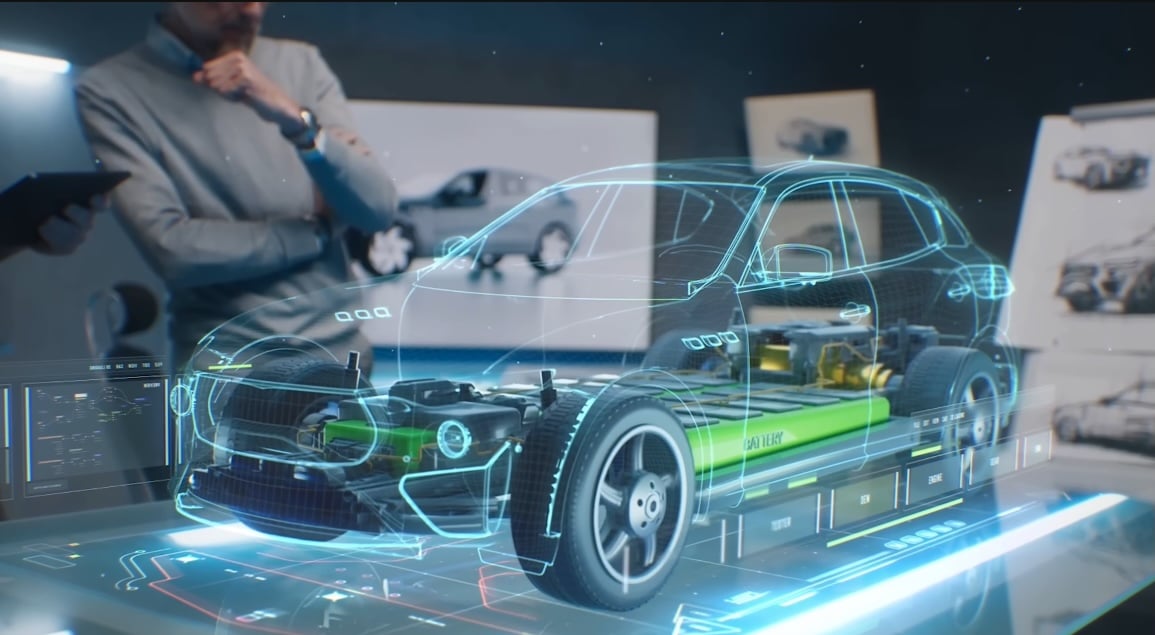
CATL’s new batteries promise to make the dream of enjoying charging times similar to refuelling with petrol a reality, with a service life that completely eliminates concerns about degradation over time.
One of the main concerns of electric vehicle buyers has long been the degradation of the battery pack. Like any electronic device that incorporates a battery, its charging capacity decreases with use. This wear can also be aggravated by operating conditions, especially if it is subjected to unfavourable conditions of intense heat or cold.
The vast majority of electric vehicles, with only a few exceptions, have systems that control battery temperature to reduce degradation, heating or cooling it as needed to extend its service life. These systems, together with improvements in cell chemistry, are making electric vehicle batteries increasingly durable and concerns about their degradation ever smaller.
A clear example of what we are saying is CATL’s new batteries, which completely put to rest any headache over the degradation of this vital component of any electric vehicle. So much so that, if the Chinese manufacturer delivers on its promise, the vehicle will almost certainly be practically ready for the scrapyard from intensive use before the battery becomes a problem.
Incredible but true
According to CATL, these batteries retain at least 80 percent of their original capacity after 1,400 full charge and discharge cycles at an ambient temperature of 60 degrees Celsius, equivalent to the extreme heat of the desert. This means that if we consider a theoretical range of around 600 km per cycle, which is quite common in many electric vehicles today, this translates into more than 840,000 km covered in adverse weather conditions while maintaining 80 percent of the charge.
In more typical environments, however, the performance of CATL’s new batteries is even more striking. According to the company, at an average temperature of 20 degrees Celsius, these batteries can withstand a minimum of 3,000 charge cycles, which equates to just over 1.7 million kilometres travelled. CATL claims that, in this way, its new batteries multiply by six the current average life of conventional batteries currently on sale.
To achieve this impressive advance in battery technology, CATL has introduced several important technical innovations. First, the cathode of these batteries features a dense and uniform coating that minimises degradation. But that is not all, as the liquid electrolyte also incorporates repairing additives that seal microcracks and prevent lithium loss. Additionally, temperature-sensitive agents are applied to the surface of the internal separator of each cell, which helps extend service life.
Improving the cell composition alone is not enough
On the other hand, the battery management system (BMS) has also been improved, and in these new CATL batteries it can direct the coolant precisely to the areas that overheat, which significantly reduces wear on the assembly.
https://www.youtube.com/watch?v=XOEGg5jxZQk
Although CATL has not specified mass production dates or which models or brands will be the first to incorporate them, the announcement comes at a key moment. With chargers already exceeding one megawatt in some markets such as China, batteries must evolve so as not to become a brake on this development.
Finally, for anyone unclear on the concept, a charge at 5C means the battery supports a charging power five times greater than its capacity. In other words, if we are talking about a 90 kWh battery, the supported charging power would be 450 kW, making it possible to complete a recharge in about 12 minutes.


 Peugeot E-208 GTi: a battery-powered toy that revives the spirit of the 1980s sports cars
 New Lexus ES: luxury grows and goes electric
 First contact with the Dacia Sandero Hybrid 155: power and efficiency from €19,890
Deja un comentario