Daimler Truck is preparing to produce a first limited series of its Mercedes-Benz NextGenH2 truck
 Javier Cantagalli
2 February 2026
3 min.
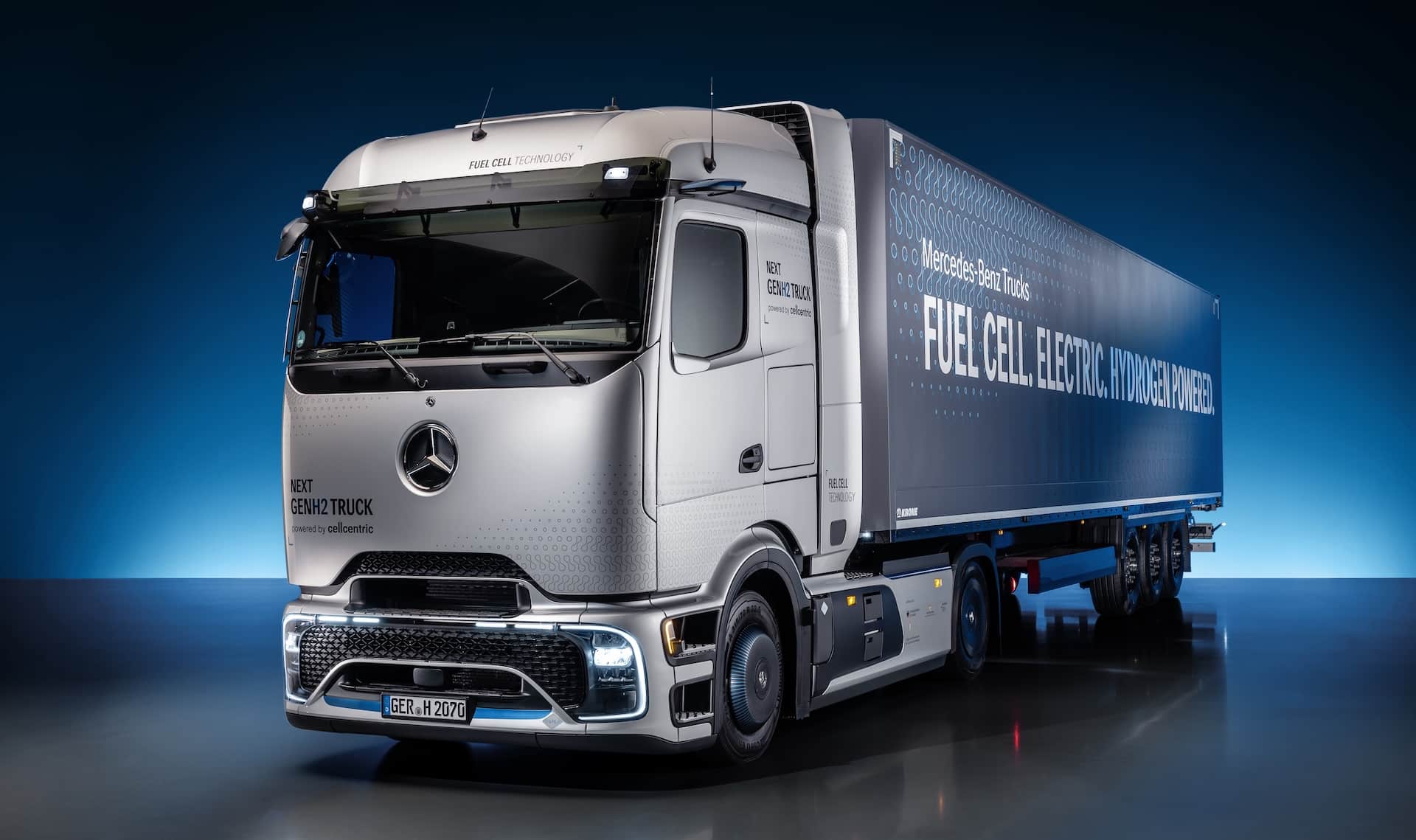
As a complement to battery-electric solutions, hydrogen-based propulsion is essential for the transformation of long-distance road freight transport.
Daimler Truck has just unveiled the Mercedes-Benz NextGenH2 Truck, the new generation of its tractor unit with semi-trailer powered by a hydrogen fuel cell propulsion system. After several years of testing with first-generation prototypes, the German manufacturer has now decided to start its production on a limited basis, with a small series of 100 units that will be assembled at the Wörth plant and will begin to be delivered to selected customers from the end of this year.
This model represents a notable evolution compared to the initial prototypes. It incorporates a BZA150 fuel cell from the Cellcentric consortium, a joint venture between Daimler Truck and Volvo Group, which offers a combined output of 300 kW, split across two 150 kW modules. With this fuel cell, the German manufacturer continues to bet on liquid hydrogen (sLH2) at -253 °C, since it offers a higher energy density, stored in two tanks with a total capacity of 85 kg. Enough to cover more than a thousand kilometers in real-world conditions, according to the manufacturer, as it already demonstrated with a prototype in 2023 when it covered 1,047 km.
It should also be noted that refueling at specialized liquid hydrogen stations takes between 10 and 15 minutes, a time period very similar to that required by diesel trucks. The only drawback, for the time being, is that the hydrogen refueling infrastructure remains very limited, with stations available only at specific locations in Germany, such as Wörth am Rhein and the Duisburg area.
Some of its technological innovations come from the eActros 600
One of the most notable novelties of this hydrogen-powered truck is the integration of components already in production for the eActros 600, which has a fully battery-electric propulsion system. These include the integrated electric axle with a four-speed transmission, the ProCabin aerodynamic cab that improves the drag coefficient by 9 percent, the Multimedia Cockpit Interactive 2 system, advanced driver assistance systems and the high-voltage electrical architecture. In addition, it incorporates a 101 kWh LFP battery with the aim of recovering energy during braking and descents, thereby supporting the fuel cell system.
Regarding on-road performance, according to Mercedes-Benz the power of the drivetrain reaches 340 kW in Economy mode and rises to 370 kW in Power Mode. Other advances include an evaporation management system (Boil-Off) to comply with regulations, an optimized cooling circuit, additional leak-safety sensors that allow overnight stays in the cab with its two standard beds, and side skirts with impact-absorbing elements to protect the tanks.
With this launch, Daimler Truck maintains its dual strategy for Europe, betting on battery-electric trucks for short and medium-range applications, while leaving the most demanding long-distance routes to its hydrogen fuel cell trucks. However, it must be taken into account that the large-scale launch of the latter has been postponed until the early 2030s, due to the slower-than-expected expansion of the hydrogen refueling network in Europe and a cost-reduction program announced in summer 2025.


 Kia offers an electric range of 10 models, 50 versions and 400 possible combinations
 The seven finalists for the 2027 European Car of the Year (COTY) are exclusively electric
 Peugeot E-208 GTi: a battery-powered toy that revives the spirit of the 1980s sports cars
Deja un comentario