Formula E cars will be lighter and more powerful from 2022
 Victor Alós Yus @sepelaci
20 December 2019
2 min.
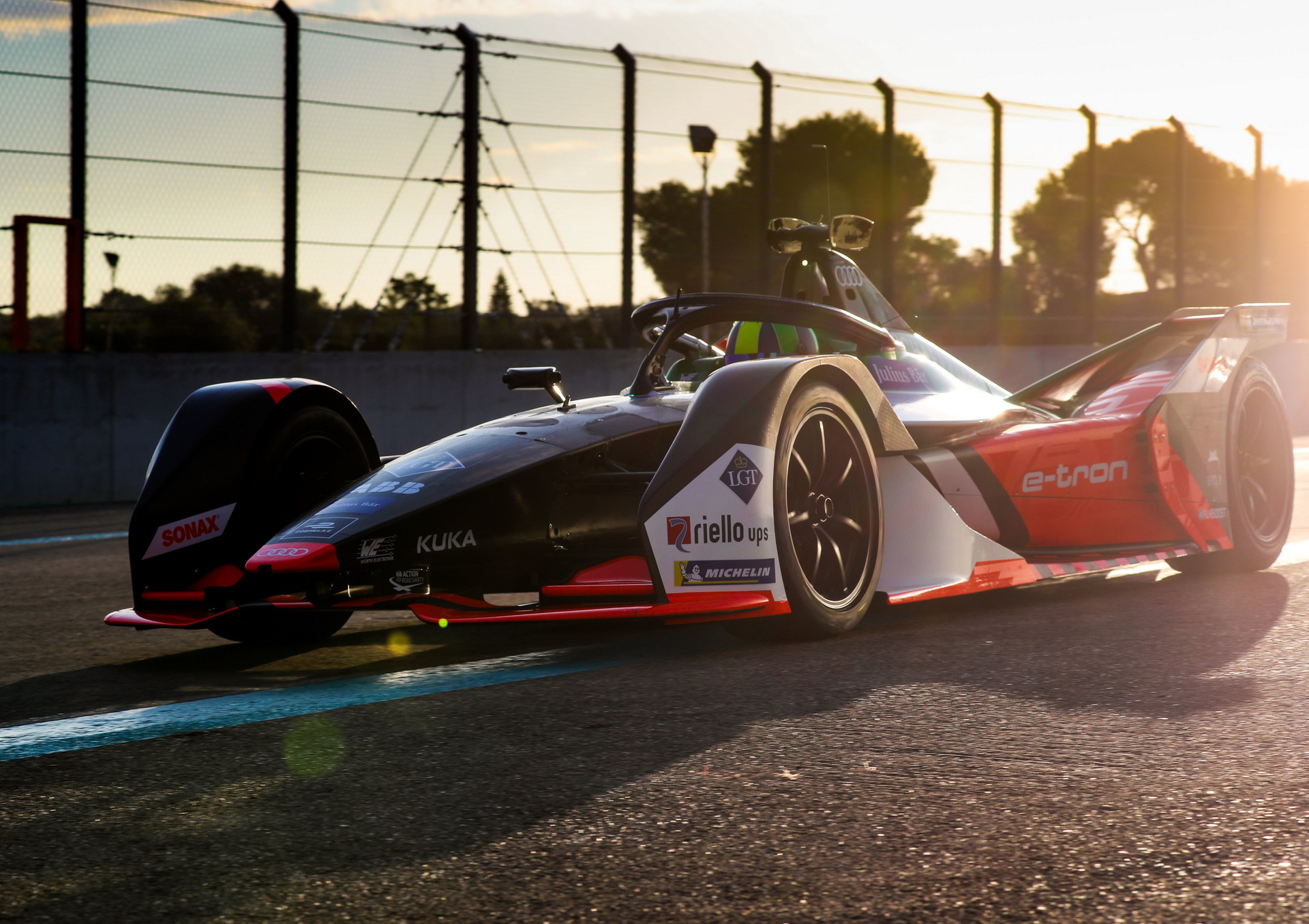
The FIA is working on a new regulation for Formula E, which will include smaller, lighter and more powerful cars, with an additional front motor
Formula E has become a testing ground for much of the technology we later see applied in the electric cars on the market. Over the last few years, racing cars have been developed through experimentation and, although 2020 will not bring major changes, from the 2022/23 season onwards they will have quite a few new features.
The Gen3 cars, which, as their name suggests, will be third-generation cars, will be lighter and more powerful, and will also have a rather striking difference. Until now, the powertrain of Formula E cars featured a single motor mounted at the rear. The new models will have an additional motor on the front axle.
However, this additional motor will not provide power; instead, it will be dedicated to regenerating energy, and consequently it will not be a motor that assists the rear one, so Formula E cars will remain rear-wheel drive.
The Formula E cars will be lighter and even somewhat smaller. The cars will now measure 5,000 mm in length and 1,700 mm in width. Weight has been reduced from 900 kg to 780 kg, including the drivers. This means there are 120 kg less. This weight reduction comes from the new battery these cars use.
This is important, because in the early seasons of Formula E drivers had to change cars midway through the race. From 2018 onwards, batteries already allowed the cars to finish a race without problems. From the ninth season, which will feature these new electric cars, ultra-fast battery charging will allow them to obtain the energy needed to continue racing without problems.
For the 2022/2023 season, two types of powertrain are being considered. The first will offer a power output of 300 kW, equivalent to 402 CV during the race and 350 kW, which is 470 CV during qualifying laps. The other scenario the FIA is considering for Formula E cars is a motor with race power limited to 250 kW (325 CV) and qualifying power limited to 300 kW.
In addition, the price of the cars will be capped at 380,000 euros, with the battery sold separately. The rules governing Formula E competition for the 2022/23 season will be ready in June 2020, so that is when we will learn all the details about this competition, whose technology is later reflected in production models.


 Peugeot E-208 GTi: a battery-powered toy that revives the spirit of the 1980s sports cars
 New Lexus ES: luxury grows and goes electric
 First contact with the Dacia Sandero Hybrid 155: power and efficiency from €19,890
Deja un comentario