How Tesla's Cybercab wireless charging works
 Javier Cantagalli
19 October 2024
3 min.
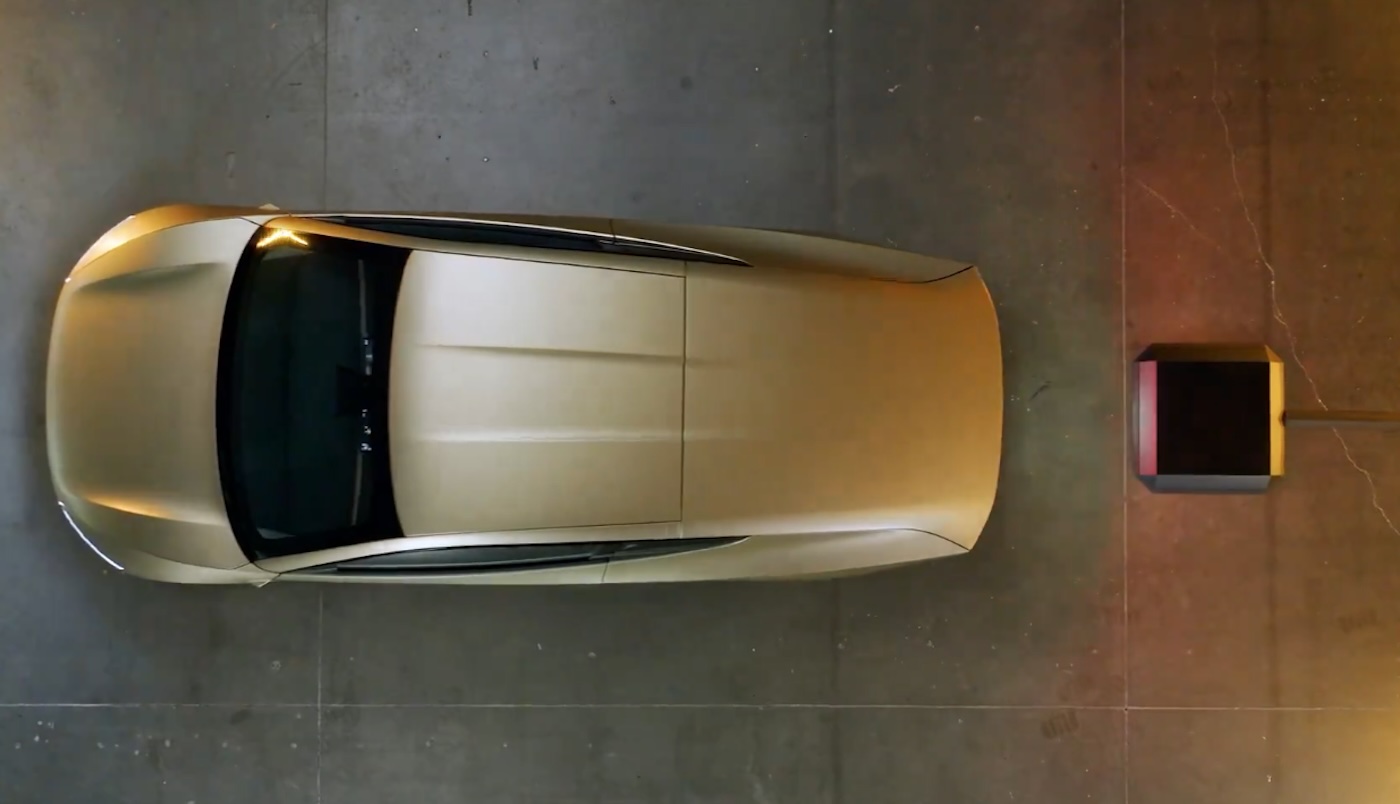
Tesla has chosen to implement wireless charging technology in its future robotaxi, so that recharging can also take place without human intervention.
One week ago, Tesla presented a first prototype of the highly anticipated robotaxi with which the company aims to revolutionise urban mobility in just a few years. The Cybercab, which is what this vehicle will be called, is certainly not a conventional vehicle; not only because it is autonomous, but also because of many other peculiarities.
In addition to having no pedals or steering wheel, seating two people, and gull-wing doors, the Cybercab is the first fully electric vehicle we know of that has no charging port. As it is an autonomous vehicle, Tesla wanted it to be able to charge itself without human intervention, and for this the best solution is none other than wireless charging technology.
A new video published this very Friday by Tesla itself now reveals some details of how the Cybercab’s wireless charging will work.
First of all, it stands out that, contrary to what we might expect, the Cybercab’s wireless charging system is located at the rear of the vehicle, so to recharge it will have to align with the charging pad on the ground by performing a reversing manoeuvre, as can be seen in the video.
Another point worth highlighting is the charging power supported, which seems set to reach 25 kW. This figure may seem modest compared with what an ultra-rapid DC charging point delivers when the cable is connected to any current electric model, but it is a notable achievement for wireless charging without any kind of cable.
Efficiency is key in a vehicle like this
The lower charging power achieved through wireless charging is also precisely the reason why Tesla has set itself the goal of making the Cybercab extraordinarily efficient. If energy consumption is very low, it is possible to equip the vehicle with a smaller-capacity battery pack to achieve the same range and, in this way, recharging will also take less time since the battery pack’s kWh figure is lower.
Regarding this last point, from the images shown in Tesla’s video it can be deduced that the battery pack’s capacity will probably not reach 40 kWh, when we recall, for example, that the entry-level Model 3’s battery pack has one of around 54 kWh.
In this regard, some reports suggest that the Cybercab’s energy efficiency could be around 11 kWh per 100 km travelled, so with a battery pack of just under 40 kWh capacity its range on each full charge should exceed 300 km. More than enough for the mainly urban use this vehicle is expected to have.

 Peugeot E-208 GTi: a battery-powered toy that revives the spirit of the 1980s sports cars
 New Lexus ES: luxury grows and goes electric
 First contact with the Dacia Sandero Hybrid 155: power and efficiency from €19,890
Deja un comentario