It is confirmed that the Kia Sportage will this same year get a diesel mild-hybrid engine
 David Lopez @espacionblanco
16 May 2018
2 min.
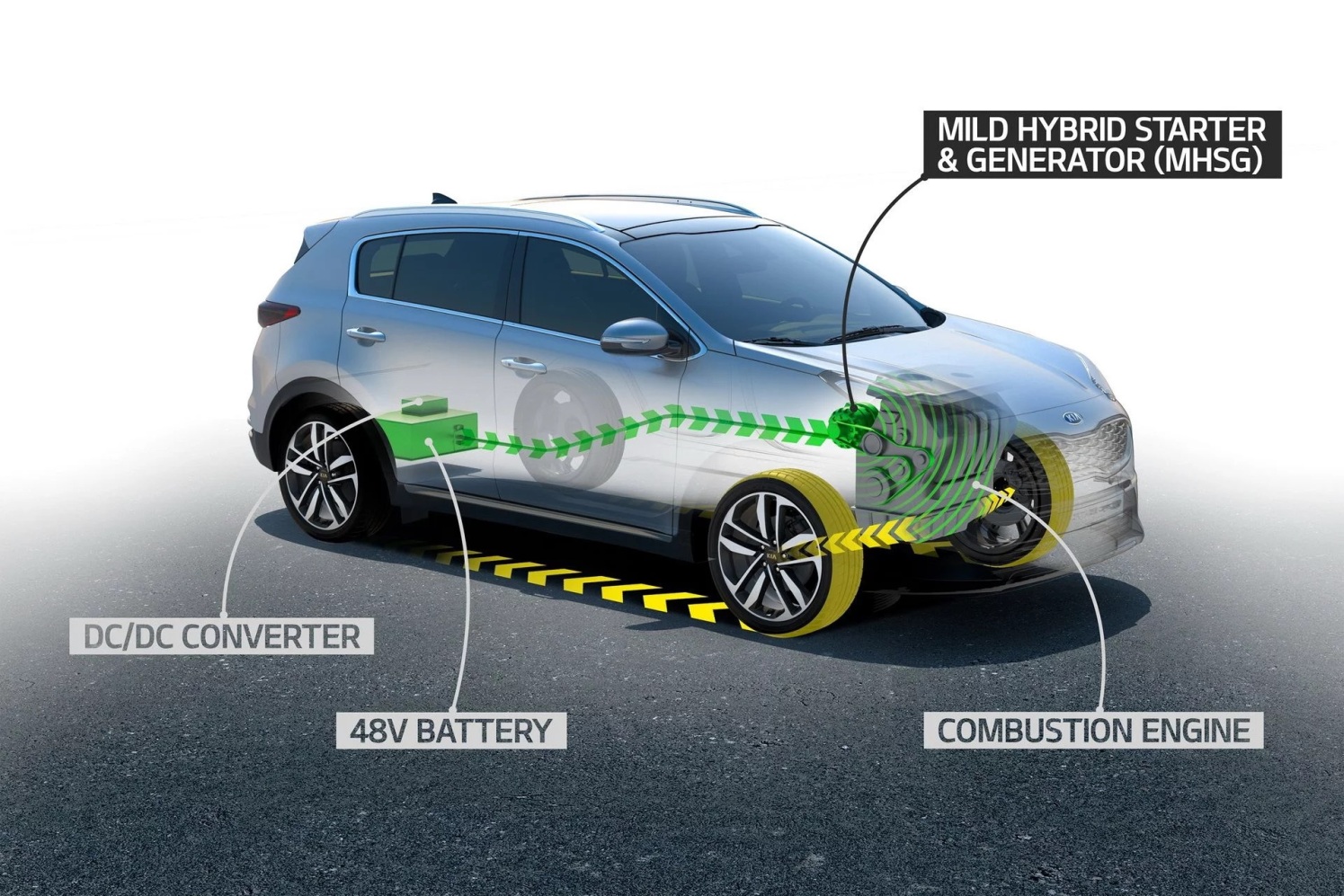
The Kia Sportage range will be expanded this year with the EcoDynamics+ version, which uses hybrid technology together with a diesel engine
Most brands, on their path toward electrifying their models, are opting to abandon diesel engines in favour of petrol ones to create new hybrid models, not to mention the increasingly tight legal restrictions gradually being imposed on diesel engines. Kia does not want to think like the rest; if it wants to do something different that sets it apart from the others, it is at this point that it believes diesel still has opportunities.
The Korean manufacturer believes diesel can still give more, and on its path toward electrifying its entire range, this engine still has something to say, forming part of its hybrid technology. So much so that the Kia Sportage will be the first to receive this technology, a flagship model for the brand; specifically, it will go on sale during the second half of this year, and then be implemented in the Ceed in early 2019.
This technology from Kia will be known commercially as EcoDynamics+, with which we will have a mild-hybrid Sportage that uses a starter generator known by the acronym MHSG, connected to the crankshaft of the diesel engine via a belt, providing an extra 10 kW of power (around 13 hp more). This engine will be combined with 48-volt lithium-ion batteries.
Its operation will be defined by two driving modes, called “Motor” and “Generator”. In the first, the MHSG starter generator delivers its power and torque to the diesel engine during acceleration phases, thereby reducing consumption and emissions; while in the second mode the system is responsible for recharging the batteries with the kinetic energy produced during braking and engine deceleration. It will also feature a new function of the Stop&Start system, since the diesel engine can be switched off during braking and deceleration phases, restarting via the MHSG as soon as the driver presses the accelerator.
According to the tests Kia has carried out with this technology, together with SCR technology for the catalytic converter, they have achieved a reduction in CO2 emissions of 4% using the new WLTP cycle as a reference, while in the NEDC cycle a reduction of 7% has been set. For this reason Kia does not intend to stop here, and has already announced that this technology will also reach its petrol engines, and will even be adapted to front-wheel, rear-wheel or all-wheel drive layouts.
Technical specifications of this car


 Peugeot E-208 GTi: a battery-powered toy that revives the spirit of the 1980s sports cars
 New Lexus ES: luxury grows and goes electric
 First contact with the Dacia Sandero Hybrid 155: power and efficiency from €19,890
Deja un comentario