Solar-panel roofs can now be mass-produced, but are they worth it?
 Victor Alós Yus @sepelaci
24 August 2026
2 min.
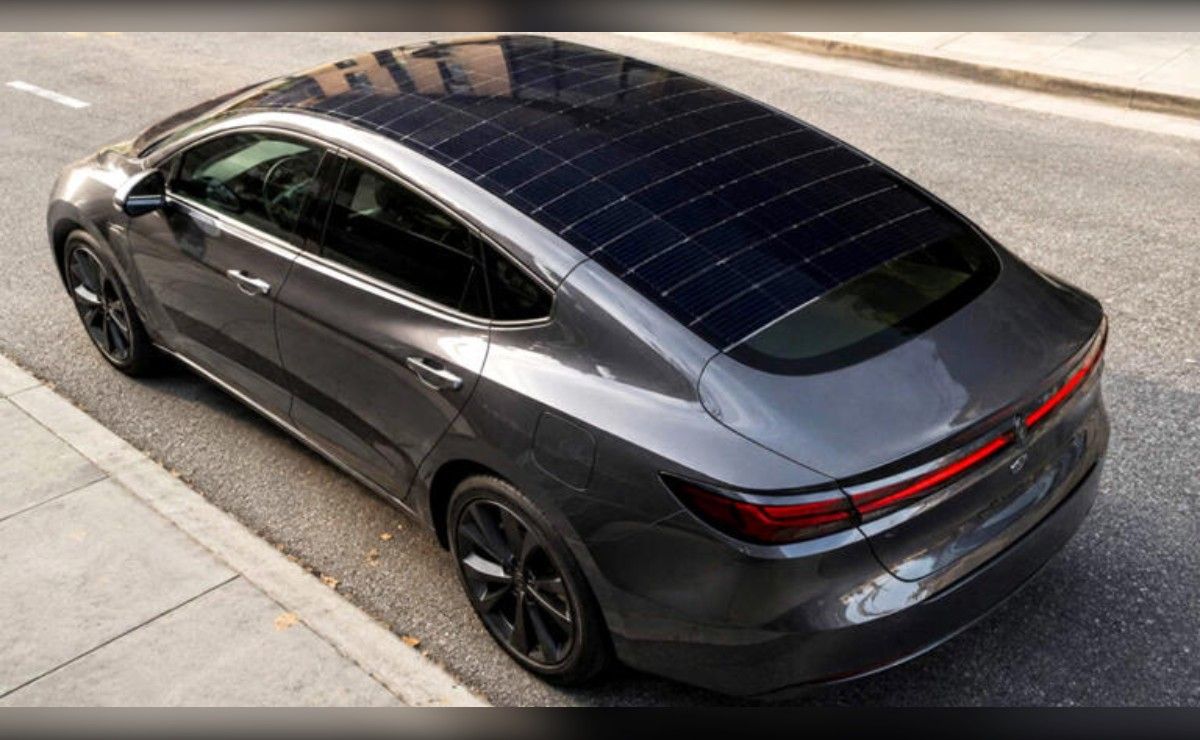
A Chinese automotive glass company has unveiled a glass roof with solar panels to increase range on sunny days, and it is designed for all brands.
Solar panels are a good solution for keeping electric cars charged, although their development and installation pose a challenge for the industry. At least, until now. A Chinese company has managed to develop a glass roof model made up of several solar panels that help charge the battery. With this patent, they can manufacture glass roofs with solar panels that all brands can use.
The company Fuyao Group has designed this solar glass roof. It is the largest glass supplier for brands such as Ford, General Motors, Subaru, Tesla and the VW Group. It is not a start-up presenting a novelty, but an established company that offers a technological solution to its customers.
To do so, it has added solar cells to the automotive glass itself and has revealed photos showing a car with the glass roof with solar cells covering the entire upper part of the vehicle and part of the rear window. This glass roof is manufactured at the company’s facilities in Yangxia and Hefei. These two plants can produce up to three million units a year. And throughout this year, this production may increase.
The important thing in this case is not the production capacity of these plants, but the interest that the different brands show in this technology. In principle, there is talk of the company collaborating with BYD to supply this solar roof as an option on the Han and Tang models, although there is still no confirmation of this.
Nissan, also at the front
The Chinese company is not alone in this advance, because Nissan also presented an Nissan Ariya with a roof of these characteristics. In this case, the solar panels provide energy to cover an additional 23 kilometres on a sunny charging day. If the car is moving, on an 80-kilometre journey in about two hours, it can produce enough energy to travel 3 kilometres further.
Although it seems little, it is worth remembering that average journeys are usually only a few kilometres a day, and this can help a lot in everyday use and make a visit to the charging station much less necessary.
Still, the energy contribution of this system is not enough to fill the battery, but rather to gain a few extra kilometres a day so you can get around comfortably without having to rush to the charger.


 Peugeot E-208 GTi: a battery-powered toy that revives the spirit of the 1980s sports cars
 New Lexus ES: luxury grows and goes electric
 First contact with the Dacia Sandero Hybrid 155: power and efficiency from €19,890
Deja un comentario