BMW Serie 3 Sedans Family Tests
BMW 318d GT road test (Engine, performance, handling and fuel consumption)
 Leo Montiel @lemonti
22 June 2014
4 min.
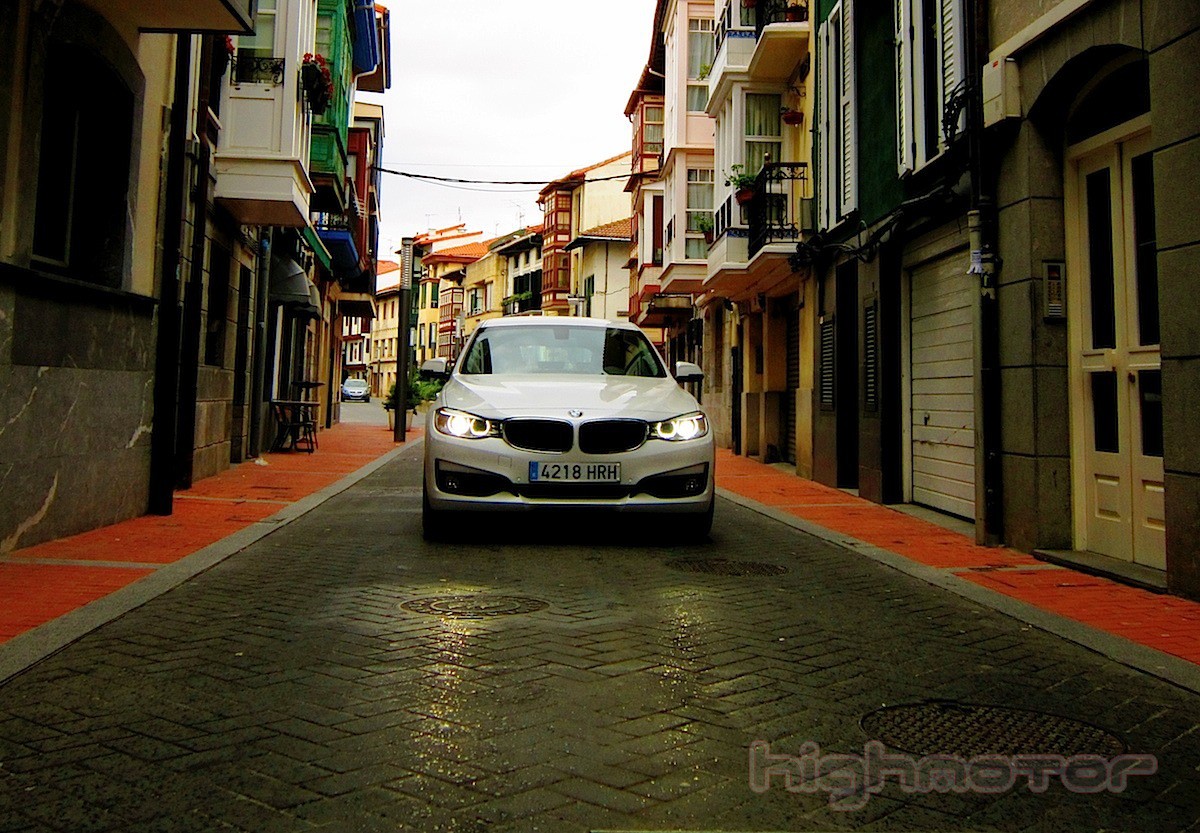
We take the wheel of the BMW 3 Series Gran Turismo in its 318d version with manual gearbox; during this test we enjoyed driving this 3 Series GT. In this first instalment we bring you details of its 143 CV engine, dynamics and efficiency. Let’s get started.
Engine and performance
The BMW 318d GT in our test features a 4-cylinder TwinPower Turbo engine with a displacement of 1,995 cc. This unit delivers 143 CV at 4,000 rpm, while the maximum torque of 320 Nm is available between 1,750 and 2,500 rpm. This suggests it will respond well from low to mid revs.
In terms of performance, with this engine the 3 Series GT is capable of accelerating from 0 to 100 km/h in 9.7 seconds, while the 80 to 120 km/h overtaking manoeuvre can be completed in around 8.2 seconds. Balanced performance for a vehicle focused on comfort; let’s see how it behaves.
Handling: on the road with the 318d Gran Turismo
When we get behind the wheel of the 3 Series GT, we notice it is very easy to find a comfortable driving position and the instrumentation is intuitive. The seating position is somewhat low, something that can be experienced in other BMW models too, and is generally very comfortable for enjoying the 318d GT.
When we turn the key we are greeted by an energetic start of the N47 engine, which makes itself felt inside the cabin more than we expected. We engage first gear and notice a clutch with a smooth, precise travel, just like the gearbox.
During the first gear changes, as we move up through the gears, we get the impression that the engine is slightly rough, which we can attribute to the cold start. As speed builds, the cabin becomes quieter and the engine smoother.
Acceleration is good and progressive. The combination of the 2-litre engine and the manual gearbox allows you to stretch the car and gain speed and power very progressively. It is very flexible at mid-range revs, delivering strength in a reliable way, which is important on motorways.
At medium-high speeds on inter-urban roads and motorways, the Series 3 GT’s ride comfort comes to the fore. The slightly soft suspension provides comfort and prevents us from feeling road irregularities too much. It is very pleasant to drive and, according to my travelling companions, also pleasant to ride in.
As we move away from the city and opt for a more active driving style, we notice the 318d maintains the engine speed very well. However, when we need a bit more power to, for example, overtake, we are left feeling that a few horses are missing, just a few.
After downshifting, a firm push on the accelerator gives a good recovery. Although on the roads heading north in Spain the gradients make it slightly challenging, and the 3 GT feels heavy in certain situations, it ultimately handles these situations.
In normal conditions, that is without needing to overtake or climbing hills, driving is pleasurable, precise and safe. These qualities can be extended to all BMW models, but focusing on the 318d GT in our test, it moved well and we greatly enjoyed being at the controls.
Then, in corners on secondary roads, the 3 GT surprised us with its precision. We understand the slight inertia is due to its larger dimensions compared with its saloon sibling. Despite this, the BMW 3 Series GT performed well throughout the test.
In every situation the 3 Series GT conveyed confidence in acceleration, cornering, steering and gear management. The only thing that is not ‘outstanding’ is the braking feel, which is not very communicative and has acceptable, let’s say, effectiveness. Good impressions overall.
Fuel consumption
The BMW 318d GT with manual gearbox has an official combined consumption of 4.5 l/100 km. The urban cycle is 5.5 litres, while the approved extra-urban figure is 4.0 litres of fuel per 100 kilometres travelled, figures closer to those of a compact than a saloon/estate.
Our route consisted of 60% motorway (Madrid-Bilbao-Madrid trip), 20% inter-urban roads and another 10% in the city. However, this 30% of combined driving was marked by the traffic jams typical of rush hour in Madrid.
The on-board computer showed consumption of 5.1 litres per 100 km near the end of our test, over 1,100 km. During the trip I’m describing, the figures rose to 5.6 l/100 km, which is still a fairly attractive number for a car of this type. Driving was never focused on achieving low consumption.
On urban journeys, ECO PRO mode is a great help in lowering average consumption. The indicator on the instrument cluster screen shows how many kilometres we gain when using this driving mode, which is very useful and graphic for those seeking efficiency.
In the second part of the 3 Series GT test we will give you details of its exterior design, cabin and load capacity.
Technical specifications of this car


 Peugeot E-208 GTi: a battery-powered toy that revives the spirit of the 1980s sports cars
 New Lexus ES: luxury grows and goes electric
 First contact with the Dacia Sandero Hybrid 155: power and efficiency from €19,890
Deja un comentario