GWM Ora 5 Electric Cars Hybrid Cars ECO Review SUV
GWM Ora 5: an SUV, three powertrains and one question: petrol, hybrid or electric? I'll tell you which one I think is best for each use
 Antonio Roncero @roncero_antonio
29 September 2026
10 min.
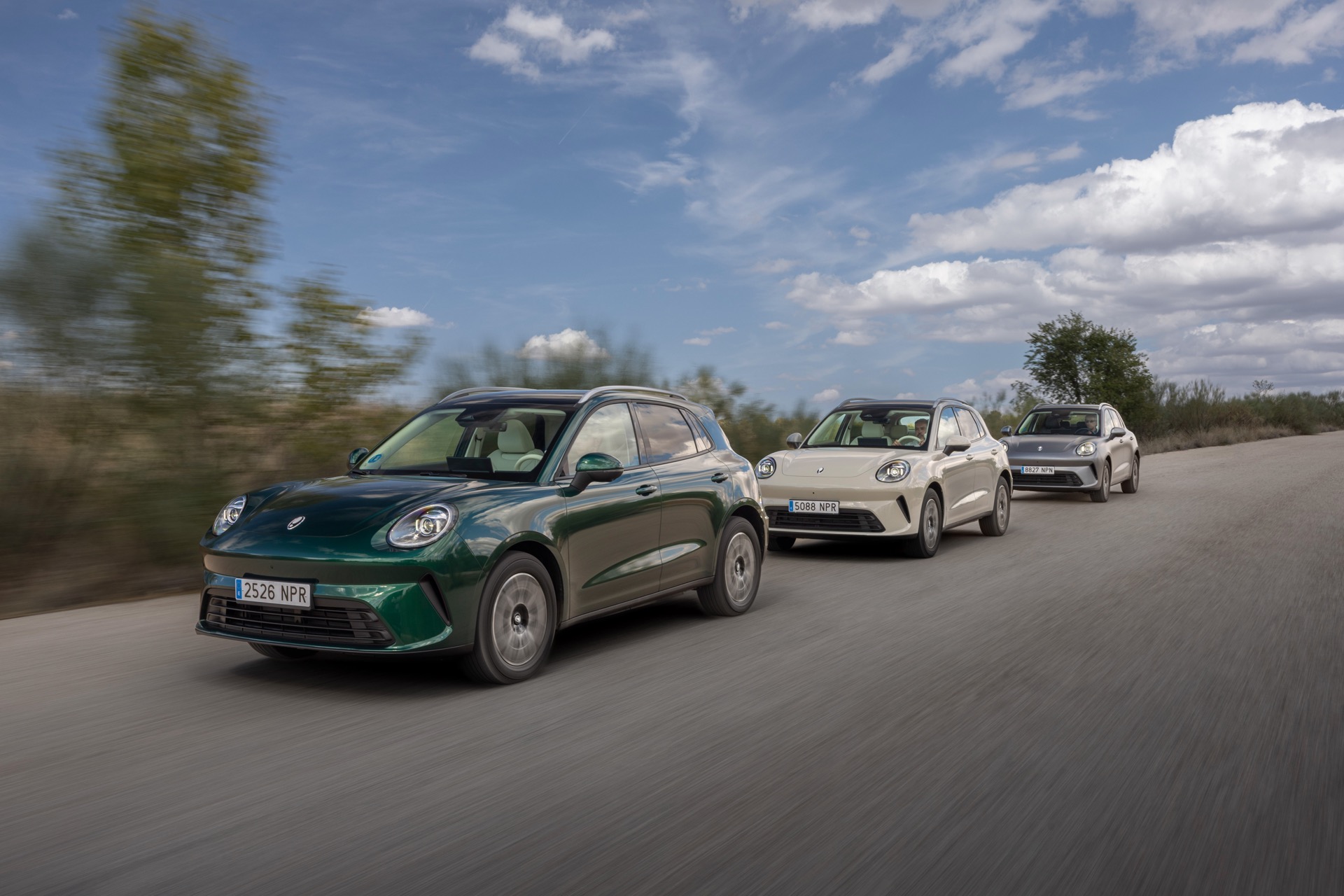
GWM’s first model in Spain, the Ora 5, is offered with a petrol, hybrid or 100% electric engine. I have driven it in all three versions and I’ll help you choose according to how you plan to use it.
Having a model offered with up to three different powertrains is becoming increasingly common. But doing so from launch, with a compact SUV that, with promotions and financing, starts below 20,000 euros including automatic gearbox as standard, is less so. That is the proposal of the new Ora 5, the model with which the Chinese brand GWM begins its commercial journey in Spain, and which we have just driven in its three variants: petrol, hybrid (HEV) and electric.
And since it is the same car with three different hearts, the interesting thing, beyond analysing how it drives, is knowing who each version makes sense for. Let’s get to it.
A compact SUV that stands out for its dynamic behaviour, design and good finish
The Ora 5 measures 4.47 metres long, 1.83 metres wide and 1.64 metres high, with a wheelbase of 2.72 metres. It sits in the compact SUV segment, with a size that is very manageable in the city and enough interior and boot space even for family use.
What the three versions share is a chassis with a setup that breaks away from what we usually find in most Chinese cars. It has a firm but not uncomfortable feel, almost sporty, and precise steering. Behind it there is specific work for Europe, with McPherson suspension at the front and multi-link at the rear, and tuning tests also carried out on Spanish roads.
Since this dynamic aspect is what surprised me most, it is worth not overlooking the good interior space and good perceived quality, although this is something more common in the new Chinese cars arriving on the market. The boot is adequate: 422 litres in the petrol and electric versions, and somewhat less, 390 litres, in the hybrid. With the rear seats folded down, capacity rises to 1,120 litres (1,088 in the HEV).
Regardless of the engine, another area where the Ora 5 excels is its complete standard equipment, with items such as a 14.6-inch multimedia screen, 7 airbags, more than 20 ADAS, full LED headlights, rain and light sensor, heated electric seats and keyless entry from the Explore versions. For around 2,500 euros, the Advance trim adds, among other things, an electric tailgate, electrically folding mirrors, panoramic roof, synthetic leather upholstery, ambient lighting system and a 9-speaker audio system.
Ora 5 1.5T petrol: the lowest price… and the highest consumption
The petrol version is the entry point to the Ora 5 range, and the option for those who want the lowest price and don’t need the ECO label. It fits a 1.5 turbo engine producing 118 kW (160 CV) and 270 Nm, and a seven-speed dual-clutch automatic gearbox as standard. The official performance figures are 8.9 seconds from 0 to 100 km/h and a top speed of 190 km/h, with a homologated consumption of 6.9 l/100 km and 158 g/km of CO₂.
The combination of the 1.5T engine with the automatic gearbox works really well both for relaxed driving and if you want to test the chassis. But you have to keep your feet on the ground regarding real consumption. In daily use, with short trips or urban driving, expect to be close to 9 l/100 km. On the open road, in Eco mode and with smooth driving, it drops to 7-7.5 litres. Nothing dramatic, but above the homologated figures, and well above what the hybrid uses, as we will see shortly.
That said, it is a pleasant engine to use and has technology uncommon in this category, such as the variable geometry turbo. If you do few kilometres and prioritise the purchase price, it may make sense.
Ora 5 1.5T HEV: the version I would choose
Without a doubt, the hybrid more than makes up for the premium, even if you didn’t need the ECO label, which, incidentally, is never a bad thing. It combines a 110 kW (150 CV) petrol engine with a 140 kW (190 CV) electric motor, for a combined output of 223 CV and 476 Nm of torque. The transmission is a two-speed DHT and the battery is 1.09 kWh. It accelerates from 0 to 100 km/h in 7.7 seconds and reaches 185 km/h. The homologated consumption is 5.1 l/100 km, with 117 g/km of CO₂.
In practice, the HEV is much more enjoyable to drive, with more instant response, and above all it uses considerably less in any circumstance: roughly 2.5 to 3 litres less than the petrol. For 2,000 euros more in list price you get more power, better performance, more pleasant driving and a much more favourable consumption.
An interesting detail: the petrol engine is not the same as the one in the combustion version. Here it is a 1.5 turbo with Miller cycle and fixed-geometry turbo, a more efficient solution better suited to operating in a hybrid system. Another difference worth highlighting compared with the petrol is that the HEV loses a little boot space, but its 390 litres remain a reasonable figure.
Ora 5 EV: only if you are sure you want to switch to electric mobility
When recommending the electric version you have to be more cautious, especially if it wasn’t in your plans. The limitations of this type of vehicle when travelling still apply. You need to be very clear that you want to make the leap and that your use fits: lots of city driving, the ability to charge at home or at work, and occasional trips that are well planned. If that’s the case, it is a highly recommended option compared with its rivals in size and price.
It fits a 150 kW (204 CV) electric motor producing 260 Nm, with acceleration from 0 to 100 km/h in 7.7 seconds and a top speed limited to 170 km/h. The battery is 58.3 kWh of LFP chemistry, and it homologates a range of 435 km WLTP combined (603 km in the urban cycle) with a consumption of 15.5 kWh/100 km. The first contact makes it clear that it is a very pleasant car to drive and also efficient: in mixed use, getting close to the homologated consumption is not difficult.
As for charging, it accepts up to 120 kW DC, allowing you to go from 10 to 80% in about 30 minutes (30 to 80% in 20). On AC it charges up to 11 kW, so a full charge from zero takes 6 hours and 36 minutes. And as is common in electric cars of Chinese origin, it includes V2L with up to 6 kW, to power external devices from the battery.
GWM Ora 5 prices: without aid, with promotion and financed
Comparing equivalent trim versions of the Ora 5, and without promotions or discounts, the Explore trim starts at 26,950 euros in petrol, 28,950 in hybrid and 34,950 in electric. In the Advance, the figures are 29,500, 31,500 and 37,500 euros respectively. But with the brand’s promotion, the starting prices are these:
- Ora 5 1.5T petrol: RRP from 26,950 euros; with cash promotion, from 22,450 euros; and financed, from 19,950 euros.
- Ora 5 1.5T HEV: RRP from 28,950 euros; cash, from 24,350 euros; and financed, from 22,350 euros.
- Ora 5 EV: RRP from 34,950 euros; cash, from 25,950 euros; and financed, from 23,950 euros.
There are several points to consider about these figures. The first is that the petrol Ora 5, with financing, is one of the most affordable SUVs of this size on the market, and even more so given that it comes with an automatic gearbox as standard. The second is that the difference between petrol and hybrid is 2,000 euros in list price (1,900 cash and 2,400 financed), an extra cost that, as I said, is worth it even without calculating the kilometres you would need to amortise it purely through lower consumption.
And the third is that the gap between the hybrid and the electric, which in list price is 6,000 euros, shrinks to just 1,600 euros with the promotions, once the Plan Auto+ comes into play. A temptation for anyone already considering the switch to electric.
Conclusion: which Ora 5 version to choose?
My recommendation is as follows:
- If you’re looking for the lowest price, do few kilometres and don’t need the ECO label, the petrol is a very logical option. Just bear in mind that its real consumption will be well above the homologated figure.
- If you want the best balance for almost any use, I’d go for the hybrid. More powerful, more pleasant, more ECO and with a much lower consumption, for a very reasonable premium.
- If you can charge comfortably and are clear that you want to switch to electric, the EV is a very competitive alternative in size and price, especially with the current promotions. But if you travel frequently, plan your journeys well.
And in all three cases you get the best of the Ora 5: a very well-tuned chassis, a spacious and well-finished interior, and a driving feel that surprises in a car that, with the current promotions, starts at less than 20,000 euros.
What other alternatives does the market offer me?
So far, everything regarding the Ora 5. But… what other options are there on the market at an equivalent or lower price? Let’s take a look.
If you’re interested in a petrol SUV: Jaecoo 5
At the Ora 5’s price there isn’t much to choose from, but you have a C3 Aircross, which also has an ECO label. There is also a Livan X6, the closest in size, interior space and price, although below in quality and dynamic behaviour. The best alternatives come from the Chery group: the Ebro S700, the Jaecoo 5 and the Omoda 5. Each in its own style: the Ebro more family-oriented, the Omoda more striking in design and the Jaecoo somewhere in between. All three share a 147 CV petrol engine that gets the job done, although it is somewhat “thirsty”.
If you’re interested in a hybrid: Ebro S700 HEV
Among SUVs around 4.5 metres with HEV powertrains more affordable than the Ora 5 we find the Citroën C3 Hybrid and the Opel Frontera Hybrid, less powerful and with less standard equipment. The best alternative on price is the MG ZS Hybrid+, currently advertised from 19,840 euros with discounts, even below the petrol Ora 5. With a starting price similar to or not far from the 29,000 euros of the Ora 5 HEV -without discounts-, my choice would be the Ebro S700 HEV, although I would also consider the Kia Niro HEV or the Toyota C-HR Hybrid 140, which are also around 30,000 euros without applying discounts.
If you’re interested in electric: Leapmotor B10
With an almost identical exterior size, the Leapmotor B10 Life Pro fits a 218 CV motor and a 56.2 kWh battery that homologates 361 km WLTP range, with a 430-litre boot. The announced price is slightly lower than the Ora 5 EV, both cash and financed. Other alternatives would be the Jaecoo 5 EV and the Skoda Elroq 60, both more expensive.
GWM Ora 5 – Image gallery


 Kia offers an electric range of 10 models, 50 versions and 400 possible combinations
 The seven finalists for the 2027 European Car of the Year (COTY) are exclusively electric
 Peugeot E-208 GTi: a battery-powered toy that revives the spirit of the 1980s sports cars
Deja un comentario