Mokka Opel Hybrid Cars Tests SUV
Opel Mokka 2025, always up to date. Slight aesthetic changes and new hybrid engine
 Sandra Zorrilla
26 February 2025
3 min.
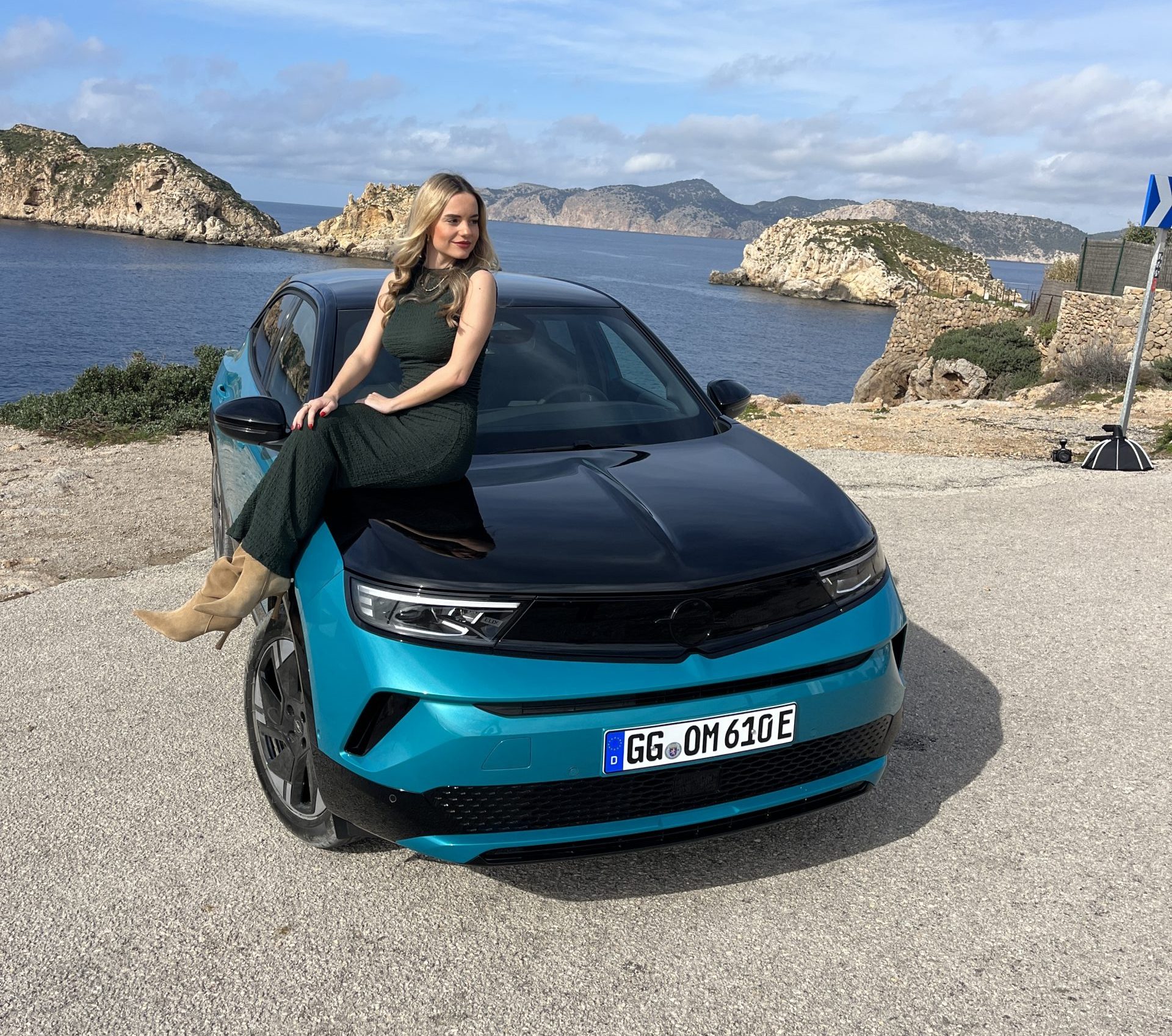
This segment to which the Mokka belongs has a buyer profile that interests all brands, as they tend to be young people who look for bold designs and leave traditional combustion behind. This Opel has always been ahead of its time when it comes to design. Who doesn’t remember the eye-catching matcha green?
Both inside and out, it is futuristic. New flat-bottomed steering wheel, flattened at the top and bottom, with a more modern look and physical buttons to activate adaptive cruise control or adjust the volume. It features a 10-inch touchscreen as standard (previously 7” with 10” as an option) and now integrates ChatGPT, along with voice recognition connected to the navigation system. In short, convenient features that keep your attention on the road. The 180-degree rear-view camera also stands out.
As a drawback, the finish of the centre console where the gear selector sits is a matt grey piece, and I think in the long run it will scratch more easily than a black one, for example. If they chose to remove the chrome exterior trim, they should also dispense with these colours inside.
On the exterior, there is a new badge and new lighting, so it does not go unnoticed. Nor will its two new colours: tropical green and hummingbird blue.
The real novelty: a new engine
Beyond all the cosmetic touch-ups, a new engine joins the existing range so it does not fall behind its rivals. Alongside the pure petrol and the 100% electric versions, there is now a hybrid. This 48V mild hybrid has a total output of 136 hp and 230 Nm of torque, thanks to a 28 hp (21 kW) electric motor. As a result, it carries the ECO label from the DGT, while the other alternatives carry the C and 0 labels respectively.
The Mokka features several driving modes to be more efficient in each situation, and the insulation from outside noise is good. As an anecdote, on my route through Mallorca with this car I found that it is more of a crossover than other cars sold as such, as I ended up on a dirt track of gravel and potholes climbing up the mountain. It overcame everything without complaint or any problem.
Its homologated consumption is 4.9 litres per 100 km, and real-world consumption is obviously somewhat higher, but it does not exceed this by more than 1 litre. An important point to bear in mind, and it comes with a 6-speed automatic gearbox.
Driving is quite smooth and without jerks, and I say this because hybrid cars tend to suffer from them…
The boot of this version is 350 litres, in line with its segment, although its rival and sibling within the group, the Alfa Romeo Junior, offers 400 litres of capacity.
Prices of all versions
The manual petrol version starts at 24,350 euros, followed by the 136 hp hybrid which costs 26,850 euros. The list is closed by the electric version, which rises to 32,100 euros.


 Peugeot E-208 GTi: a battery-powered toy that revives the spirit of the 1980s sports cars
 New Lexus ES: luxury grows and goes electric
 First contact with the Dacia Sandero Hybrid 155: power and efficiency from €19,890
Deja un comentario