Clase V Ford Mercedes Multivan Opel Peugeot Tourneo Traveller Vito Volkswagen Zafira Coches GLP/GNC Minivans Tests Rankings
Ranking 2026: the 5 eight-seater vehicles with the lowest real-world consumption for VTC fleets in the Spanish market
 Iván Navarro
8 November 2026
6 min.
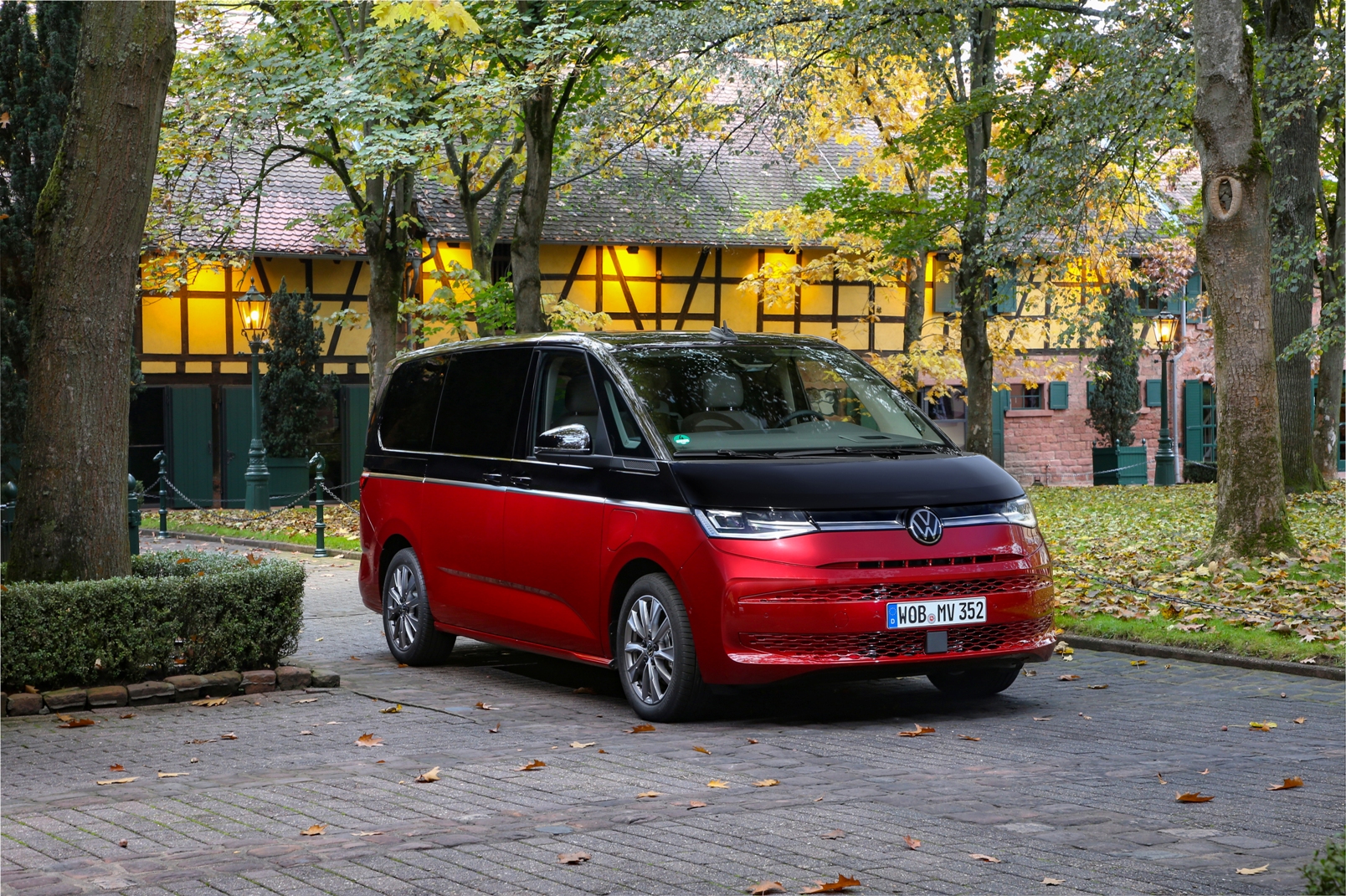
We analyse the real-world consumption versus WLTP figures of the five eight-seat MPVs approved in Spain and most used by VTC fleets. A ranking designed for fleet managers who need a tight TCO and a favourable DGT label.
A VTC fleet manager isn’t buying a car, they’re buying a spreadsheet. Litres per 100 km, maintenance, residual value at four years, DGT label to enter Madrid Central or Barcelona’s ZBE without restrictions. In that exercise, the figure that really separates a profitable vehicle from one that bleeds margin is not the brochure WLTP, it’s the real consumption after 40,000 km of urban trips with the air conditioning on and four suitcases in the boot. With that premise we’ve built this ranking: five eight-seat MPVs on sale today at Spanish dealerships, ordered by what they actually consume when working.
Why real consumption matters more than WLTP in a VTC fleet
The WLTP cycle measures under controlled conditions that have little to do with an airport-to-centre run through traffic on the M-30. In our tests, the average gap between the homologated figure and consumption in VTC service is around 12-18%, larger the heavier the vehicle. For a fleet of 15 or 20 units covering 60,000 km a year, that difference translates into thousands of euros in fuel that were not in the original budget. That is why the criterion for this ranking is verified consumption, not the spec sheet.
Highmotor ranking methodology
We have cross-referenced official WLTP data with our own measurements on mixed urban-interurban routes, with four occupants and a standard Mediterranean climate. The DGT label, the power available so that acceleration on motorways is not penalised, and the entry price in a configuration suitable for VTC (eight homologated seats, commercial trim) also weigh in. The order is not simply “the one that burns the fewest litres”: it is the one that offers the best balance between real consumption and total cost of ownership.
1. Volkswagen Multivan — from €68,200
The Multivan in its T7 generation is, in our view, the one that best resolves the dilemma between label and range. The eHybrid version combines a petrol engine with a battery that allows more than 90 km in electric mode, enough to qualify for the CERO label on much of a VTC’s urban route. The more conventional TDI variant remains the choice for those who do more motorway than city driving.
| Version | Power (kW) | Power (CV) | Consumption | Label | Fuel |
|---|---|---|---|---|---|
| Multivan eHybrid | 180 | 245 | 0.8-2.8 l/100 km WLTP (≈7.5-8.5 l/100 km with depleted battery) | CERO | PHEV |
| Multivan TDI 150 CV | 110 | 150 | 6.8 l/100 km real | C | Diesel |
2. Ford Tourneo Custom — from €53,500
The Tourneo Custom wins over with mechanical robustness and a 2.0 EcoBlue that, in our tests, stays stable even with the vehicle at full load. It is not the quietest in the group, admittedly, but its real consumption is among the most contained in the diesel range.
| Power (kW) | Power (CV) | Consumption | Label | Fuel |
|---|---|---|---|---|
| 110 | 150 | 6.9 l/100 km real | C | Diesel |
3. Mercedes Vito Tourer — from €51,400
The Vito Tourer offers the most premium finish in the line-up, something that shows in the end customer’s perception, no minor argument in high-end VTC. Consumption, however, is not its strong point: the 163 CV 2.0 CDI performs somewhat worse than its direct rivals when sustained power is demanded.
| Power (kW) | Power (CV) | Consumption | Label | Fuel |
|---|---|---|---|---|
| 120 | 163 | 7.6 l/100 km real | C | Diesel |
4. Peugeot Traveller — from €46,000
The Traveller is, in practice, one of the most balanced in terms of entry cost. Its 150 CV BlueHDi offers competitive real consumption and maintains an access price that makes it easier to amortise the fleet sooner.
| Power (kW) | Power (CV) | Consumption | Label | Fuel |
|---|---|---|---|---|
| 110 | 150 | 6.7 l/100 km real | C | Diesel |
5. Opel Zafira Life — from €47,900
The Zafira Life closes the ranking, practically a mechanical cousin of the Traveller, with which it shares platform and engines. Its entry price is the lowest in the group, a point in its favour when TCO outweighs every other criterion.
| Power (kW) | Power (CV) | Consumption | Label | Fuel |
|---|---|---|---|---|
| 132 | 180 | 6.9 l/100 km real | C | Diesel |
Comparative summary table of the ranking
| Model | From | Real consumption | Label | Fuel | Score (1-10) |
|---|---|---|---|---|---|
| Volkswagen Multivan eHybrid | €68,200 | ≈7.5-8.5 l/100 km (depleted battery) | CERO | PHEV | 9.2 |
| Peugeot Traveller | €46,000 | 6.7 l/100 km | C | Diesel | 8.4 |
| Ford Tourneo Custom | €53,500 | 6.9 l/100 km | C | Diesel | 8.1 |
| Opel Zafira Life | €47,900 | 6.9 l/100 km | C | Diesel | 8.0 |
| Mercedes Vito Tourer | €51,400 | 7.6 l/100 km | C | Diesel | 7.2 |
TCO and DGT label: what really matters to a VTC fleet manager
The TCO of a VTC vehicle is not measured in litres alone. Depreciation, fleet insurance, scheduled servicing and access to low-emission zones weigh as much as or more than point consumption. Here the Multivan eHybrid has a clear advantage: the CERO label opens doors that its diesel rivals — all with a C label — face surcharges or direct restrictions in certain cities. That said, it is not a panacea either: the higher entry price means the numbers must be run carefully before electrifying the whole fleet at once.
Plan Auto+ and taxation for VTC fleets
For those considering electrified units, it is worth reviewing the current incentives under the Plan Auto+, which provides support for purchasing vehicles with ECO and CERO labels, with amounts varying by autonomous community and the budget available in each call. The exact amount changes frequently, so the prudent course is to check the official website before closing the fleet order, rather than relying on figures that may have expired.
How to choose the right eight-seater for your VTC fleet
If use is mostly urban and the priority is entering the centre of major cities without restrictions, the Multivan eHybrid justifies its higher price. If the profile is more interurban trips and airports, the Traveller or the Zafira Life offer the best cost per kilometre. We have already analysed in detail the Volkswagen Multivan against the Mercedes-Benz V-Class for private transfers, a comparison that complements this ranking, which is focused on professional use. And if the fleet combines different customer profiles, it is also worth reviewing how to choose a large MPV or SUV for carrying passengers on long journeys, where noise levels and rear climate control matter as much as consumption.
Frequently asked questions
Which eight-seater consumes least for VTC in Spain?
According to our measurements, the Volkswagen Multivan eHybrid burns the least fossil fuel in real use thanks to its electric range of over 90 km, followed by the Peugeot Traveller among the purely diesel options.
Does the PHEV pay off against diesel for a high-mileage VTC fleet?
It depends on the usage profile. On short, repeated urban trips, the PHEV reduces consumption and improves the label. On long daily interurban distances, a well-managed diesel remains more predictable in cost.
What DGT label does a VTC need to drive in Madrid and Barcelona without restrictions?
The CERO label guarantees access without limitations in any current ZBE. The C label, the most common on the diesels in this ranking, allows circulation in most cases except during high-pollution episodes.
Are there public grants to renew a VTC fleet with these models?
Yes, the Plan Auto+ provides incentives for vehicles with ECO and CERO labels, with amounts varying by autonomous community. It is advisable to check the current call before formalising the purchase.
Technical specifications of the cars in this article


 Kia offers an electric range of 10 models, 50 versions and 400 possible combinations
 The seven finalists for the 2027 European Car of the Year (COTY) are exclusively electric
 Peugeot E-208 GTi: a battery-powered toy that revives the spirit of the 1980s sports cars
Deja un comentario