308 408 Peugeot Hybrid Cars Compact Tests SUV
Test drive of the Peugeot 308 and 408 Hybrid; the entry-level versions now feature hybrid technology from €26,900
 Óscar Sanz
19 November 2024
5 min.
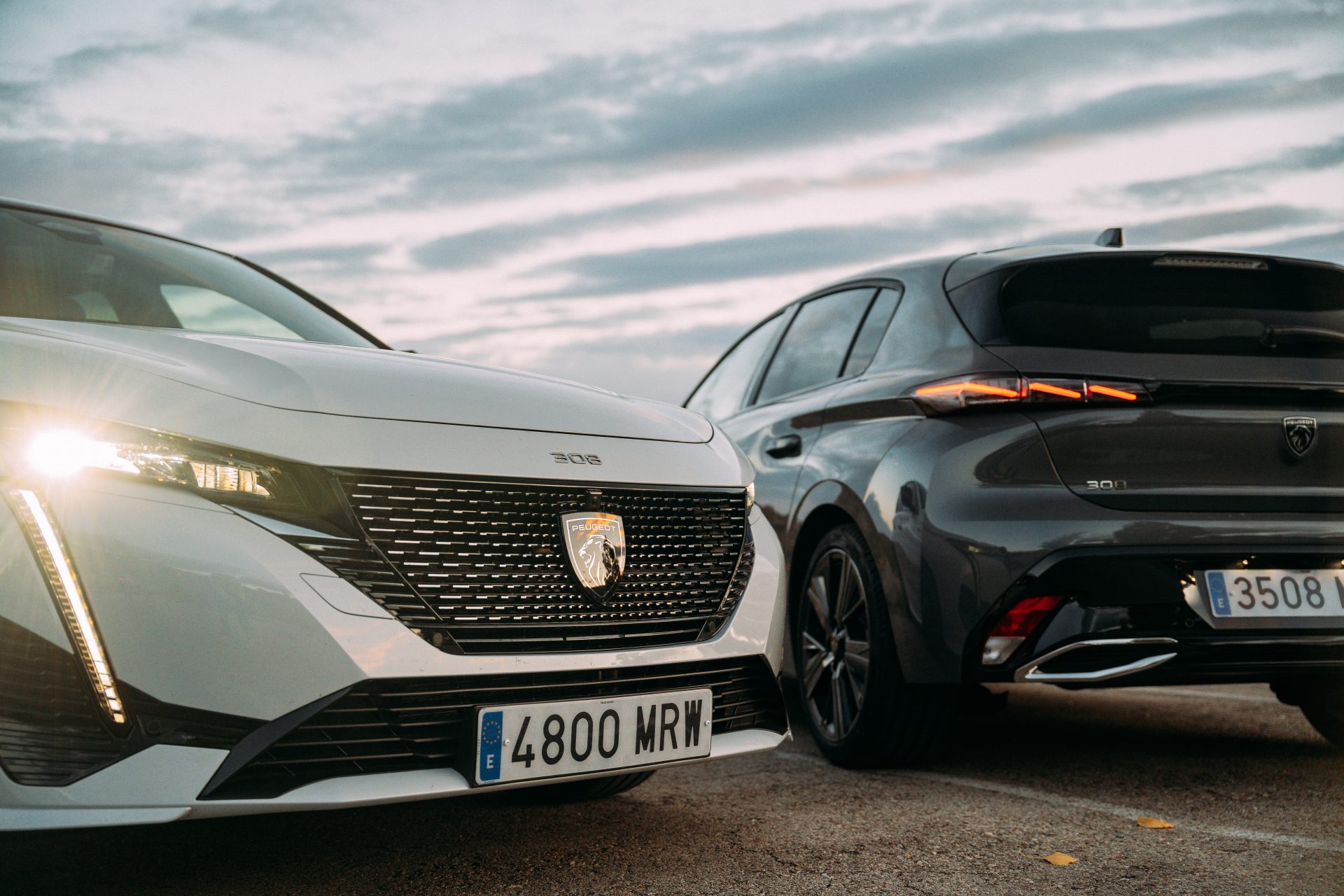
Peugeot is committed to sustainability with the new 308 and 408, lightweight hybrid models with an ECO label, plug-in options and electric versions with up to 400 km of range
Peugeot takes a step forward and strengthens its compact and SUV range with the updates to the 308 and 408 models for 2024, along with the introduction of its hybrid technology. This new Hybrid powertrain, which is already available, delivers 136 CV of power and is paired with a six-speed automatic dual-clutch gearbox. Thanks to automatic battery recharging during deceleration, it can drive in ‘zero emissions’ mode for 50% of urban journeys. We had the opportunity to test both models with their new powertrain, and in this article I come to tell you my impressions and their prices, with a brief summary of their features.
Peugeot 308 MHEV
The new Peugeot 308 range covers a variety of powertrains. With the introduction of the MHEV engines, the petrol and diesel versions are no longer available. The 48-volt mild hybrid (MHEV) version combines a 136 CV petrol engine with an e-DCS6 automatic transmission. This system carries the DGT ECO label and promises reduced consumption thanks to energy optimisation in urban driving.
On the other hand, the plug-in hybrid versions, available in 180 and 225 CV, offer up to 60 km of electric range, ideal for those who want to maximise efficiency without giving up performance. The fully electric e-308 completes the offer with a 400 km range and 156 CV, standing out for its energy efficiency and zero emissions.
In terms of design, the 308 keeps its sporty elegance with dynamic lines and a driver-focused interior. The digital instrumentation and the i-Connect Advanced infotainment system reinforce its technological commitment, while its spacious boot (from 412 litres) makes it practical for everyday use.
Peugeot 408 MHEV
The Peugeot 408 combines the best of an SUV and a saloon in a fastback design that stands out for its aerodynamics and modernity. This model features a 136 CV MHEV version, which reduces fuel consumption by 20% compared with traditional powertrains, while maintaining balanced performance for urban and long journeys.
The interior of the 408 stands out for its spaciousness and comfort, with a boot of up to 536 litres, ideal for family trips or getaways. It also includes the latest driver assistance technologies, such as night vision and adaptive cruise control, underlining its focus on safety and comfort.
Behind the wheel of the hybrid versions
As many of you already know, these units use the 1.2 PureTech engine, but as mild-hybrid versions they benefit from an integrated timing chain instead of a belt as in earlier PureTech engines. Since they now only come in electrified versions, we can forget about the famous timing belt problem. This powertrain is found in all of Stellantis‘s hybrid engines, which we were able to test, for example, in the Opel Mokka.
The truth is that these powertrains are quite recommended for urban journeys since they keep consumption very low, but you will pay for it when you hit the motorway, as consumption rises noticeably, reaching up to 6 litres per 100 kilometres. We drove urban, winding and mountain-pass roads with these two models, and the results were 6.3 litres for the 408 and 5.8 litres for the 308. Its self-charging hybrid technology works very well in town and lets it run longer in electric mode than its main rivals, thanks to a small 1 kWh battery.
I found the instrument cluster incredible. It has very good image quality, is very fluid and has some 3D graphics that highlight its quality, although these graphics are not available on the 408. If there is any drawback to the 308, it is the space. At my height of 1.90 m, the driver’s seat feels somewhat cramped, so to speak; the leg position is not stretched and the shins tend to get overloaded. It is also worth noting that on the 308 the steering wheel has little reach adjustment, and the only way to see the whole instrument cluster without issue is to lower it to the limit, a detail that, however, cannot be said of the 408.
If there is one thing Peugeot does well, it is its chassis, and this test confirmed it. Both models handle any road condition perfectly, tackling tight bends and roundabouts with barely any body roll, something that is particularly valued in the GT versions. I liked the steering quite a lot; it is firm by today’s standards, but it could be sharpened a little more in Sport mode, as could the throttle response. Even so, with the new Hybrid powertrain there is a clear improvement in throttle response, although on occasion it still suffers a loss of power when the combustion engine kicks in.
Competitive prices
The new 2024 Peugeot 308 and 408 range comes with a varied set of options that cover every need. For the 308, prices start from €30,800 for the mild hybrid model 308 5p Style HYBRID 136 eDCS6, up to €40,030 for the 308 5p Allure PLUG-IN HYBRID 180 e-EAT8. On the other hand, the fully electric version E-308 5p Allure Electric 156 (115 kW) has a starting price of €39,750.
As for the 408, the price range is equally competitive. The mild hybrid variant 408 GT HYBRID 136 eDCS6 starts from €40,050, while the plug-in options such as the 408 GT PLUG-IN HYBRID 225 e-EAT8 rise to €48,750. In addition, the electric version New E-408 Allure Electric 210 (157 kW) is available from €45,860, reinforcing Peugeot’s commitment to sustainable mobility.
Technical specifications of the cars in this article


 Kia offers an electric range of 10 models, 50 versions and 400 possible combinations
 The seven finalists for the 2027 European Car of the Year (COTY) are exclusively electric
 Peugeot E-208 GTi: a battery-powered toy that revives the spirit of the 1980s sports cars
Deja un comentario