The BMW i5 already comes standard in the United States with a NACS charging port
 Javier Cantagalli
31 March 2026
2 min.
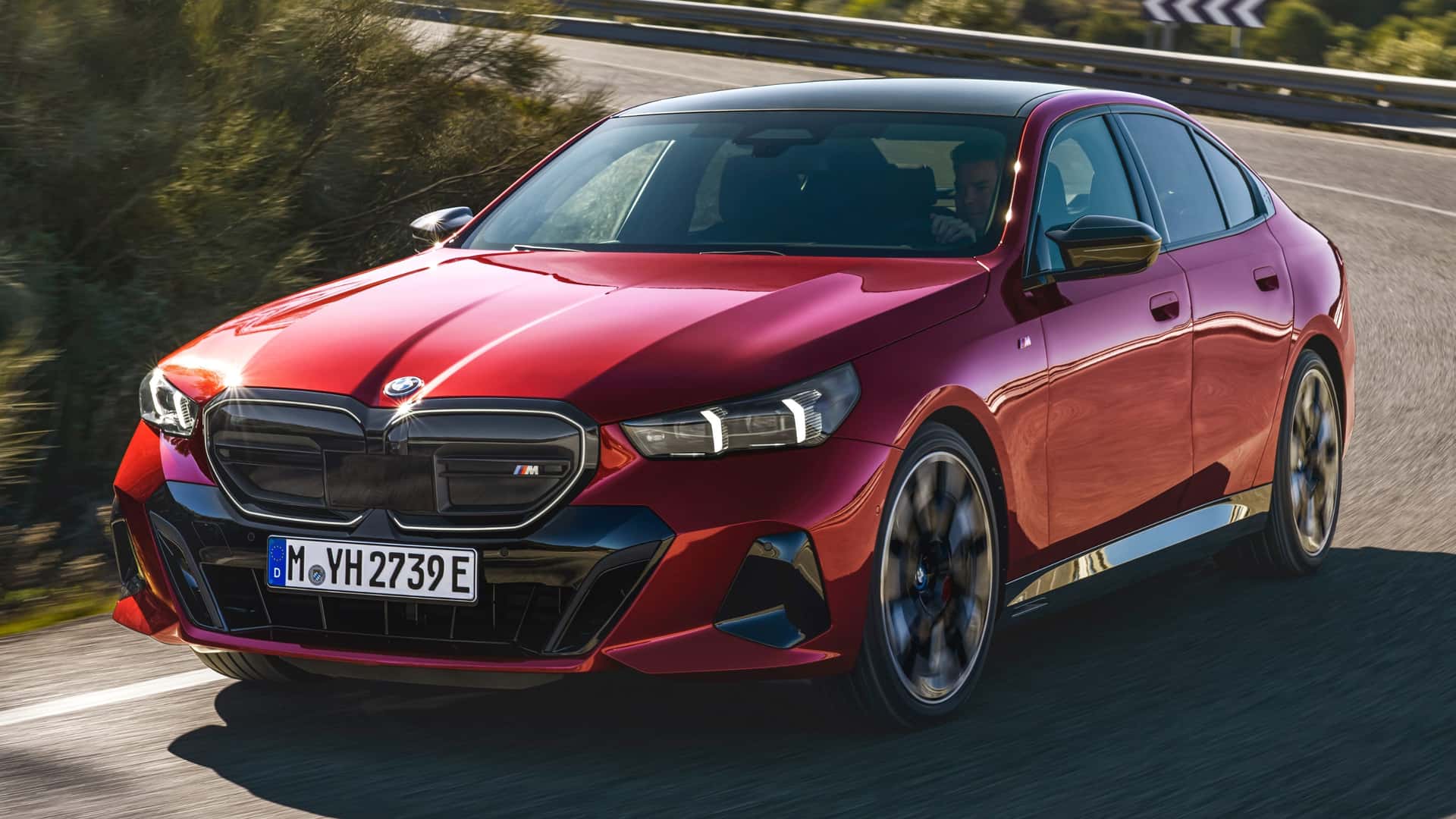
After a somewhat confusing initial statement, BMW has decided to unify its charging strategy in North America. As a result, every unit of this electric saloon, regardless of trim, now comes standard with an integrated NACS port.
Quietly, BMW has discreetly fitted the NACS charging port to its i5 model, making it the first vehicle from the Bavarian brand to offer direct compatibility with the Tesla Supercharger network in the United States, without the need for an adapter.
Although the official BMW website in North America initially stated that only the best-equipped version of this electric saloon, the i5 M60, would initially feature the NACS charging port, while lower versions such as the xDrive40 and eDrive40 would for a time come standard with the traditional CCS connector, it now appears that this will not be the case. BMW has confirmed that from now on, all BMW i5 vehicles destined for the US market will leave the factory with an integrated NACS port, regardless of trim.
The Bavarian manufacturer has also explained that all i5 units equipped as standard with the NACS charging port will be delivered with two adapters: one for charging on Alternating Current (AC) and the other for DC charging at stations that do not yet have NACS-connector cables. This measure will make life easier for new owners. It is worth noting that owners of earlier units with a CCS1 charging port have had to buy the CCS1-to-NACS adapter themselves, which costs around 180 dollars. BMW recommends the adapter made by Lectron.
Charging has never been so easy
Finally, it should be noted that on all BMW i5 models with a native NACS port, the Plug&Charge function is activated from the factory, allowing automatic charging at Tesla Superchargers as long as a payment method is configured in the Shell Recharge account via the My BMW app.
Every new 2026 BMW i5 sold in the United States includes 1,000 kWh of free charging on the Electrify America network (for a maximum period of two years). Although most of these stations already have charging points with NACS-connector cables, the adapter included with the vehicle ensures that charging is simple even at points that have not yet been upgraded and still use CCS1.
Technical specifications of this car

 Peugeot E-208 GTi: a battery-powered toy that revives the spirit of the 1980s sports cars
 New Lexus ES: luxury grows and goes electric
 First contact with the Dacia Sandero Hybrid 155: power and efficiency from €19,890
Deja un comentario