The BMW Serie 7 undergoes a facelift and takes a step forward in technology
 David Lopez @espacionblanco
29 April 2026
5 min.
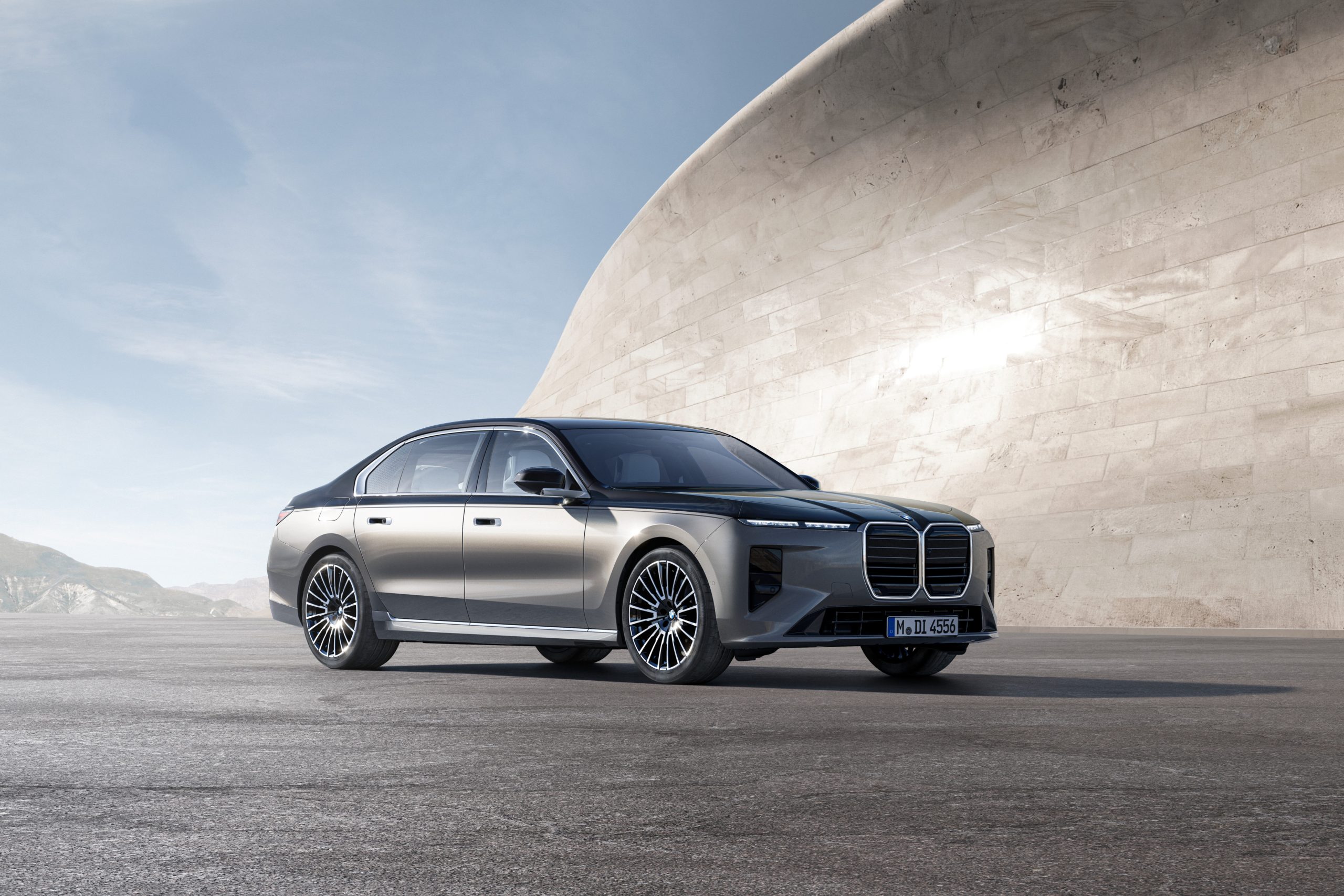
BMW presents the new Serie 7, as its flagship saloon has undergone a restyle that brings new design and the most cutting-edge technology
It has been more than three years since BMW presented and introduced to the market the seventh generation of its flagship luxury saloon, the Serie 7, surprising with a strikingly bold and disruptive new look that also came loaded with technology that left its competition behind. Now, after these years on the market, the German brand gives the Serie 7 a light facelift and introduces technologies from the Neue Klasse.
Without further ado, let’s first see what the new BMW Serie 7 has in store for its exterior, as the brand states it benefits from the new look of BMW’s flagship models, which stands out for the BMW “Iconic Glow” grille. It keeps its large dimensions but is now framed by a new lower section of the bumper, where the side air intakes have been modified, which in turn serves to slightly modify the design of the headlights with crystal BMW elements and give it a more intimidating look.
Its side lines continue to flow smoothly to the rear, where we also find new wheel designs ranging from 20 to 22 inches. At the rear, apart from minor tweaks to the bumper, the main change on the new Serie 7 is the new rear light cluster, with a new light signature and a more elongated design that almost meets in the centre of the boot. The M versions will have a prominent appearance and sporty features, and the colour palette has been expanded to more than 500 colours and combinations.
The new Serie 7 will continue to incorporate all the luxury available from BMW inside, along with high-quality materials, to which are added around 700 possibilities for individual personalisation. But without a doubt, what draws the most attention is the adoption of BMW Panoramic iDrive technology, which encompasses the new 17.9-inch central screen and the new standard-fitted 21:9 Full HD passenger screen, as well as the BMW Panoramic Vision, which projects information along the lower strip of the windscreen and, just above it, the new BMW 3D Head-Up Display. The spectacular BMW Theatre Screen has been improved and, to make the experience of a cinema on wheels even greater, we have the new Bowers & Wilkins sound system, with up to 36 speakers and 4D audio function, Dolby Atmos compatibility and even more optimised acoustics.
Perhaps in a separate paragraph we should talk about the new steering wheel design that BMW has given the Serie 7, because while the new technological environment catches your eye for its integration, the steering wheel will do so for quite the opposite reason, as it completely contradicts the rest of the design. Beyond this, BMW says the new steering wheel features Shy Tech technology, in other words, controls that light up only when wanted and provide haptic feedback when using the infotainment system, while also separating the assistance, parking and infotainment functions for intuitive use without having to take your eyes off the road.
Precisely regarding driver assistance and support systems, we have the novelties “Entry-2-Exit” on the motorway and “Address-2-Address” in the city. The first is the optional motorway assistant, with which you can drive hands-free up to 130 km/h and which carries out automated lane changes after visual signal confirmation, all with navigation-guided assistance via BMW Maps. The second is the also optional city assistant, which provides navigation-guided assistance and helps in everyday urban traffic situations, such as turns, roundabouts, lane changes, and starting and stopping at traffic lights, as long as the vehicle detects that the driver is paying attention.
In terms of engines, the BMW Serie 7 will continue to offer the petrol 740 xDrive, which delivers 400 CV and 580 Nm of torque supported by 48 V mild-hybrid technology. Continuing with traditional engines, the diesel 740d xDrive is also available, whose power now rises to 313 CV, while its torque remains unchanged at 670 Nm, and which is likewise supported by 48 V mild-hybrid technology.
If we want to venture into the electric world, we can start with the plug-in hybrid versions, the 750e xDrive and M760e xDrive, with 490 CV and 700 Nm for the former, while the latter significantly increases its power to 612 CV, with torque remaining fixed at 800 Nm. On the other hand, we can opt for the fully electric versions, the i7 50 xDrive, i7 60 xDrive and i7 M70 xDrive, with outputs of 455 CV, 544 CV and 680 CV respectively, whose range increases to more than 750 km thanks to the new 112.5 kWh battery capacity, as well as faster charging, going from 10% to 80% in about 28 minutes.
Technical specifications of this car


 Peugeot E-208 GTi: a battery-powered toy that revives the spirit of the 1980s sports cars
 New Lexus ES: luxury grows and goes electric
 First contact with the Dacia Sandero Hybrid 155: power and efficiency from €19,890
Deja un comentario