Mercedes Electric Cars Furgonetas
The Mercedes-Benz eSprinter will arrive in 2019 as its second electric commercial vehicle
 David Lopez @espacionblanco
30 May 2018
3 min.
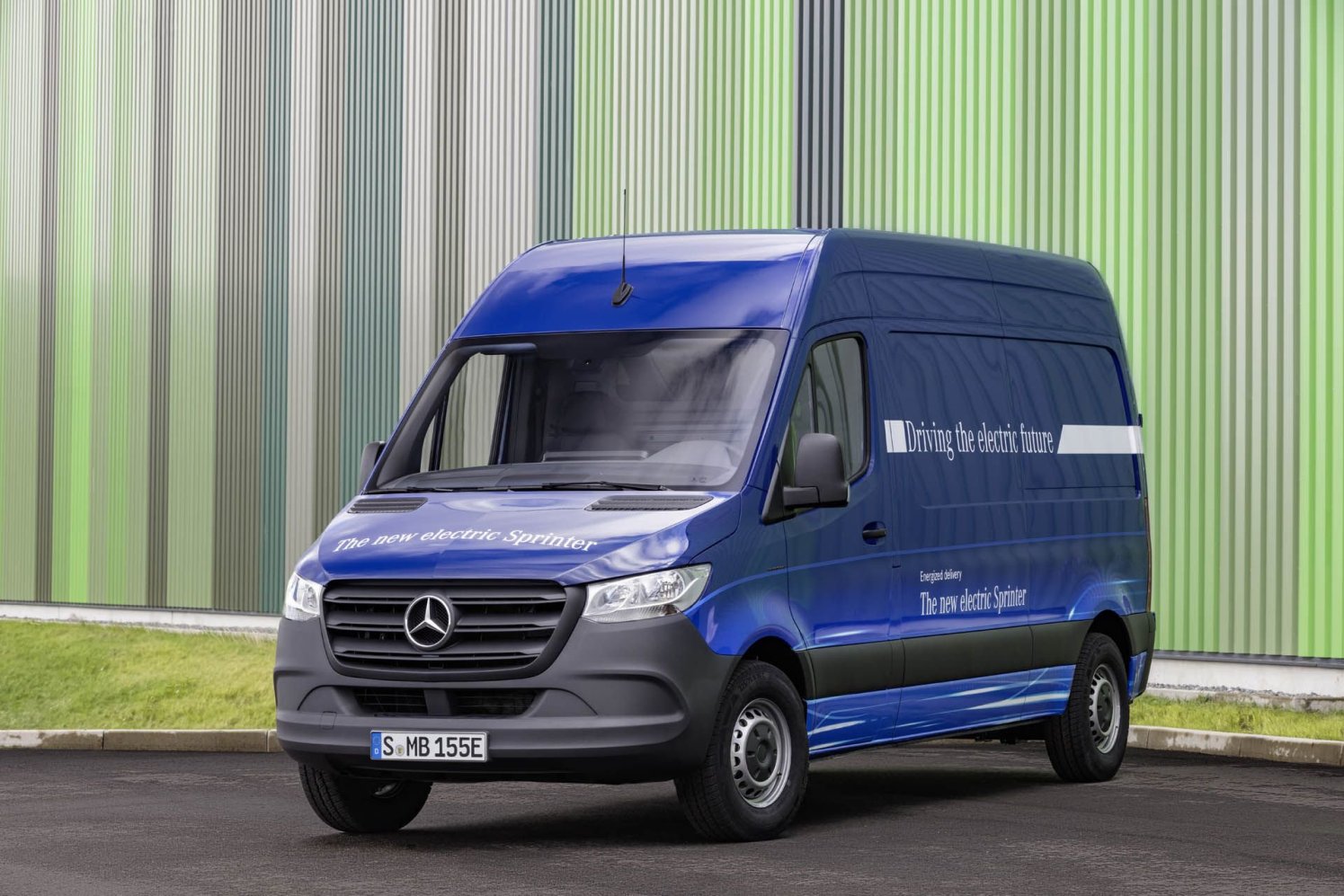
Following the path of the eVito, Mercedes continues electrifying its van range now with the eSprinter, and will later finish with the small Citan
Week after week we see and hear how a new brand intends, or makes real, the electrification of some of its models, especially when it comes to passenger vehicles, something that for the moment is not applied with the same force to the commercial vehicles offered by many brands. It must be said that we do have on the market proposals that reduce emissions, such as the Dobló from Fiat, a van offered with a CNG engine.
Perhaps CNG is the most suitable alternative, at least for now, for offering less polluting engines for commercial vehicles, since these vehicles generally cover long distances and, above all, do so with loads inside, a combination that can prove disastrous in terms of range for a fully electric model. But at Mercedes-Benz they believe that today there is the possibility of offering these vehicles with electric powertrains, and that is why we have seen how the Vito, one of its star models, has become a zero-emission model with the creation of the eVito.
The Mercedes-Benz eVito, presented at the end of last year, was the start of the electrification of its commercial vehicles, with a strategy that will continue with the Sprinter and, finally, with the small Citan. Now it is the turn of the Sprinter, presented in its third generation at the beginning of this year with substantial changes to its exterior and interior design and with new technology, which will also become, from 2019, a model more friendly to the environment.
We already knew of the existence of the Mercedes-Benz eSprinter, but until now the German brand had not given us the most relevant data about it, power and range, and it is curious that Mercedes has revealed these figures using the worst conditions of use for the eSprinter as a reference, thus suggesting that these figures will be even better when, for example, the load volume is smaller or the weather conditions are better.
Anyone who opts for a Mercedes-Benz eSprinter will be able to choose between two types of battery: on the one hand 41 kWh and on the other 55 kWh. If we fit the first battery and drive at low temperatures while carrying the maximum load of 1,040 kilos, the range reaches up to 115 kilometres, whereas if we fit the second battery the range increases up to 150 kilometres. Professionals should bear in mind that, when fitting the 55 kWh battery, the load capacity decreases by 140 kilograms.
Although this van is designed to carry out its work in cities or their surroundings, its top speed reaches 120 km/h, but it will probably never reach that speed and consequently its range will always be better. By the way, when the battery is nearly depleted, we can recharge it with the 7.2 kW on-board charger in a time of roughly 6 to 8 hours, although this time drops to 45 minutes if we do it with a DC Combo charger.
For the moment we do not know what the price of the new Mercedes-Benz eSprinter will be, but what is certain, as I told you at the beginning, is that its arrival on the market will be next year. After that, we only have to wait for the Mercedes Citan.


 Peugeot E-208 GTi: a battery-powered toy that revives the spirit of the 1980s sports cars
 New Lexus ES: luxury grows and goes electric
 First contact with the Dacia Sandero Hybrid 155: power and efficiency from €19,890
Deja un comentario