The new generation of the BMW X5 will come with a hydrogen fuel cell version
 Javier Cantagalli
23 September 2025
3 min.
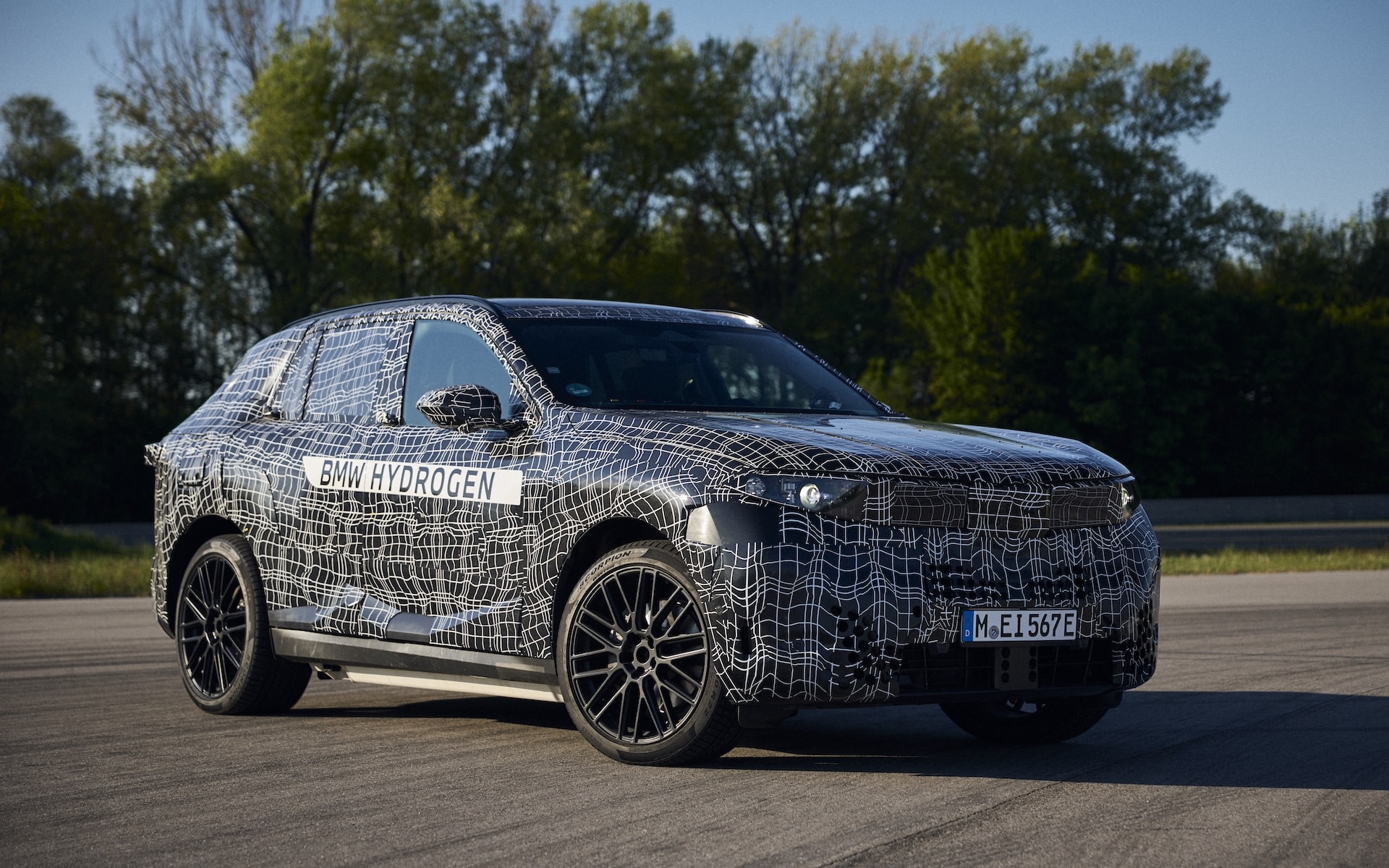
BMW still believes there is a gap in the market for hydrogen-powered passenger vehicles, and with the new X5 it is taking an important step that reinforces this argument.
BMW has just announced that the next generation of its iconic X5 SUV will reach the market in 2028, and it will do so with a wide range of powertrain options. In addition to the usual petrol and diesel combustion engines and plug-in hybrids, this time it will also include purely electric versions and, for the first time in a series-production model, a hydrogen fuel cell version.
The Bavarian manufacturer says that this variety of powertrains available with the new-generation X5 reflects the brand’s commitment to offering its customers maximum flexibility while maintaining its focus on sustainable mobility.
BMW has in fact been experimenting with hydrogen fuel cell technology in the X5 for some time, through a pilot fleet of 100 units of the iX5 Hydrogen based on the current generation of this SUV. The big difference is that the new hydrogen-powered X5 will be a series-production model.
“With the launch of the new BMW X5, we are offering five powertrain options, reaffirming our leadership as technological pioneers. Hydrogen is key to global decarbonisation, and we are determined to drive this technology forward.”
BMW continues to evolve its hydrogen fuel cell technology
The hydrogen version of the new X5 will incorporate the third generation of BMW’s fuel cell system. In the first generation, presented in 2014 with the 535iA, the Bavarian manufacturer integrated a system supplied by Toyota. With the second generation, for the iX5 Hydrogen, it developed its own system, although using fuel cells from Toyota. The third generation will again be a collaboration between the two manufacturers, seeking synergies for applications in passenger and commercial vehicles.
Production of this system will be centred in Bavaria and Austria, with specialised centres in Munich and Steyr, where prototypes are already being manufactured. The Landshut plant will also contribute key components. Assembly of the X5, meanwhile, will take place at the Spartanburg plant in South Carolina. Unlike the new iX3 and X3, which use the Neue Klasse platform, the next X5 will be based on an updated version of BMW’s CLAR architecture, designed to support combustion, hybrid, electric and hydrogen engines.
In parallel with this initiative, the Bavarian manufacturer plans to boost hydrogen refuelling infrastructure through its HyMoS (Hydrogen Mobility at Scale) programme. This project, in collaboration with industrial partners, seeks to strengthen hydrogen refuelling networks for vehicles of all kinds, from trucks to passenger cars. The aim is to improve the economic viability of this technology by driving hydrogen demand, while at the same time creating an optimised network of refuelling stations.
Currently, thanks to initiatives such as H2 Mobility, demand for hydrogen for commercial vehicles at 350 bar is rising, although passenger vehicles such as the future X5 will use the 700 bar standard.
Technical specifications of this car


 Peugeot E-208 GTi: a battery-powered toy that revives the spirit of the 1980s sports cars
 New Lexus ES: luxury grows and goes electric
 First contact with the Dacia Sandero Hybrid 155: power and efficiency from €19,890
Deja un comentario