911 Porsche Hybrid Cars Supercars
The Porsche 911 Turbo S becomes a hybrid, offering more power and performance
 Victor Alós Yus @sepelaci
8 September 2025
4 min.
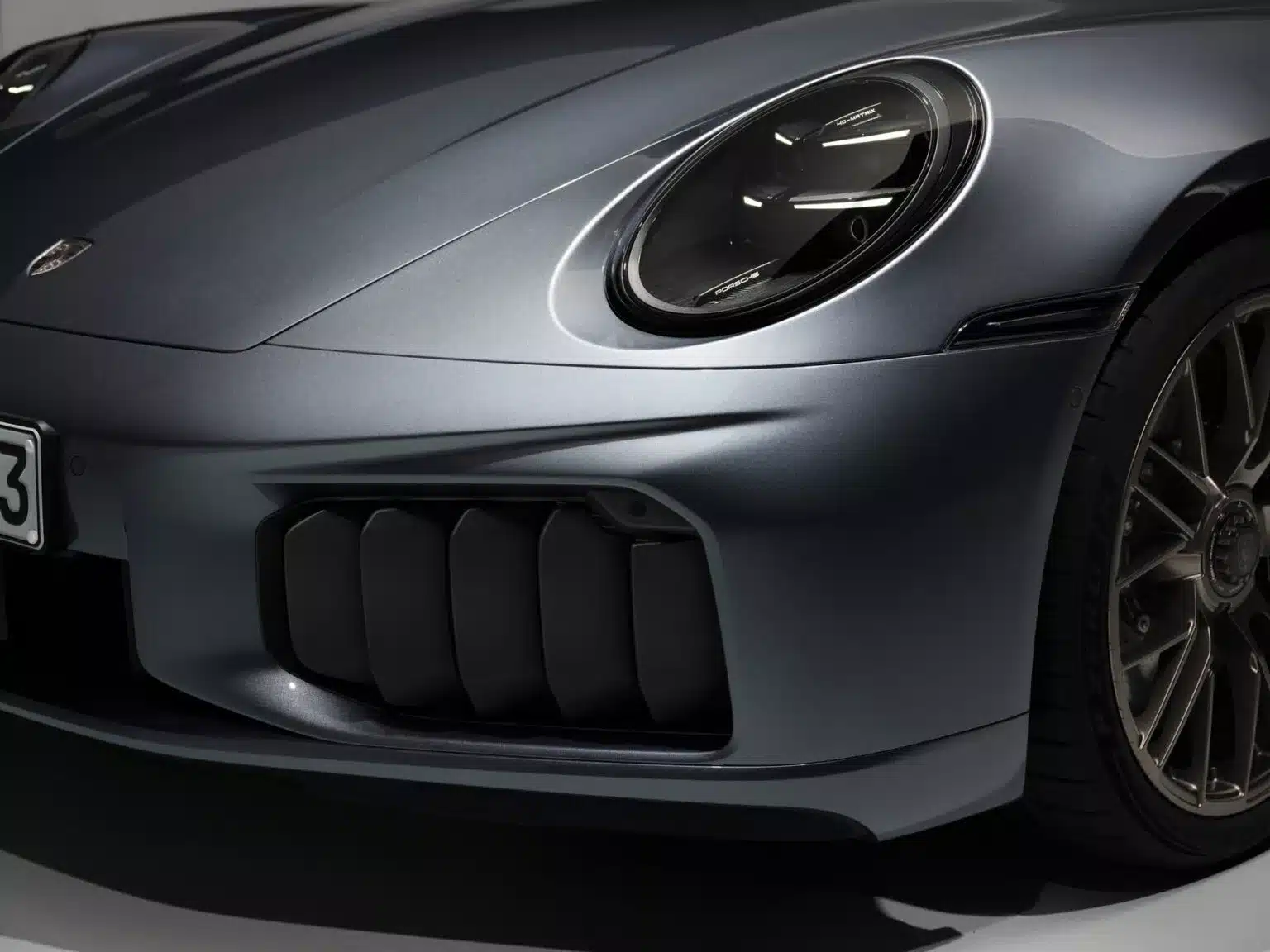
The Porsche 911 Turbo S is one of the most sought-after variants of the model, which has now become a hybrid and has increased its power and performance.
The most powerful Porsche 911 is the Turbo S, a variant that has become one of the most striking in the brand’s lineup. A car with supercar performance but with the functionality of a road car, ready for everyday use. But now it also comes with a hybrid drivetrain that will give it even more power and even more appealing performance.
The new Porsche 911 Turbo S hybrid was created by implementing the same technology that equips the 911 GTS, but they wanted to take it a step further. To do so, instead of using just one electric turbocharger, two eTurbos have been incorporated, increasing power to 701 CV and a maximum torque of 800 Nm, available between 2,300 and 6,000 rpm.
This represents an increase of 61 CV over the power offered by the non-hybrid version, which produces 640 CV and the same torque. Like the standard version, it features a six-cylinder, 3.6-litre boxer engine. To this, the two eTurbos have been added, but also an electric motor integrated into the eight-speed dual-clutch automatic transmission.
Galería de fotos -
PORSCHE 911 TURBO S HYBRID
The power is transmitted to all four wheels through the all-wheel-drive system Porsche Traction Management. With all this, the 911 Turbo S achieves an acceleration from 0 to 100 km/h in 2.4 seconds. The time to reach 200 km/h is 8.4 seconds, although when using Launch Control this time improves by 0.2 seconds for the 100 km/h acceleration and by 0.5 seconds for the 200 km/h acceleration.
The top speed is set at 320 km/h, slightly slower than its predecessor. As for weight, the scales show 1,736 kg, an increase of 82 kg over the non-hybrid model. This increase is justified by the parts needed to fit the hybrid system.
Another point worth noting is that this hybrid version has managed to cut the lap time at the Nürburgring by 14 seconds compared with other variants. The incorporation of the Porsche Dynamic Chassis Control system improves the vehicle’s behaviour at high speeds. It also uses the 400-volt architecture, which helps the hybrid system perform better.
More details
The Porsche 911 Turbo S hybrid uses a ceramic brake system with 420 mm discs at the front and 410 mm at the rear, and tyres sized 255/35 ZR 20 at the front and 325/30 ZR 21 at the rear. To keep the power under control, vertical cooling fins, an active front diffuser and an extendable rear spoiler have been installed. In the
Since the power increases, Porsche made sure to modify other parts of the 911 faster than ever before. Thus, it installed vertical cooling fins, an active front diffuser and an extendable rear spoiler to improve cooling, while the rear received a tilting and extendable spoiler. The aim was, in addition to cooling, to reduce aerodynamic drag when necessary and to improve manoeuvrability. With all this, aerodynamic behaviour and manoeuvrability are improved.
The silencer and the tips of the new sport exhaust system are made of titanium, which saves weight and improves the engine sound.
The interior, also improved
No expense has been spared on luxury elements inside, and carbon fibre decorative elements and neodymium decorative details can be seen. The Race-Tex roof lining and Turbonite details, found on the steering wheel, instrument panel, dashboard, centre console and seatbelts, add an elegant touch to the whole.
The coupé version has two customisable seats, while the Cabrio version has a 2+2 configuration. As for the price, it has not yet been made public, but it is expected to be considerably higher than that of the non-electrified models.
Technical specifications of this car

 Peugeot E-208 GTi: a battery-powered toy that revives the spirit of the 1980s sports cars
 New Lexus ES: luxury grows and goes electric
 First contact with the Dacia Sandero Hybrid 155: power and efficiency from €19,890
Deja un comentario