EX60 Volvo Industry Safety Technology
Volvo presents a new safety breakthrough: the multi-adaptive seatbelt that will debut in the EX60
 David Lopez @espacionblanco
11 June 2025
3 min.
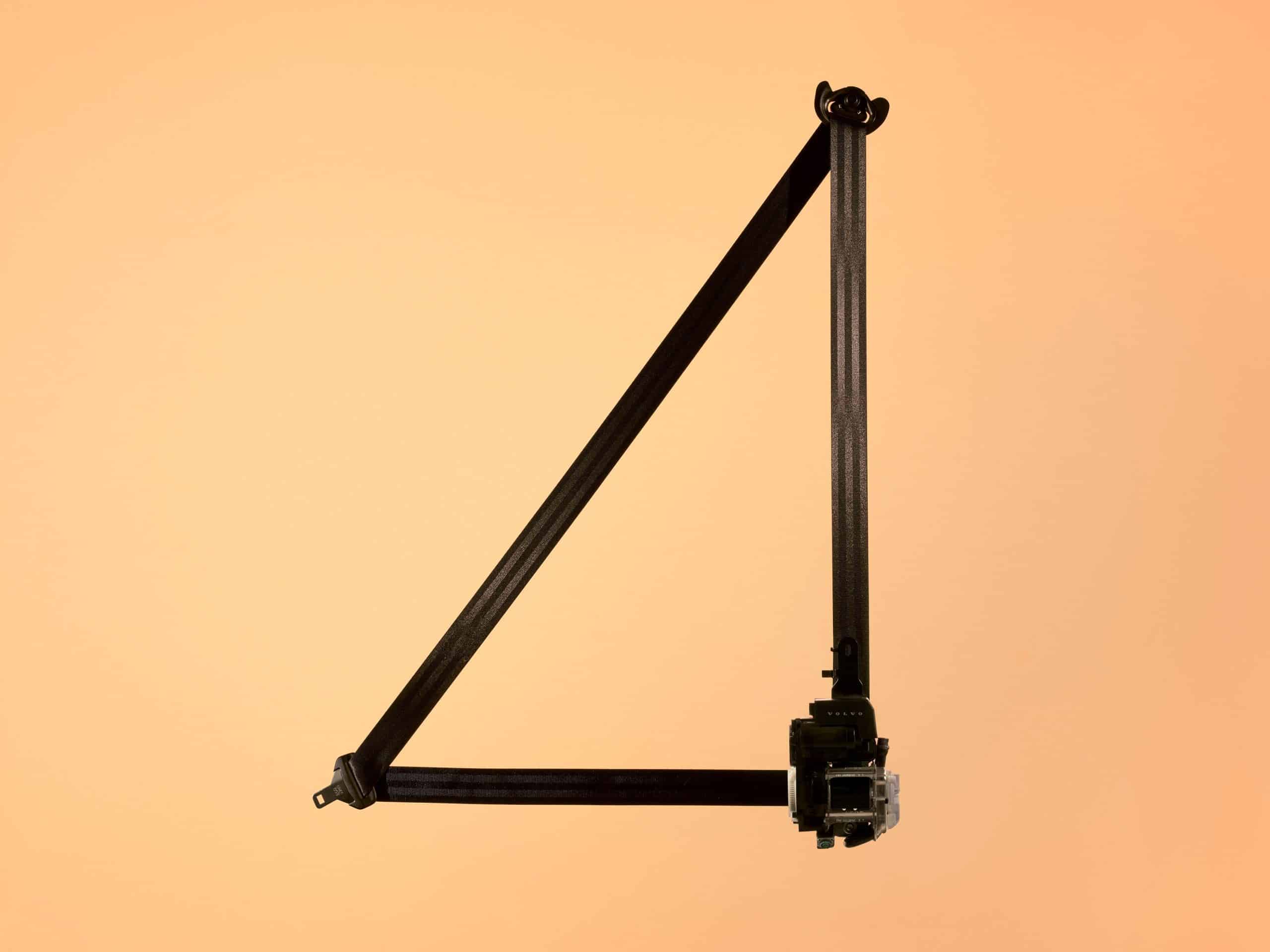
Volvo, a pioneer in many safety advances, now presents the new multi-adaptive seatbelt that the EX60 will feature for the first time
If there is one thing that cannot be denied of Volvo, it is its capacity for innovation and research in safety throughout its history, something that has helped the Swedish brand achieve several very important milestones and advances in the automotive industry, such as the development of child safety systems or the side and curtain airbags, a breakthrough it had been working on since the 1960s and which was first incorporated into the Volvo 850 in 1994.
That is not the only one, there are quite a few, but perhaps another very important safety advance developed by Volvo is the creation of the three-point seatbelt, which was devised by the brand’s engineer Nils Bohlin. The seatbelt was first introduced in the Volvo PV544 at the end of the 1950s and, three years after its implementation, the Swedish brand released the patent so that all brands could benefit from this revolutionary advance, with more than one million deaths having been prevented since then.
Now, with more than five decades of safety research and a database of more than 80,000 occupants involved in real-world accidents, the Swedish brand is set to unveil its latest safety advance, and it is precisely related to the seatbelt: it is the new multi-adaptive seatbelt, which the brand has confirmed we will soon see on the road fitted to the new evolution of the electric Volvo EX60.
To put this in context, we should know that conventional three-point seatbelts make use of load limiters to control the amount of force that the belt itself applies to the person’s body in the event of an accident, whereas Volvo’s new multi-adaptive seatbelt expands the load-limiting profiles from three to eleven and increases the number of possible settings, so that it can optimise its performance and operation according to the person and the type of accident. It achieves this through data arriving from the various sensors the vehicle carries, analysing practically instantly data such as direction, speed or the passenger’s posture to select the most appropriate configuration.
Volvo’s multi-adaptive seatbelt also adapts at all times, via sensors, to the person using it according to their height, weight, body shape and position in the seat. To give an example, this means that if a large person is involved in an accident, the belt’s load setting will be higher to avoid the risk of head injuries, but if the occupant is smaller, in the event of a milder collision, the load setting will be gentler to reduce at all times the risk of rib fractures.
In addition, all the functions of Volvo’s new multi-adaptive seatbelt have been designed so that they can be continuously improved through over-the-air software updates, so that as Volvo gathers more data, the vehicle itself will improve its recognition of its occupants and of new situations, thus creating far more effective response strategies.
Technical specifications of this car


 Peugeot E-208 GTi: a battery-powered toy that revives the spirit of the 1980s sports cars
 New Lexus ES: luxury grows and goes electric
 First contact with the Dacia Sandero Hybrid 155: power and efficiency from €19,890
Deja un comentario