BMW sets itself apart with over 900 km of range in its new i3 saloon
 Javier Cantagalli
4 October 2026
4 min.
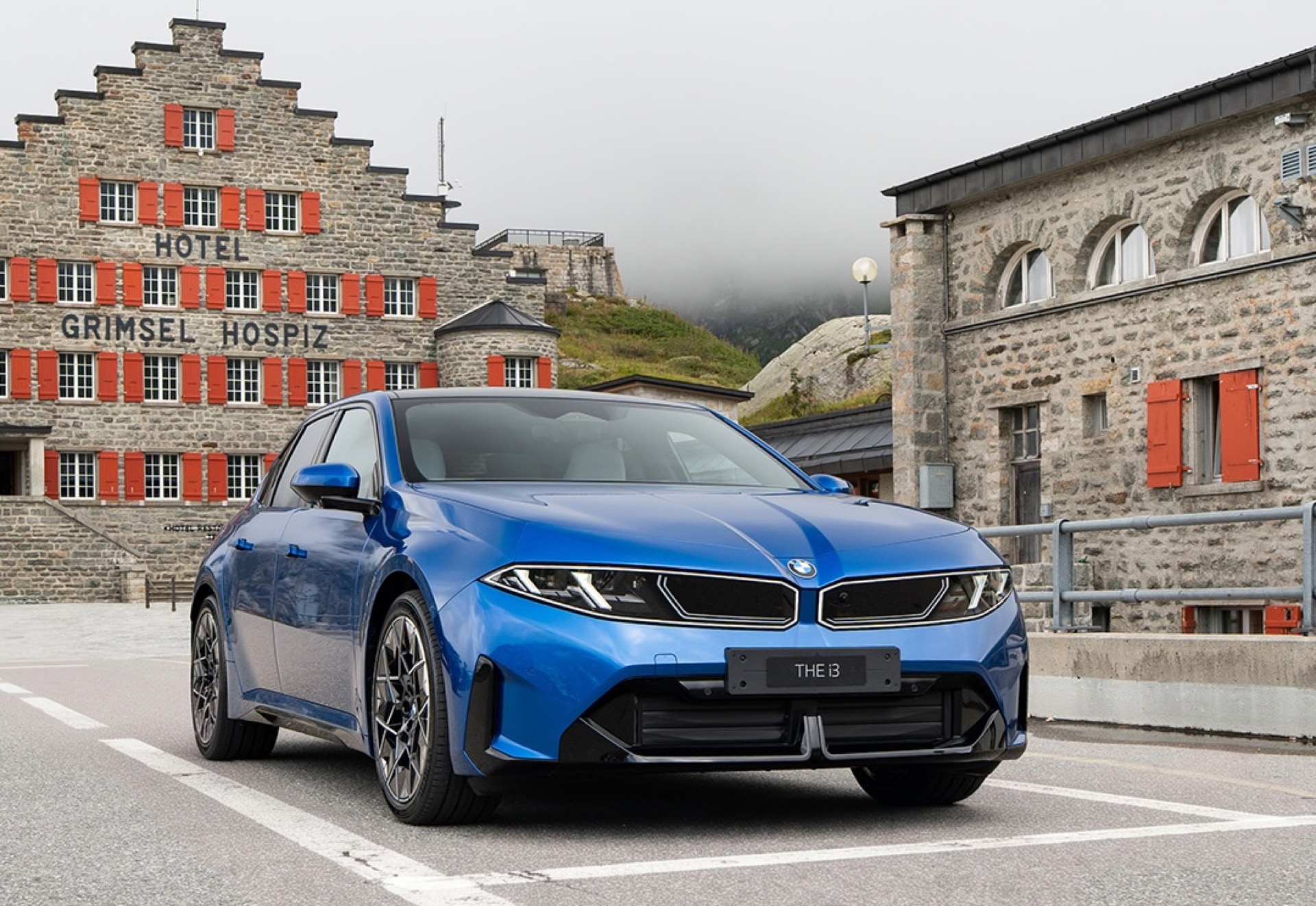
BMW debuts its new i3 saloon from the Neue Klasse, with a homologated range of 912 km, charging in 21 minutes and a price starting at 59,900 euros.
BMW has just officially unveiled the new 3 Series, including for the first time a fully electric version under the name i3. This new model, based on the Neue Klasse platform of the Bavarian firm, stands out for its remarkable range of more than 900 km, which positions it as the new benchmark in the market.
With a base price in Germany of 59,900 euros, customers interested in enjoying that range of more than 900 km will have to pay a somewhat higher amount, with a minimum of 65,900 euros.
The debut of the new i3 saloon from BMW comes slightly behind the commercial schedule. Since June, a launch edition from 75,340 euros has been available for reservation, and BMW had already revealed the price of the i3 50 xDrive. The design was also known since March, and series production started in August at the Munich plant, so the final figures and specifications were still pending publication.
BMW i3 2026 range
At launch, two all-wheel-drive versions arrive: i3 40 xDrive and i3 50 xDrive. Later, mild hybrid combustion variants will join and, in 2027, a plug-in hybrid. Although the Bavarian firm has not yet announced a version of the i3 with a single powertrain, the availability on the iX3 — which does offer rear-wheel drive — makes this option likely in the near future.
The iX3 measures 4.76 metres long, 1.87 wide and 1.48 high, with a wheelbase of 2.90 metres. The sixth-generation system it uses combines a separately excited synchronous motor on the rear axle and, in the xDrive versions, an additional 123 kW asynchronous motor on the front axle. The architecture is 800 volts and the NMC battery uses cylindrical cells.
The i3 50 xDrive delivers 345 kW and 645 Nm, with a net battery of 108.7 kWh. It accelerates from 0 to 100 km/h in 4.7 seconds — slightly quicker than the equivalent iX3 thanks to its improved aerodynamics — and is homologated for 912 km WLTP, more than 100 km above the iX3 SUV. DC charging reaches 400 kW, capable of going from 10 to 80 per cent charge in just 21 minutes. It also supports bidirectional charging, V2L at 3.7 kW and V2H/V2G at 11 kW.
The i3 40 xDrive, on the other hand, is priced below 60,000 euros. It combines 195 kW on the rear axle with the same front motor, delivering a combined 275 kW and 520 Nm. The net battery is 82.8 kWh and range reaches 710 km. Acceleration from 0 to 100 km/h stands at 5.4 seconds and top speed, as with the 50, is 200 km/h. DC charging power is 300 kW, requiring the same 21 minutes to increase the battery charge from 10 to 80 per cent, as a consequence of its smaller capacity. It also supports bidirectional charging.
For 2027, BMW announces a high-performance i3 M60 xDrive, and new entry-level versions with more affordable prices can also be expected.
The new face of BMW
As we already saw in March, the design of the new i3 is inspired by the Vision Neue Klasse prototype from 2023: characterised by headlights merging into the grille, rear lights almost reaching the logo, and a long-wheelbase silhouette with short overhangs and pronounced wheel arches. The door handles are flush and the wheels range from 19 to 21 inches. There are M Sport packages and a new metallic blue; the range of options will expand in 2027.
As for the interior, it follows the line of the iX3: few controls, a striking steering wheel, a central screen with angled sides, and the Panoramic iDrive, a continuous band along the base of the windscreen. The control combines touch, haptics and voice, with support for Alexa+. The panoramic roof with climate glass seeks more light, the standard seats already offer electric adjustment and memory, and there are multifunction, M Sport and rear heating options. The boot offers 420 litres and the space available under the bonnet is 31.
The i3 is produced at BMW’s main plant in Munich, from which only electric models of the Neue Klasse will roll out in just over a year. After the Hungarian plant in Debrecen, where the iX3 is built, Munich will be the group’s second factory dedicated exclusively to electric vehicle production.

 Peugeot E-208 GTi: a battery-powered toy that revives the spirit of the 1980s sports cars
 New Lexus ES: luxury grows and goes electric
 First contact with the Dacia Sandero Hybrid 155: power and efficiency from €19,890
Deja un comentario