European authorities will not grant their approval to the FSD of Tesla until December at the earliest
 Javier Cantagalli
28 September 2026
3 min.
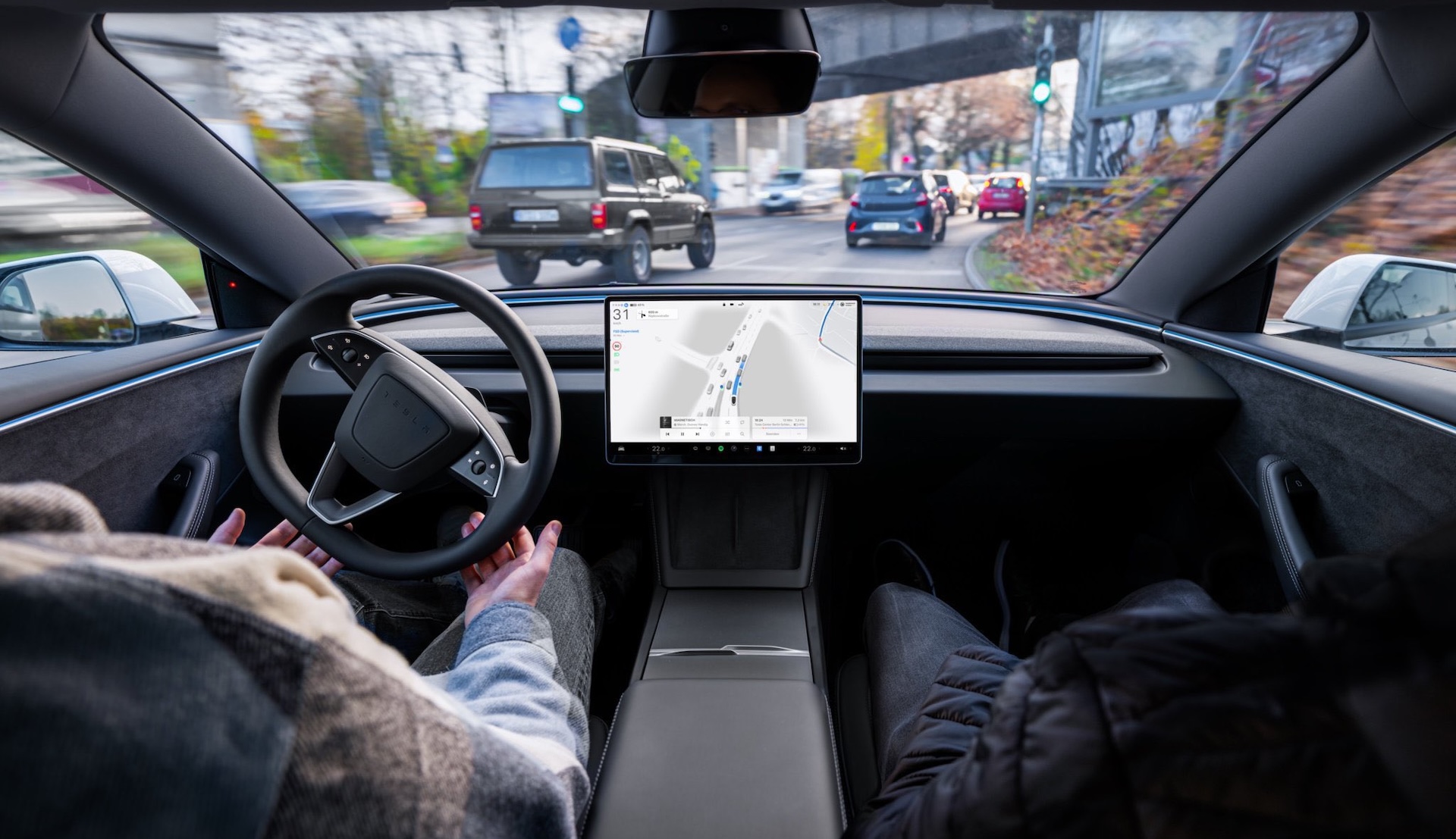
For Tesla, the delay is another setback in its European timetable. Until the TCMV makes a decision, Europe will remain divided on regulatory matters.
The European-wide approval of Tesla’s driver assistance system known as Full Self-Driving (Supervised), or FSD (Supervised), continues to be delayed. At the next meeting of the EU technical committee, scheduled for early October, there will only be a further debate, and no vote will take place until December at the earliest.
In April, Tesla obtained its first European authorisation for this system, granted by the Dutch road traffic authority RDW. This is not an ordinary type approval, but a provisional authorisation under Article 39 of Regulation (EU) 2018/858, designed for technologies or technical concepts that do not yet fully fit within current legislation. Since then, several Member States have accepted that provisional authorisation; the most recent, the Czech Republic. As we already reported here at HighMotor.
The path towards a regular approval valid across the whole Union is not advancing at the pace that Tesla, the company’s fans and Elon Musk himself had hoped. The provisional agenda of the Technical Committee on Motor Vehicles (TCMV) meeting, to be held on 6 October, only includes 25 minutes of “continued discussion” on the Dutch application. No vote is therefore expected. As the body will not meet again until December, that would be the first possible date for a European decision.
Tesla had pointed to 6 October as a possible voting date. The file is based on the provisional authorisation granted by the RDW. The committee has already considered the application on two occasions without putting it to a vote.
So far, seven countries have adopted the Dutch authorisation for their roads: the Netherlands, Lithuania, Estonia, Denmark, Belgium, Slovenia and Czechia. Together they represent barely 12 percent of the EU population. A Community-wide approval requires a qualified majority: at least 15 of the 27 States and 65 percent of the Union’s population.
That is why the large markets are decisive. France has not yet recognised the current system. Nor have Germany, Italy or Spain. Among the reservations of the European authorities are compliance with speed limits and monitoring of driver attention.
Some countries have already expressed their reluctance
It should also be noted that Sweden has spoken in favour of rejecting the authorisation as long as Tesla allows, among other things, setting a speed above the applicable limit. In other Nordic countries, the system’s behaviour in winter conditions and driver supervision are also a concern. France has pointed to problems of speed and attention in urban traffic.
Tesla, for its part, responds with its own safety data. The company states that by early September more than 70,000 customers were using FSD (Supervised), collectively covering more than one million kilometres a day. According to Tesla, over 100 million kilometres the system was involved in accidents 4.1 times less than Tesla vehicles driven manually. These figures come, however, from the manufacturer itself and have not been independently verified.


 Peugeot E-208 GTi: a battery-powered toy that revives the spirit of the 1980s sports cars
 New Lexus ES: luxury grows and goes electric
 First contact with the Dacia Sandero Hybrid 155: power and efficiency from €19,890
Deja un comentario