Ferrari Luce Sedans Electric Cars
Ferrari Luce: the first fully electric supercar from the Italian manufacturer leaves no one indifferent
 Javier Cantagalli
27 May 2026
3 min.
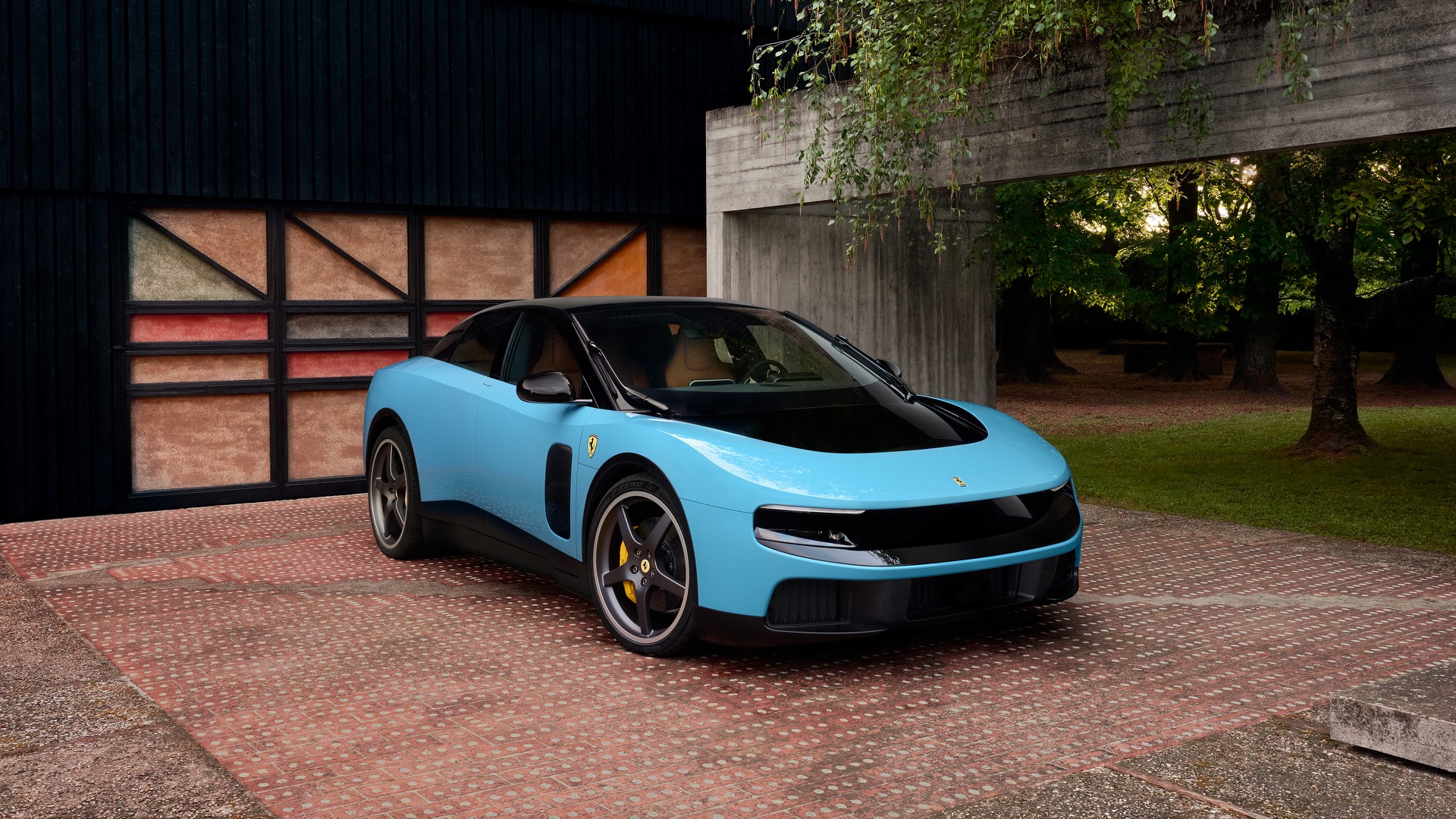
The Ferrari Luce is certainly not a classic supercar, and in terms of design it strays far from what anyone would expect to see in a new model from the Italian marque.
Ferrari has just unveiled to the world its long-awaited first fully electric supercar. A new model with which the Maranello-based firm seeks to carry the emotion, character and driving sensations typical of the brand into the era of electric mobility.
Contrary to what many expected, the Luce is not a traditional two-seater sports car but a four-door, five-seat saloon, very different from anything we had seen so far bearing the Cavallino Rampante badge. This new model is part of Ferrari’s strategy through 2030, presented in October 2025, under which the Italian brand’s range will evolve to consist of battery electric models -20 percent-, hybrids -40 percent-, and more traditional combustion-engined vehicles -another 40 percent-.
The Luce is based on an 800-volt electric platform developed entirely by Ferrari in Maranello. It features four permanent-magnet synchronous electric motors -one per wheel-, inspired by the F80 technology and drawing on the knowledge gained in Formula 1 and the WEC. The two front motors deliver 105 kW each, while the rear units provide 310 kW apiece. In total, the system reaches a maximum output of 772 kW and a torque of 990 Nm.
It is no ordinary saloon
These figures translate into outstanding performance, capable of reaching 100 km/h from a standstill in just 2.5 seconds, and 200 km/h in 6.8 seconds. Its top speed, meanwhile, is limited to 310 km/h.
The battery pack, also designed and manufactured in Maranello in collaboration with SK On, has a gross capacity of 122 kWh and uses NMC chemistry cells. Ferrari estimates a WLTP range of up to 530 km -still pending final homologation-. When recharging, the Luce supports peak power of up to 350 kW at 800-volt stations and, thanks to the integrated converter, can charge at 150 kW when the infrastructure is 400-volt.
Beyond its pure performance, Ferrari has placed special emphasis on driving dynamics. The floor-mounted battery lowers the centre of gravity by 95 mm compared with the Purosangue, and the moment of inertia is 15 percent lower. Furthermore, the torque vectoring system, active suspension and independent rear steering allow the vehicle to feel far more agile than its 2,260 kg would suggest.
The interior stands out for its combination of traditional physical controls with OLED screens, and an innovative sound system that amplifies in real time the vibrations of the electric axles, rather than generating artificial noise. In addition, the steering wheel paddles do not change gears but instead modulate power delivery and regenerative braking, seeking to maintain the emotional interaction typical of Ferrari.
At 5.03 metres long and with a 597-litre boot, the Luce represents a new dimension for the brand, with far more space than we had seen so far in any of its vehicles and a special focus on offering greater versatility. Its exterior design, developed together with the LoveFrom studio of Jony Ive and Marc Newson, is perhaps the most controversial aspect of this new model, favouring clean surfaces and advanced aerodynamics.

 Peugeot E-208 GTi: a battery-powered toy that revives the spirit of the 1980s sports cars
 New Lexus ES: luxury grows and goes electric
 First contact with the Dacia Sandero Hybrid 155: power and efficiency from €19,890
Deja un comentario