Eclipse Cross Mitsubishi Electric Cars Tests SUV
Review and test Mitsubishi Eclipse Cross: five strengths of an electric car with a range of up to 600 km
 Diego G. Moreira
1 July 2026
7 min.
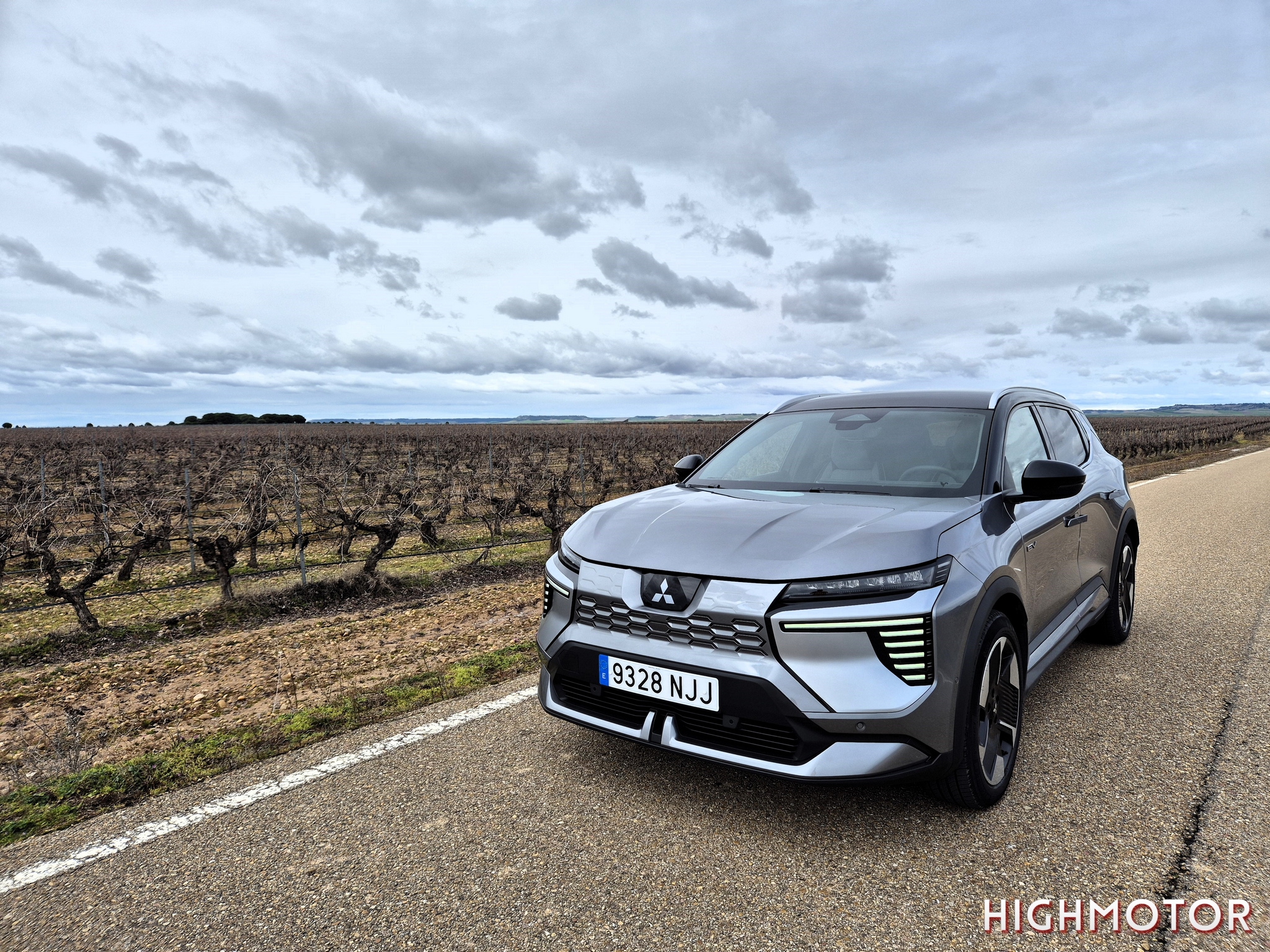
We took the wheel of the Mitsubishi Eclipse Cross 2026, a model that arrives completely redesigned and has little in common with its predecessors. This new electric SUV from Mitsubishi has a curious origin, as it shares its platform with the electric Renault Scenic, although the Japanese manufacturer has applied its own redesign and personality.
The new Eclipse Cross is built in France in collaboration with Renault, but it positions itself as an interesting alternative in the segment of family electric SUVs, standing out for its range, its interior space and a design that, at least at the front, is more eye-catching than that of the French model.
To get to know this new Mitsubishi Eclipse Cross electric better, we are going to analyse its main characteristics in detail in five key points.
1. French design reinterpreted by Mitsubishi
As we mentioned at the start of this test, the base design of the Mitsubishi Eclipse Cross 2026 comes from the electric Renault Scenic, a model conceived to offer a large interior space thanks to its generous wheelbase.
However, Mitsubishi has wanted to differentiate it clearly, incorporating at the front its new design language and the brand’s updated logo. The result is a sportier and more striking look, especially at the front.
The door handles are integrated into the bodywork and deploy automatically when the vehicle is unlocked, a solution that is increasingly common in modern electric cars. The large wheel arches also stand out, which can accommodate 19- or 20-inch wheels, the former being the most recommendable if we are looking to maximise efficiency.
At the rear, the black strip running across the whole tailgate catches the eye, a design feature that gives the vehicle a sense of width. The boot lid is electric as standard and the cargo space reaches a notable 545 litres of capacity, placing it among the best in its segment.
2. A spacious, comfortable and well-resolved interior
One of the strong points of the Mitsubishi Eclipse Cross electric is its interior. Compared with other electric SUVs on the market, this model stands out for offering a very balanced combination of space, range and build quality.
The driver’s area is dominated by an infotainment system with a screen angled towards the driver, with a simple and easy-to-use interface. In addition, the centre console and the doors offer numerous storage spaces, which is especially useful for family use.
The rear seats are another of the vehicle’s most notable features. Thanks to its wheelbase, passengers enjoy plenty of legroom and a high level of comfort on long journeys.
In addition, rear occupants have dedicated air vents and several USB-C sockets for charging electronic devices, an increasingly essential detail in today’s cars.
3. 218 CV for comfortable and efficient driving
The propulsion system of the Mitsubishi Eclipse Cross 2026 consists of an electric motor that develops 218 CV of power and sends all of its energy to the front axle.
This figure does not aim to offer particularly sporty behaviour, but it does provide a more than sufficient response for everyday use, allowing this electric SUV to move with ease even when loaded or carrying passengers.
The driver can choose between different driving modes: Eco, Sport, Perso and Comfort. Each one modifies the accelerator response and the vehicle’s overall behaviour.
In Eco mode the torque and the top speed are limited to 115 km/h to reduce consumption, although it is possible to exceed that limit by pressing the accelerator fully. In Sport mode, by contrast, the response is more immediate and dynamic.
During our test, what stands out most is the high level of ride comfort and the sense of composure at high speeds, making it a particularly pleasant car for long journeys.
4. Up to 600 km of range with an 87 kWh battery
One of the most important aspects of the Mitsubishi Eclipse Cross electric is its range. It is currently available with an 87 kWh gross battery, which according to the WLTP cycle allows a range of up to 600 km.
Later on, the range will be expanded with a more affordable version equipped with a 60 kWh battery.
In real driving conditions, during our test we achieved between 500 and 520 km of range on the road, recording a consumption close to 15.5 kWh/100 km when driving efficiently.
In everyday use, average consumption is approximately 17 kWh/100 km, which allows around 480 km to be covered on a full charge. On the motorway, consumption can rise to 19 kWh/100 km, reducing the range to roughly 400 km.
As for charging, the Eclipse Cross supports a maximum fast-charging power of 150 kW on direct current, which allows going from 10% to 80% battery in just over 35 minutes.
For domestic charging on alternating current, the onboard charger supports up to 11 kW. Although compatibility with 22 kW is officially mentioned, this particular version fits an 11 kW charger, so a full charge takes approximately 9 hours.
5. Mitsubishi Eclipse Cross EV 2026 from 34,960 euros
The new Mitsubishi Eclipse Cross takes a very rational approach within the electric SUV segment. Beyond its modern design and family focus, it stands out especially for offering very complete equipment without complicating the buying experience with too many versions or optional packs.
On the Spanish market, the Eclipse Cross EV is available in only two trim levels: Kaiteki and Kaiteki+. Already from the Kaiteki version a very comprehensive specification is included, with a large multimedia screen, digital instrumentation, dual-zone climate control, keyless entry and start, electric tailgate, heated seats and a wide package of driver assistance systems. In addition, the SUV retains several physical controls for important functions, something increasingly rare and very practical in daily use.
Above the Kaiteki sits the Kaiteki+ trim, which adds a more technological and sophisticated approach with elements such as a panoramic sunroof, better interior materials, specific aesthetic details and more advanced equipment. The difference between the two trims is not intended to create a “basic” version and a “luxury” one, but to offer two clear and simple alternatives for different customer profiles, while maintaining a very competitive balance between price, technology and equipment in both cases.
The standard sound system also makes a good impression. Without claiming to offer a premium experience, it performs perfectly well for everyday use thanks to balanced quality both in radio and in playback via Bluetooth or streaming platforms. Moreover, the good insulation of the cabin, helped by the electric drivetrain, makes for a pleasant acoustic experience even on the motorway.
One of the most practical details of the Eclipse Cross EV lies in the management of its electronic aids. Mitsubishi allows certain assistants to be switched off using a direct physical button, avoiding the need to constantly navigate through submenus on the central screen. It may seem like a minor detail, but in daily use it turns out to be a far more comfortable and intuitive solution than that of many rivals.
Photos | Test team
Technical specifications of this car

 Kia offers an electric range of 10 models, 50 versions and 400 possible combinations
 The seven finalists for the 2027 European Car of the Year (COTY) are exclusively electric
 Peugeot E-208 GTi: a battery-powered toy that revives the spirit of the 1980s sports cars
Deja un comentario