Tiguan Volkswagen Hybrid Cars Tests SUV
Test drive Volkswagen Tiguan eHybrid 204 CV, we tell you what stands out about the new German SUV
 Diego G. Moreira
25 November 2024
5 min.
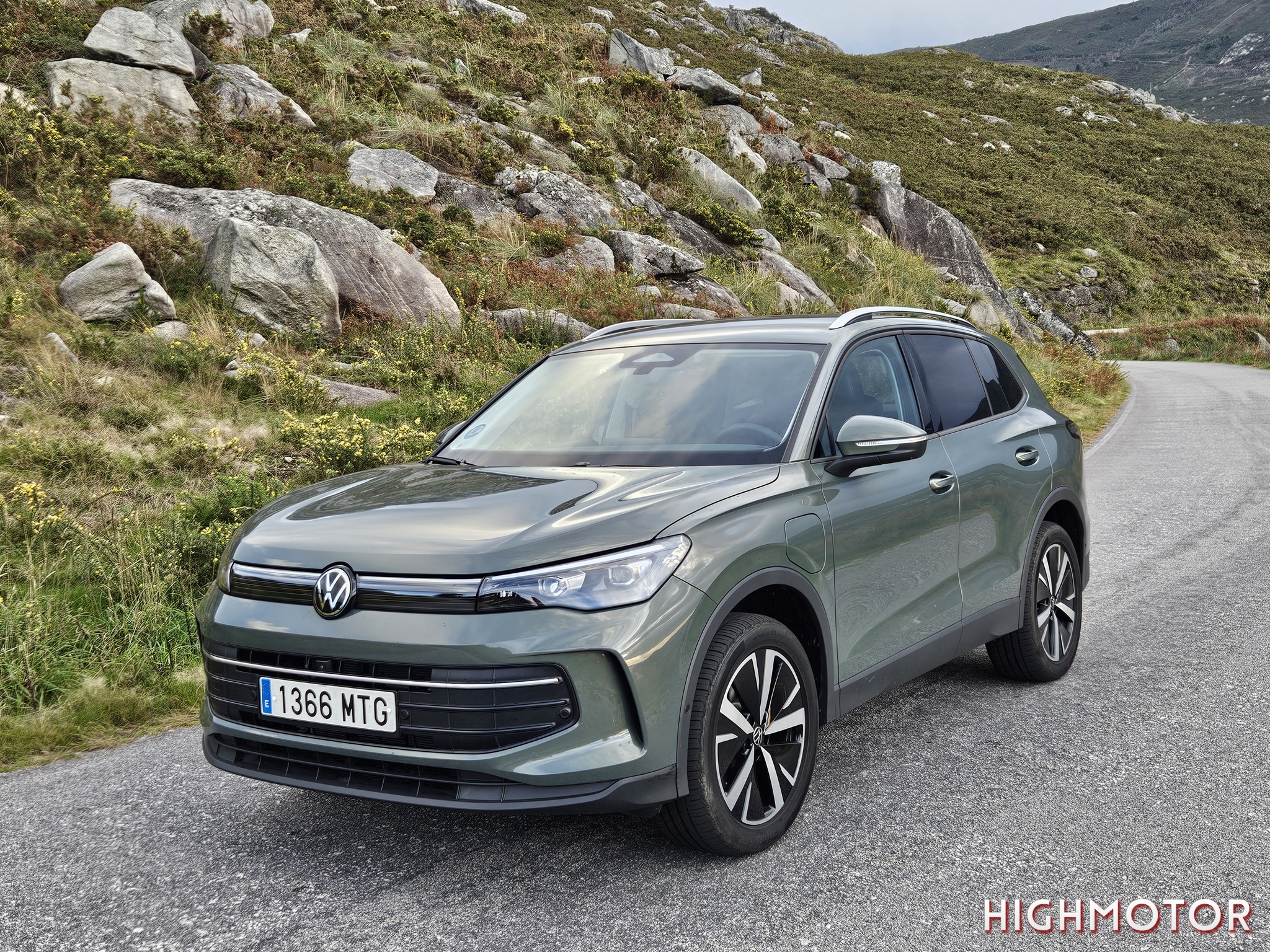
We analyse the main points of the new Volkswagen Tiguan plug-in hybrid, i.e. the e-Hybrid with 204 CV of power and an electric range of up to 114 km.
Volkswagen has just renewed its flagship SUV and the new Tiguan 2024 comes with major updates on many fronts, making for a really interesting car. We have tested the Tiguan 1.5 TSI eHybrid with 204 CV in the “Más” trim, keep reading and we’ll tell you its strong points.
1. Updated design
Although the dimensions of the new Tiguan 2024 are very similar to those of the previous generation, it looks much bigger, thanks to a completely updated design with a greater sense of robustness. It also features LED headlights for all lighting functions, and the LED light bar runs across the whole front (following the trend of the brand’s latest launches) and across the entire rear.
There are design elements from the ID range that can clearly be seen on its exterior, with much smoother lines than the previous generation, yet with a clearly defined SUV look (such as its height).
2. Higher quality, more technology
Inside, the screen (taken directly from the ID range) stands out, although it has been refined a great deal until it works properly. The sense of space and the quality of the finish also stand out, with large, pleasant-to-the-touch (and soft) surfaces and a decently made trim surrounding the screens.
The steering wheel buttons are physical (a great decision), with an outstanding feel, and although the instrumentation is digital, it is perfectly integrated behind the steering wheel with good visibility.
The head-up display (optional) completes the tech touch. There is also a new, very well-judged element in the centre tunnel: a selector knob that lets you adjust the volume or driving modes quickly and intuitively (VW calls it the Driving Experience Control).
The space in the rear seats is also worth mentioning, with the option to adjust their distance (to gain boot space or legroom) and with adjustable backrests, a very practical detail.
3. Comfort behind the wheel
We have been able to test the plug-in hybrid version with 204 CV, with a 1.5 TSI petrol engine paired with an electric system and a 19.7 kWh battery.
It is not a sporty combination, but from the first kilometres it wins you over with its smooth ride, the very high level of onboard comfort, which has improved over the previous generation.
In fact, on the road it is stable and comfortable, but without sporty nuances despite its 204 CV, which show up discreetly in “Sport” mode. In return, it offers outstanding peace of mind on board.
4. Tiguan eHybrid 2024: economical, very economical
The experience Volkswagen has gained with electrified vehicles shows in this new Tiguan, since the electric side is optimised and is therefore a genuinely economical choice if you want a car that uses little fuel. Its four-cylinder petrol engine is paired with an electric system and a battery that lets it easily reach up to 100 km of range, and even a few more.
Charging times have improved, as it now supports fast charging up to 50 kW (a real asset on the road, letting you make a quick stop and recharge to save petrol) in just 20 minutes. Charging at a public post has also improved, up to 11 kW (in other words, 2.5 hours to be fully charged).
The average consumption is around 18-20 kWh per 100 km in fully electric mode, but if you charge daily you can go a long time without refuelling with petrol, since you’re running in fully electric mode. At home, charging takes a little longer, nearly 10 hours depending on the contracted power.
And when the battery runs out? On our typical motorway route between Madrid > Vigo > Madrid, the average consumption was 5.1 litres per 100 km (with a full charge in 20 minutes while we stopped for a coffee) plus a full battery at the start, which greatly reduced the final average consumption. On the road, without battery, consumption ranges between 5.5-6 litres per 100 km.
5. From 39,440 euros up to almost 50,000 euros for our test unit
The Volkswagen Tiguan 2024 has a price that starts at 39,440 euros, but our eHybrid unit in the “Más” trim rises to 53,360 euros, though fully equipped.
The “Más“ trim line includes every kind of feature so you don’t miss anything, from LED headlights for all lighting functions (both front and rear), 18-inch alloy wheels, an 8-speaker multimedia system, keyless entry and start, among others. There are, however, a number of optional extras, including multiple driver assistance systems, 3D LED headlights and the IDA voice assistant, among others.
In short, we are talking about a spacious, practical SUV that is comprehensively equipped (apart from a few extras that should come as standard), which in eHybrid form is genuinely economical, with consumption typical of a diesel compact and a “real” electric range that lets you save in cities or nearby areas.
Photos | Test team
Technical specifications of this car

 Kia offers an electric range of 10 models, 50 versions and 400 possible combinations
 The seven finalists for the 2027 European Car of the Year (COTY) are exclusively electric
 Peugeot E-208 GTi: a battery-powered toy that revives the spirit of the 1980s sports cars
Deja un comentario