The Qiyuan A06 is the first Changan vehicle to feature a sodium-ion battery
 Javier Cantagalli
9 February 2026
3 min.
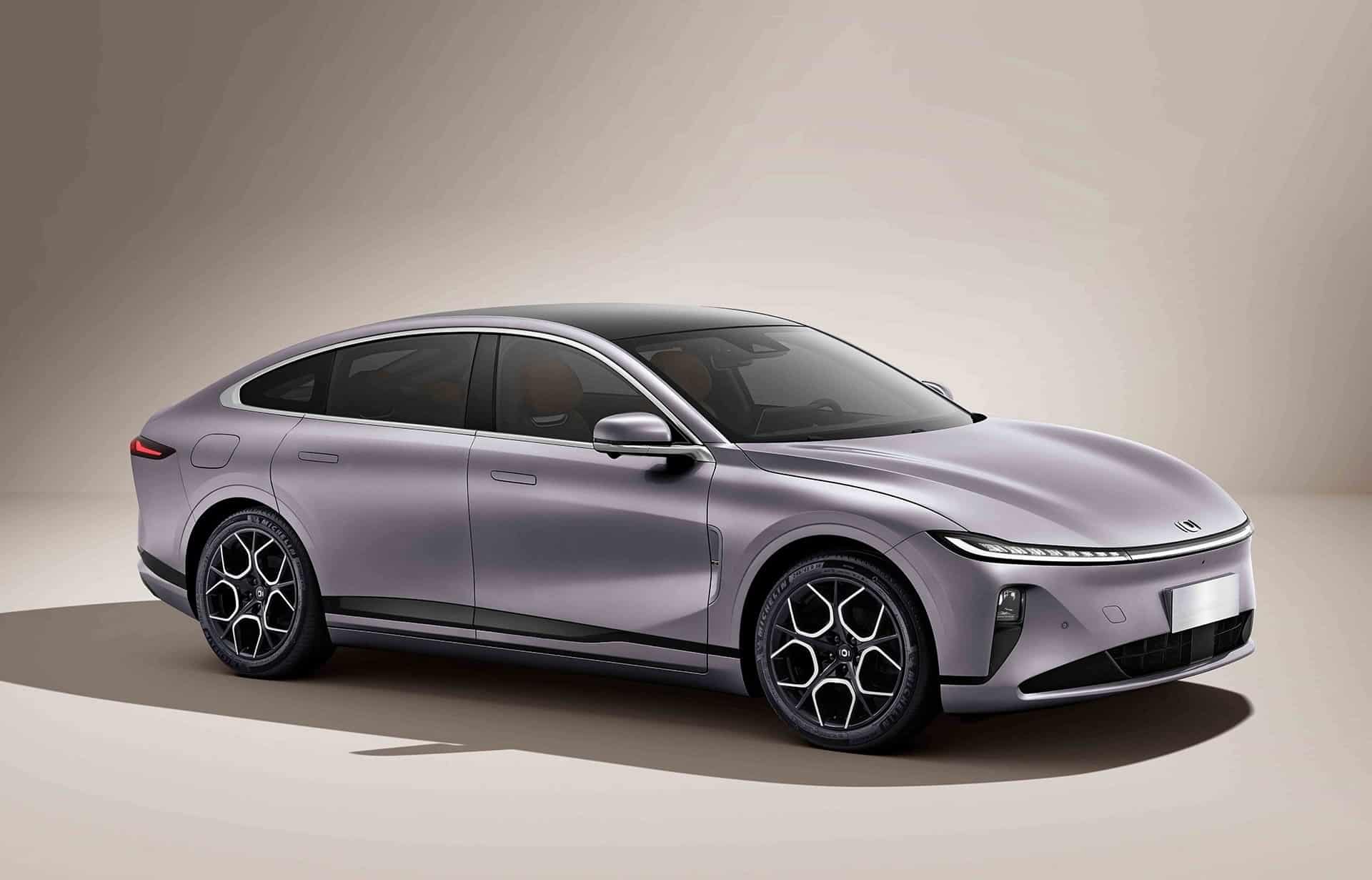
The market launch of a new version of the Qiyuan A06 equipped with a sodium-ion battery marks a technological milestone on the road to the mass commercialisation of batteries that are even cheaper, safer and more resistant to cold.
Changan, in partnership with battery supplier CATL, has just unveiled its first mass-production vehicle equipped with a sodium-ion battery. This is the Qiyuan A06, a saloon set to reach the Chinese market in mid-2026.
This model is already on sale in this market in battery-electric and extended-range (EREV) versions, using LFP cells supplied by Gotion for the electric versions and by CATL for the EREV versions, with capacities ranging from 23.4 to 63.2 kWh.
The new version now arriving features a sodium-ion battery supplied by CATL under the Naxtra brand, with a capacity of 45 kWh. According to initial estimates, this battery will allow more than 400 km of range per charge, always under China’s excessively optimistic CLTC homologation cycle. This last point should be borne in mind if this model eventually reaches the European market too, where the official WLTP range will very likely be considerably lower.
Changan has been keen to stress that the Qiyuan A06 is not only its first model fitted with sodium-ion batteries, but also the first high-volume production model from any brand to reach the market. The truth is that other models, such as the JAC Yiwei launched in 2024 with Hina Battery cells, already used this type of cell, but their production volumes are really very limited.
Sodium-ion batteries are here to stay
Turning our attention to the new Naxtra cells from CATL that the Qiyuan A06 will use, their energy density is worth highlighting, which reaches 175 Wh/kg. This figure is very similar to that offered by many LFP cells currently on sale. These Naxtra cells are also integrated using a cell-to-pack design with no intermediate modules, which optimises space and weight. This technology is based on the same chemistry that CATL already uses in batteries for light commercial vehicles.
One of the major advantages of sodium-ion batteries is their behaviour in extreme climates. In some tests during the harsh winter in certain regions of China, the vehicle demonstrated discharge power at minus 30 degrees Celsius almost three times higher than that of equivalent LFP models. Furthermore, it retains more than 90 per cent of its capacity at minus 40 degrees and continues to operate stably even at minus 50 degrees, which makes these batteries a genuinely attractive option for many drivers living in parts of the world with extremely low winter temperatures.
CATL also believes this battery technology will continue to evolve in the coming years, making it possible to offer CLTC ranges of 500 or 600 km in pure electric models and 300 km in electric mode in extended-range (EREV) vehicles. It is therefore expected that sodium-ion batteries will gradually approach the current performance of LFP batteries, while offering some additional advantages.


 Peugeot E-208 GTi: a battery-powered toy that revives the spirit of the 1980s sports cars
 New Lexus ES: luxury grows and goes electric
 First contact with the Dacia Sandero Hybrid 155: power and efficiency from €19,890
Deja un comentario