Análisis Curiosities Safety Technology
This car features 35 sensors, 3 LiDARs, 13 high-resolution cameras and 6 radars with wave sensors. Do you know which one it is?
 Óscar Sanz
20 February 2025
3 min.
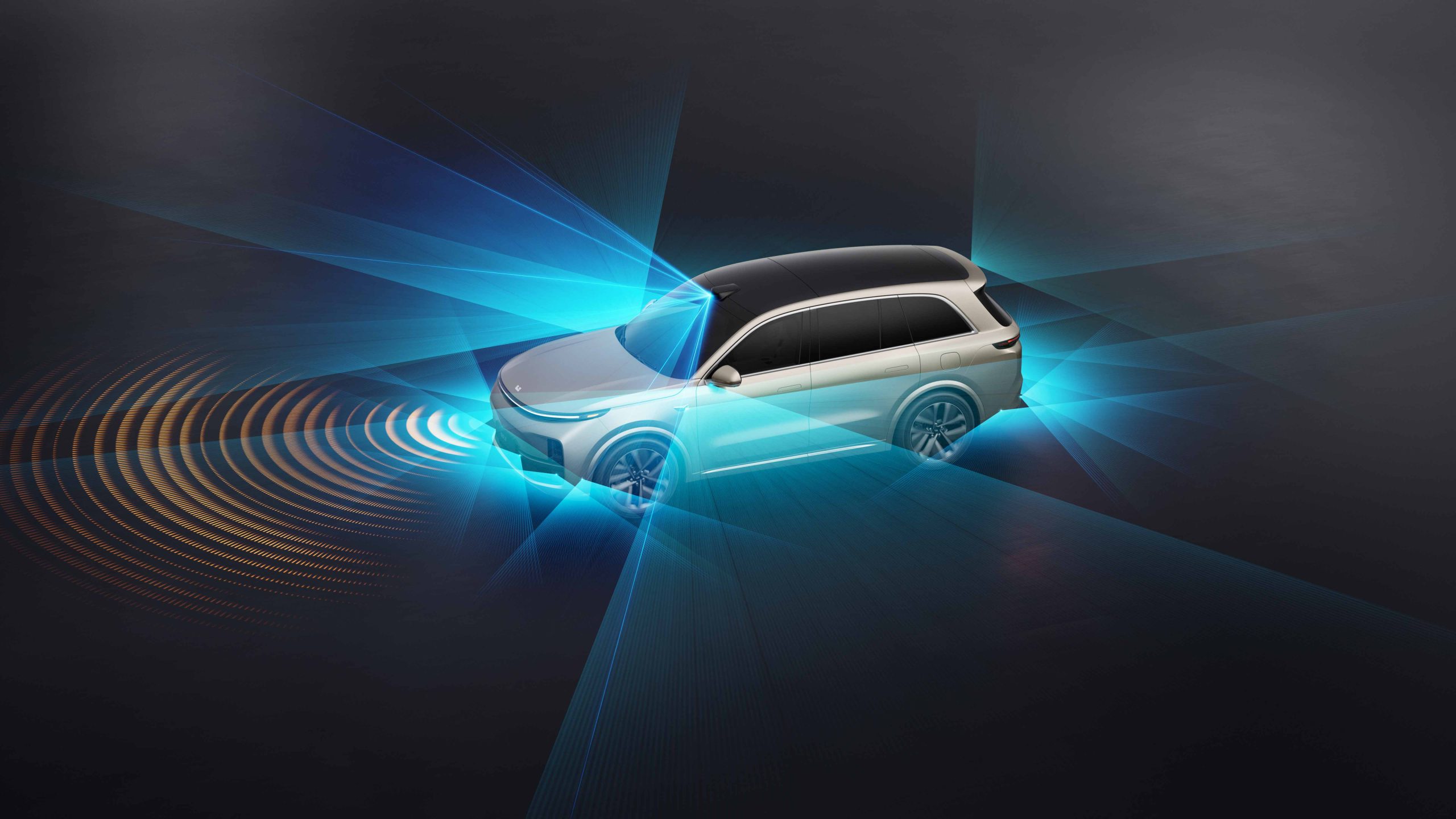
The Avatr 11 redefines safe driving with 35 sensors and artificial intelligence technology that processes 8 GB of data per second.
Can you imagine driving a car that sees and thinks almost like a human being? ADAS (Advanced Driver Assistance Systems) are revolutionizing the automotive world, taking automated driving to levels unimaginable just a few years ago. At the epicenter of this revolution is the Avatr 11, the car that leads the market with no fewer than 35 sensors
The first autonomous emergency braking (AEB) assistant, launched by Volvo in 2008, used just one radar and one camera. By contrast, the Avatr 11 incorporates 3 LiDAR sensors, 13 high-resolution cameras, 6 millimeter-wave radars, 12 ultrasonic sensors and a camera dedicated to monitoring the driver.
This technological arsenal allows the vehicle to capture every detail of its surroundings with millimeter precision, but it also requires maintenance. Each time we need to replace our windscreen, these ADAS require sophisticated calibration. Specialized companies such as Carglass take care of the recalibration of these systems to ensure that every ADAS in a vehicle works correctly.
It is not the only model that bets on a large sensor array. Models such as the WM Motors M7 and the NIO ET9 also have more than 30 sensors, reflecting a clear trend in the automotive industry toward hyperconnectivity and advanced automation.
The amount of data these sensors generate is staggering: up to 8 GB per second, the equivalent of downloading two 4K films every second. To process this avalanche of information, the most advanced vehicles have a computing power of up to 1,016 TOPS (tera operations per second), thanks to complex SoC systems (system on chip) working in parallel. By comparison, future fully autonomous cars, such as robotaxis, could require up to 3,048 TOPS.
AI is the engine that turns this data into safe and fast decisions. Thanks to algorithms, ADAS systems recognize vehicles, pedestrians, cyclists, traffic signs and road markings.
The cars with the most sensors on the market
1. Avatr 11 – 35 sensors: 3 LiDAR, 13 HD cameras, 6 millimeter-wave radars, 12 ultrasonic sensors, 1 driver monitoring camera.
2. WM Motors M7 – 32 sensors: Includes 3 LiDAR with autonomous zoom and 330° coverage.
3. NIO ET9 – 32 sensors: Aquila 2.0 system with ultra long-range LiDAR sensors.
4. IM LS7 – 32 sensors: Equipped with 3 Ultra High Pixel cameras and multiple radars.
5. Volvo EX90 – 31 sensors: True to its safety heritage, with a complete sensor suite.
6. XPENG G9 – 31 sensors: With 13 cameras and advanced millimeter-wave radars.
The key role of each sensor
- Cameras: ADAS cameras, mainly installed in the windscreen, recognize vehicles, pedestrians and signs using AI. After replacing a windscreen it is essential to recalibrate them to maintain their accuracy; we can turn to specialized companies such as Carglass.
- Radars: With a range of 250 metres and 360° coverage, radars detect static and moving objects even in adverse conditions.
- Ultrasonic sensors: Ideal for parking manoeuvres, they detect nearby obstacles (up to 6 metres away) using sound waves.
- LiDAR: They provide precise 3D maps of the surroundings. Although expensive and sensitive to adverse weather, they are essential for autonomous driving.


 Peugeot E-208 GTi: a battery-powered toy that revives the spirit of the 1980s sports cars
 New Lexus ES: luxury grows and goes electric
 First contact with the Dacia Sandero Hybrid 155: power and efficiency from €19,890
Deja un comentario