Robotaxis from Tesla arrive in Dallas and Houston
 Javier Cantagalli
21 April 2026
3 min.
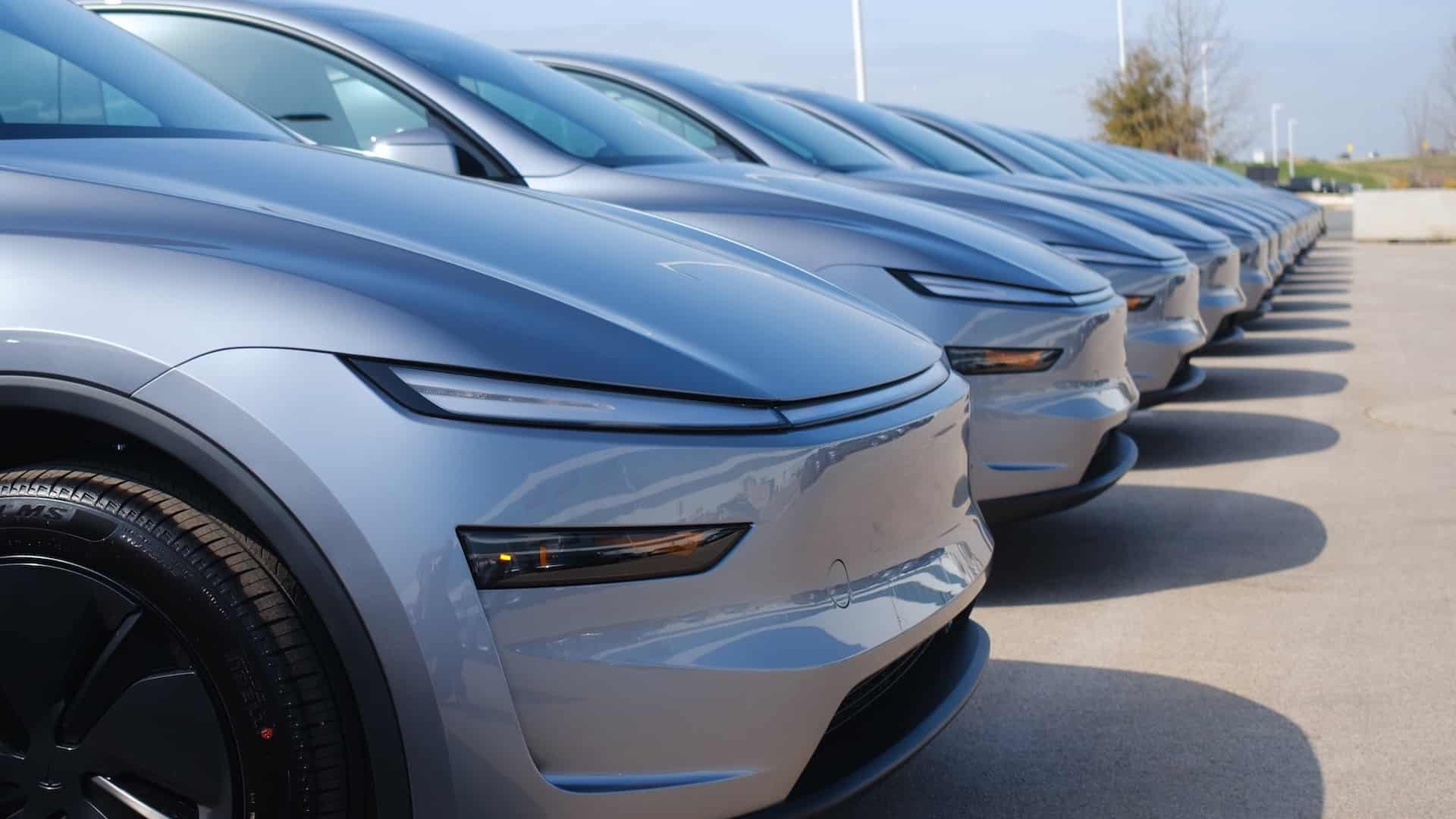
Although the operating zones in these two cities are still limited, this move by Tesla reinforces the company’s commitment to autonomous passenger transport.
Tesla has just announced the expansion of its robotaxi service in the United States to the cities of Dallas and Houston in the state of Texas. Until now, the company’s robotaxis only operated in one city in this southern state, Austin, where the service has been active for ten months.
Initially, in Austin, Tesla’s robotaxis drove with a safety driver in the front passenger seat, ready to step in in case of emergency, although without direct control of the steering wheel and pedals. In January, Tesla took an important step forward and moved this supervisor to a follow-up vehicle, reducing the human presence inside the company’s robotaxis. In Dallas and Houston, however, the service will operate with no safety drivers at all.
It is worth noting that expanding Tesla’s robotaxi service to these two new cities is much simpler from a regulatory standpoint, since both also belong to the state of Texas, a pioneer in its support for autonomous vehicles thanks to its favorable legislation passed back in 2017. By contrast, in San Francisco, where Tesla also offers robotaxis, a driver is still required to remain behind the wheel, since California has not yet authorized fully autonomous driving.
Without haste but without pause
For now, the exact dimensions of the deployment in Dallas and Houston have not been detailed. In Austin, the initial fleet consisted of 20 units of the Tesla Model Y, growing gradually to around 35 vehicles by the end of 2025. It is currently estimated that the number of Tesla robotaxis circulating on the streets of Austin is already approaching 50.
In the company’s results presentation last January, Tesla announced that during the first half of the year it would extend the service to seven more cities: Dallas, Houston, Phoenix, Miami, Orlando, Tampa and Las Vegas. With the launches in Dallas and Houston, the first two have already been completed.
It is important to point out, however, that the operating zones in these two new cities are still very small. In Dallas they cover between 78 and 90 square kilometers, and in Houston only between 30 and 39, a minimal fraction compared with the more than 25,900 square kilometers of the latter city’s metropolitan area. In any case, it is expected that over the coming months these areas will gradually expand, as has happened in Austin.
In the United States, Alphabet/Google’s Waymo currently leads the autonomous passenger transport market, with operations in Phoenix, San Francisco, Los Angeles and Austin, to which Miami and Orlando have recently been added. Zoox, owned by Amazon, already operates in Las Vegas and San Francisco. Meanwhile, Uber is preparing to give a strong boost to autonomous passenger transport by partnering with nearly twenty manufacturers and technology companies, among them Rivian and Lucid Motors, among others.


 Peugeot E-208 GTi: a battery-powered toy that revives the spirit of the 1980s sports cars
 New Lexus ES: luxury grows and goes electric
 First contact with the Dacia Sandero Hybrid 155: power and efficiency from €19,890
Deja un comentario