Tesla receives the FCC OK from the US Federal Communications Commission to use a key technology for the wireless charging of the Cybercab
 Javier Cantagalli
22 February 2026
2 min.
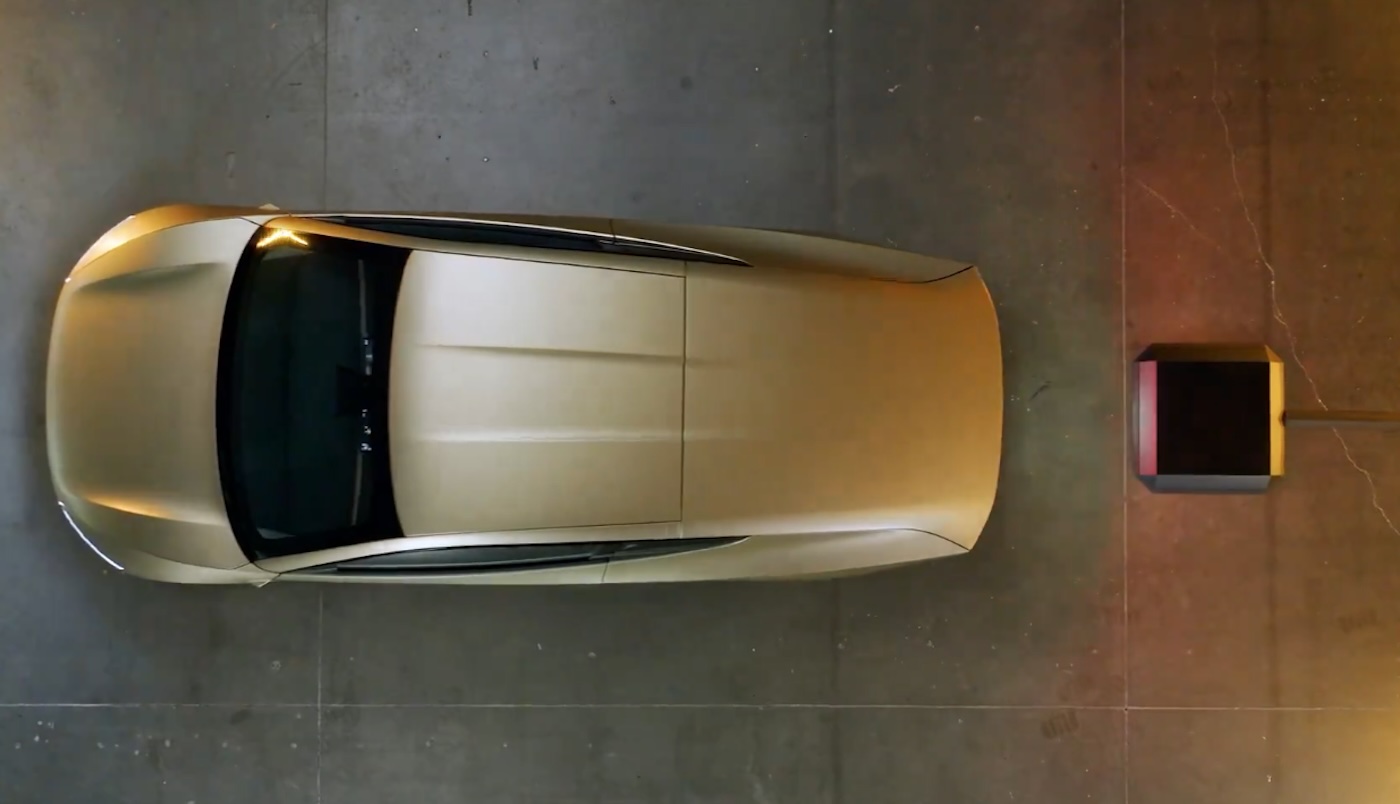
With this regulatory exemption, Tesla clears a new hurdle in its goal of starting the rollout of a large fleet of Cybercabs that will act as robotaxis.
Tesla continues to move forward in its goal of bringing its first vehicle without a steering wheel or pedals to market this year. The company has already started production of the first pre-series units of the Cybercab, as we told you in a recent post, and now we have learned of another important piece of news that very positively affects the development of this project.
According to a recent report, Tesla has overcome a significant regulatory hurdle in the United States. A step that is essential for making the Cybercab a reality. The Federal Communications Commission (FCC) has granted it a special exemption that authorizes the use of ultra-wideband (UWB) radio technology in its inductive wireless charging system. This approval allows UWB transceivers to be installed at outdoor fixed charging stations, something current regulations in this country restrict exclusively to portable devices.
The charging system that Tesla is developing consists of a platform integrated into the ground and a receiver on the underside of the vehicle. When the Cybercab is correctly positioned over the platform, energy is transferred wirelessly through electromagnetic fields generated by coils, just as occurs with Qi wireless chargers for mobile phones, but on a larger scale.
UWB to achieve perfect alignment
As is also the case with mobile phones, the main challenge in achieving efficient charging is achieving precise alignment between the charging base and, in this case, the vehicle. Apple solved this problem on the iPhone with its MagSafe wireless charging system, using magnets that allow perfect alignment.
In the case of the Cybercab, however, the use of magnets is not possible because the vehicle has a certain ground clearance. As an alternative, Tesla plans to use ultra-wideband technology applied to a pulse-based positioning system that enables two-way communication between a transceiver in the car and another at the charging station. In this way, the autonomous vehicle is guided to the optimal position.
According to the FCC’s official documentation, UWB signals are emitted only briefly during the vehicle’s approach and are concentrated mainly in the lower zone, between the car and the platform. In addition, the vehicle’s own body significantly attenuates these signals once it is positioned above, minimizing any potential interference.
Finally, it should be noted that Tesla could initially use Bluetooth technology for localization and alignment, before switching to UWB once it has definitive regulatory approval.
 Kia offers an electric range of 10 models, 50 versions and 400 possible combinations
 The seven finalists for the 2027 European Car of the Year (COTY) are exclusively electric
 Peugeot E-208 GTi: a battery-powered toy that revives the spirit of the 1980s sports cars
Deja un comentario