Renault Symbioz Hybrid Cars Tests SUV
Test drive: the Symbioz E-TECH from Renault, the most sensible choice in the B-segment, with more space and a better price than its rivals
 Óscar Sanz
4 February 2025
4 min.
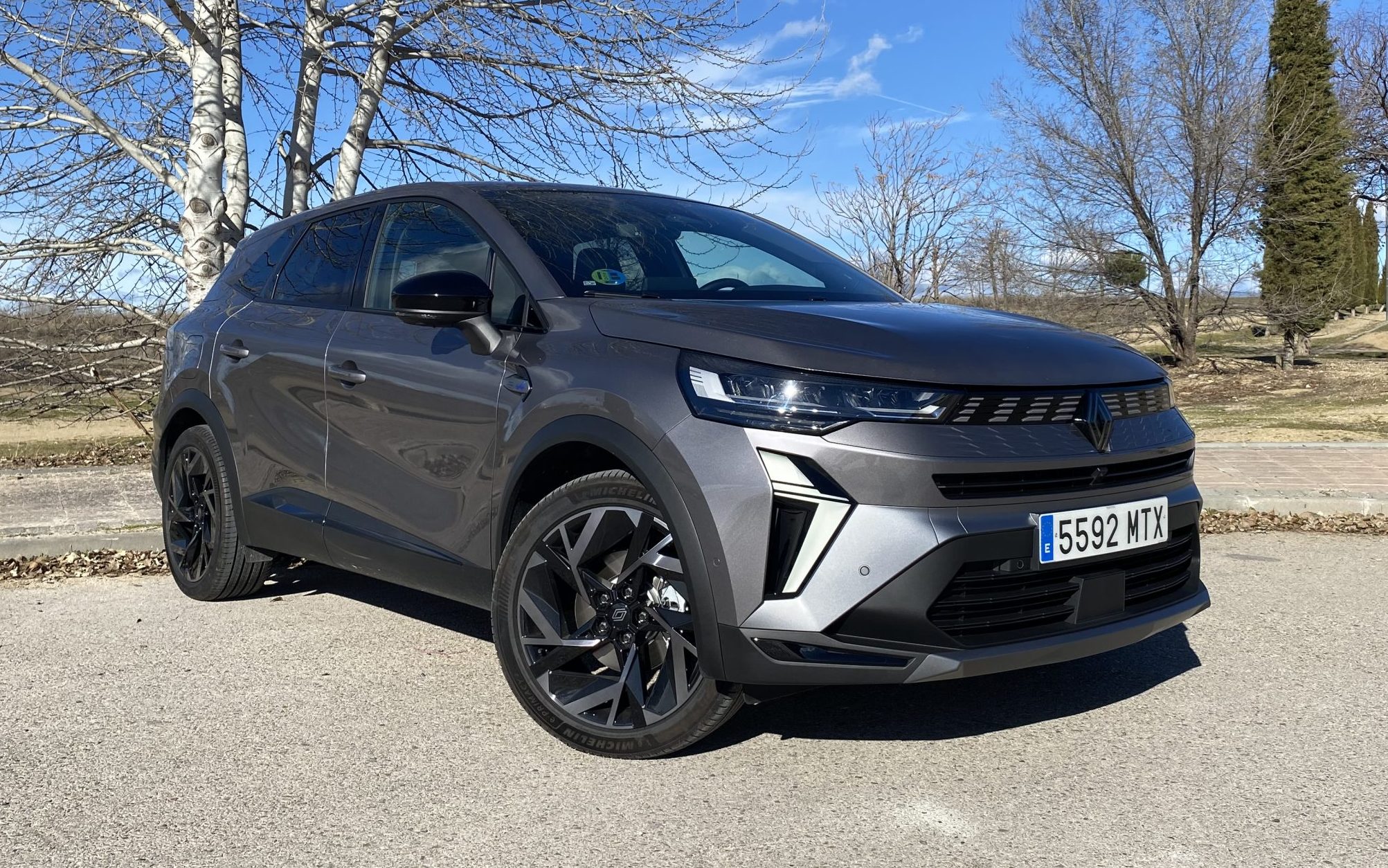
Low consumption, great technology and optimised space: that’s the Renault Symbioz. We analyse its powertrain and whether it’s really worth it compared with its rivals
Many of you will be surprised by its name, but the Renault Symbioz is not a new model. Its origins go back to an electric concept presented in 2017, in which the brand sought harmony between home and vehicle. Now, although it may seem curious in an SUV, Renault has made it a reality. This new model is based on the Renault Captur, but it is 17 cm longer, keeps the same wheelbase and offers a well-judged dynamic, low consumption thanks to its hybrid powertrain and a huge boot that gives it its own personality.
https://www.youtube.com/watch?v=RVoFHv8zZgc&t=1s
Platform and dimensions
The Symbioz is based on the CMF-B platform (the same as the Clio and the Captur), with a single powertrain of 143 CV and a technology level slightly below the Austral and the Rafale.
It is a five-seater SUV measuring 4.41 metres long, sitting between the Captur (4.24 m) and the Austral (4.51 m). It is the largest in the B-segment or one of the smallest in the C-segment. Its width is 1.79 metres, its height 1.57 metres, its wheelbase 2.64 metres and its weight 1,498 kg.
The boot offers 434 litres, expandable to 548 litres by sliding the rear bench, and 1,586 litres with the rear seats folded.
E-Tech hybrid powertrain
The Renault Symbioz is equipped with the E-Tech Full Hybrid 143 CV system, made up of a 1.6 petrol engine producing 95 CV and two electric motors: one of 49 CV that can drive the car on its own, and another of 20 CV, which acts as generator and starter. The 1.2 kWh battery allows journeys in 100% electric mode, reducing consumption.
In town, consumption is extraordinarily low, although its response when accelerating can feel somewhat lazy due to its 148 Nm of torque. Activating Sport mode, the combustion engine responds more quickly, although it also generates more noise.
Distinctive design
The Symbioz inherits the Captur’s front end, with vertical daytime running lights. Up to the B-pillar it is identical, but its rear section redefines the proportions to offer more boot space. The more stylised triangular-shaped rear lights give it a modern touch. The wheels can be 17 to 19 inches (the Alpine versions are 19″). The bodywork is available in 20 colour options.
Digitalised interior
The interior is identical to the Captur’s, with differences in upholstery and trim. Its two digital screens stand out, including the 10.3-inch instrument display and the 10.4-inch multimedia screen with Android Automotive 12 and a permanent internet connection. It is compatible with Android Auto and Apple CarPlay wirelessly and includes Google services (Maps, Assistant, Play Store).
Iconic versions feature gold-coloured details, while the Esprit Alpine adds blue stitching, bucket-style sport seats and the French flag on the trim and steering wheel. A 9-speaker Harman Kardon sound system and the Solarbay sunroof are also optional.
Driving dynamics
The Renault Symbioz stands out for its comfort and efficiency, especially in town, where it achieves extraordinarily low consumption. Its E-Tech Full Hybrid 143 CV powertrain, which combines a 1.6 95 CV petrol engine with two electric motors, provides smooth and quiet driving under normal conditions.
In strong acceleration, its response is somewhat lazy due to its 148 Nm of torque, although this improves in Sport mode, which engages the combustion engine for a more immediate response. However, this increases noise and consumption.
A notable improvement is the addition of a 20 CV generator motor, which optimises battery management and prevents running out of energy during periods of high demand, something that did occur in earlier versions of Renault’s hybrids. Thanks to this optimisation, the system is now more efficient and reliable.
Its automatic gearbox is smooth and effective, although it shows some delay in power delivery when a more energetic response is demanded. It has no sequential shifting or paddles, but includes Brake mode, which improves deceleration and prolongs brake life.
On safety, it is equipped with 29 ADAS systems, which are unobtrusive and can be easily switched off using the “My Safety” button on the dashboard. It also features hands-free parking.
Price and competitors
The Renault Symbioz starts at €29,643 in its basic trim, €3,100 more than a Captur with the same engine, but €2,100 cheaper than an entry-level Austral.
With the Techno trim, the price rises to €33,360, the Esprit Alpine costs €34,860 and the Iconic reaches €36,360.
It competes with models such as:
- Kia Niro HEV
- Hyundai Kona Hybrid
- Jeep Compass e-Hybrid
- Opel Grandland Hybrid
It also faces rivals such as the Nissan Qashqai (from €25,900), the SEAT Ateca 1.5 TSI 150 CV (from €31,810) and the Toyota C-HR 140 CV (from €31,750).
Technical specifications of this car


 Peugeot E-208 GTi: a battery-powered toy that revives the spirit of the 1980s sports cars
 New Lexus ES: luxury grows and goes electric
 First contact with the Dacia Sandero Hybrid 155: power and efficiency from €19,890
Deja un comentario