208 Peugeot Hybrid Cars Compact Tests
PEUGEOT 208 HYBRID 110 GT Test Drive: Forget the PURETECH versions, this one IS worth it
 Óscar Sanz
24 June 2025
9 min.
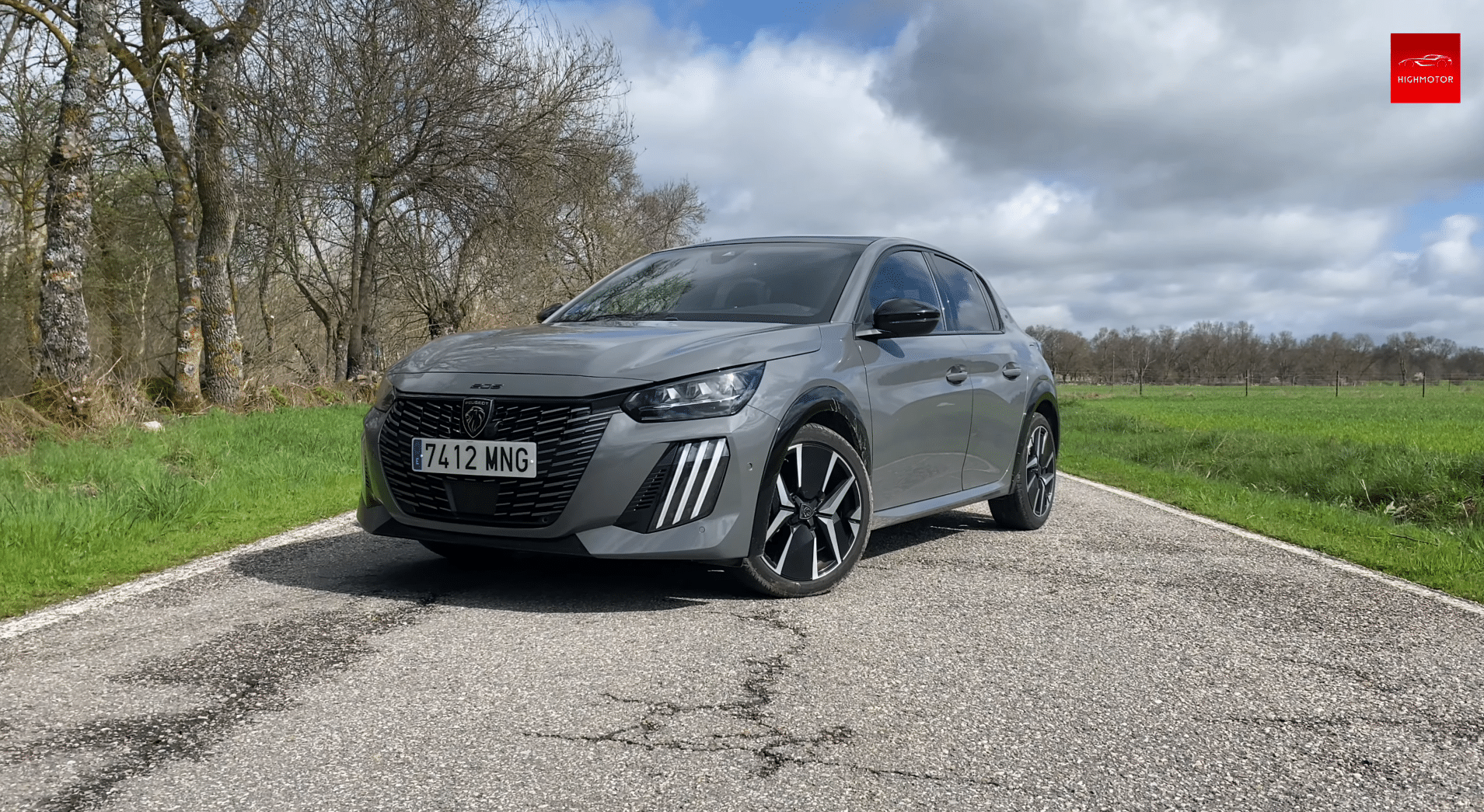
They say a car is not just a means of transport, but an extension of your lifestyle. And if that’s true, the new Peugeot 208 Hybrid GT has a lot to say. Compact, elegant and now with a more efficient heart… Will this be the perfect balance between design, technology and sustainability? Let’s find out. After presenting the prices and details of the special Style trim, the lion brand put an end to the famous PureTech name given to conventional petrol engines. The entry-level 75 CV engine also disappears, a very practical unit with a very attractive starting price that made it ideal for urban journeys, and it is replaced by a 100 CV petrol with manual gearbox starting at €18,000.
https://youtu.be/CvIQRpa2C8g
There are also changes to the mild hybrid versions: the previous versions of 100 and 136 CV have been replaced by the new 110 and 145 CV respectively, and they are now called “Hybrid“. But this does not mean their power has increased: they simply add the maximum output of the hybrid system’s electric motor to the total when both units work at the same time.
New design with three claws
The design of the Peugeot 208 remains one of its greatest strengths. In this update, its muscular, compact lines are kept, with a very recognisable front end, now enhanced by the new full LED headlights with a three-claw light signature, a direct inheritance from the 508 and the 408. In addition, the Artense Grey colour, combined with the GT trim details, suits it perfectly and stands out in a segment where many tend to look generic, although it is a €600 extra. All colours except Red and Blue, which cost €200 more, are €600 less, except Yellow Águeda, which comes included.
In this GT trim, the top of the range, we find details such as: black gloss wheel arches, 17″ ‘Yanaka’ alloy wheels, black mirror housings, and ‘GT’ badges on the rear and sides.
At the rear we find the lights joined together by a thick line where the brand name sits, and a widened SPORT rear spoiler in gloss black that integrates the brake light. It measures 4.05 metres long, 1.75 metres wide and 1.43 metres high, weighs 1,295 kg, which makes it ideal for urban environments without losing presence on the road. Its boot has a homologated 309 litres of capacity, expandable to over 1,100 with the seats folded. It does lose the false floor because of the hybrid system, and there is no spare wheel: only a puncture repair kit.
A different interior with very good finishes
Inside, we continue with the Peugeot i-Cockpit® concept, which combines a compact steering wheel with raised instrumentation. The digital instrument cluster on this GT is 10 inches with a 3D effect, a technology that projects data in two layers to improve visibility.
The central touchscreen is also 10 inches, now with a smoother interface and better layout, although the fluidity worsens on the most basic trims. It supports wireless Android Auto and Apple CarPlay. There is also a wireless charger and up to three USB-C ports plus a regular USB port (two at the front and one at the rear, on this trim).
The GT seats with the Alcantara Pack have a specific design with Adamite Green stitching and a mixed upholstery combining fabric, Alcantara and synthetic leather. Adjustment is electric for the driver only, which also includes lumbar massage, but both front seats are heated.
Finally, although it is one of the features that stands out most, there is the sunroof with blind that does NOT open, which is a €1,000 extra, or the two-tone black pearl roof for an extra €300. The automatic air conditioning and the LED ambient lighting package in several zones also stand out.
Space in the rear seats is not its strongest point. Two adults fit comfortably, but if you are over 1.80 metres tall, the roof can be a bit tight, especially if the front seat is moved back. Habitability is average for the segment, although rear access is not as generous as in the Renault Clio or the Ibiza.
Forget the PURETECH versions
To start with, the timing system has been redesigned, moving from belt to a chain on the mild hybrid versions, instead of the belt that seems to have caused so many headaches for many users of the original engine… and for Stellantis itself. Although the brand assures that the change was not due to reliability issues, and that the non-hybridised engine versions will keep a timing belt, though improved, so it no longer sheds debris.
The main protagonist here is the new Hybrid 100 e-DCS6 system. It combines a 1.2 three-cylinder turbo 100 CV engine with the new 6-speed dual-clutch gearbox.
In total it delivers 100 CV and 205 Nm, completed by a 48-volt battery with a gross capacity of just under 1 kWh (a little over 0.5 kWh net). The remaining elements are a second electric motor of about 28 CV, belt-driven, which acts as generator and starter motor for the combustion engine.
Very well-tuned dynamics
To begin with, I can tell you we are looking at one of the best chassis in its segment. It shares its platform with the Corsa, but even so, this model manages to deliver better consumption.
The difference from other simpler MHEV systems, in which the generator that acts as starter motor can add extra energy to the combustion engine but cannot move the vehicle on its own, is that in this case, and although only in very specific situations, 100% electric driving is possible, thanks to the additional electric motor located between the combustion engine and the gearbox. For example, when setting off and covering the first kilometres smoothly in electric mode. But also when parking, or in the stop-and-go situations typical of traffic jams. Up to 50% of urban journeys can be made in electric mode, according to Peugeot.
The automatic e-DCS6 gearbox works smoothly, far more refined than the e-CVT of traditional hybrids. Gear changes are quick and natural, and it avoids that ‘slipping’ effect of other systems. It’s true that, if we take the interesting Allure versions as a reference, it means an additional outlay of almost €2,700. But look at everything you get in return: a dual-clutch automatic gearbox, which alone is almost worth it, a car that uses less fuel and has better performance, the DGT ECO label… and the “peace of mind” of a chain-driven timing system. The steering feels quick and precise, and the front axle responds with liveliness. The suspension is firmer-tuned on this GT, and with the paddles behind the steering wheel, bends are no problem; it gives better grip in corners without sacrificing comfort. On the road it holds up well, although it is not a car for racing: its 0-100 is around 9.8 seconds, which is not bad at all.
The hybrid system significantly reduces consumption in town. We have achieved averages of between 4.3 and 4.8 litres/100 km in real urban driving. On the open road, consumption rises to about 5.3 litres, and on the motorway, with steady cruise control, it hovers around 6.0–6.2 litres. The battery is not plug-in, but it recharges through regenerative braking and during deceleration. It has driving modes: Eco, Normal and Sport, which change the throttle response and the hybrid system. Thanks to all this, it carries the DGT ECO label, with access to restricted zones and tax benefits.
Comparison with rivals
If we compare it with its main rivals, the Peugeot 208 Hybrid GT comes out well.
Renault Clio E-Tech:
The Clio is more efficient thanks to its full-hybrid architecture, with better urban consumption. But the Peugeot has better interior quality and a bolder design. In terms of dynamics, the Clio is smoother, the 208 more agile.
Toyota Yaris Hybrid:
The Yaris has the most proven and efficient hybrid system, but less overall refinement. The 208 wins on design and ergonomics, and offers a more “European” driving experience.
SEAT Ibiza eTSI (MHEV):
The Ibiza MHEV only has mild hybridisation, so it cannot run in genuine electric mode. In fast driving the Ibiza is solid, but the 208 conveys more sportiness and style.
Conclusion and prices
There are three trims available: Style, Allure and GT, the last being the one we are testing. The 110 CV Hybrid engines, which in my opinion are the best option, start at €21,170 in the most basic Style trim, €22,700 for the intermediate Allure trim and €25,000 in the sportier GT trim. The 145 CV versions raise the price by €1,000 in each trim, but they are not offered in the Style trim, so it’s worth thinking about…
The Peugeot 208 Hybrid GT is not just a city car that looks good: it’s a car that knows what it wants to be. It’s good-looking, comfortable, has an ECO label and makes you enjoy driving like few in its segment do.
It is not the roomiest or the cheapest, but it makes up for it with design, quality and a different hybrid proposition that copies no one. If you’re looking for something urban, with personality and efficiency, but not boring… the 208 GT deserves a place on your list. What do you think? Does this hybrid approach from Peugeot convince you?
Technical specifications of this car


 Peugeot E-208 GTi: a battery-powered toy that revives the spirit of the 1980s sports cars
 New Lexus ES: luxury grows and goes electric
 First contact with the Dacia Sandero Hybrid 155: power and efficiency from €19,890
Deja un comentario